News
Four years after Treasurer Jim Chalmers promised a budget geared more to wellbeing, the initiative has foundered, with no framework for monitoring or evaluation across government. By Emily Barrett.
What happened to happiness?
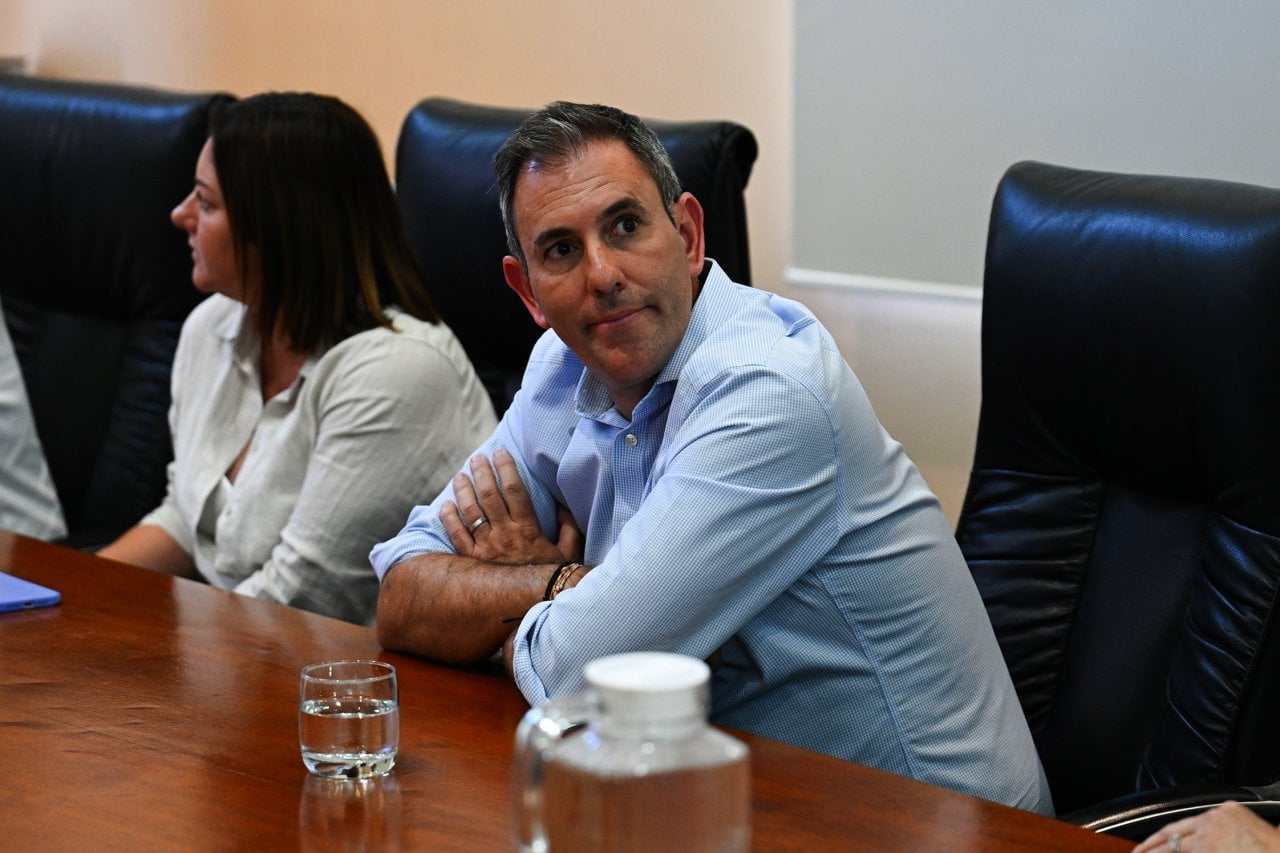
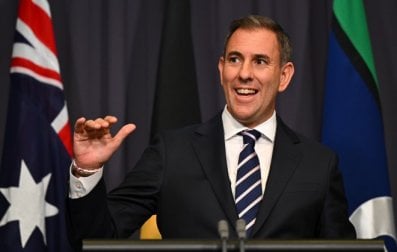
The treasurer’s vision for a federal budget more dedicated to protecting quality of life is fading. People who’ve worked on the foundations of his promised “wellbeing budget” variously blame a lack of resourcing, resolve or departmental control. All agree there has been a quiet but unequivocal retreat from reform.
One person familiar with the Treasury’s preparations likens the project to the government’s commitment to the Voice to Parliament referendum. In their view, “Jim Chalmers would like to be a legacy-leaving reformist and Albanese is not up for that.”
Labor’s election victory in May 2022 promised to animate what Chalmers had long championed in opposition. He wanted to build out the traditional markers of progress, such as GDP and employment, with measures of wellbeing that would help guide the funding priorities in the national budget.
In his first speech to staff, the new treasurer urged them to “have the kind of mindset that I have”.
Speaking of his department, Chalmers said, “this very powerful machine that we have here is about winning arguments, and changing outcomes, and imposing ourselves on the government, and being the most influential part of a successful reforming government that builds big reserves of economic credibility”.
On the eve of his first budget, Chalmers told ABC Radio Brisbane it would include “a pretty detailed paper – never happened before here in Australia … with an eye to doing our first wellbeing budget, or our first ‘measuring what matters’ budget during the course of next year”.
Picking up from a speech two years earlier, in which he quoted former United States attorney-general Robert F. Kennedy, Chalmers spoke of accountability, a need to “measure our progress against our objectives, whether it be health or education or environment or intergenerational disadvantage or some of the other things that we’re passionate about”.
The budget included a single page on “Measuring What Matters” – furnished with a circular graphic and the promise of an “overarching framework” to complement existing reporting on Closing the Gap and the State of the Environment.
Initially, there was momentum. A consultation period from October 2022 to May 2023 included 71 stakeholder meetings and two public submission rounds that drew 283 responses. Staff met with government and private sector representatives in Australia and overseas, to learn from successes in places such as New Zealand, Wales and Finland. Consultants were engaged and an interdepartmental working group established. What emerged was a Measuring What Matters (MWM) framework comprising data on five themes: healthy, secure, sustainable, cohesive and prosperous.
By that stage, however, the phrase “wellbeing budget” had already stopped showing up in Chalmers’ public statements. When asked by reporters, he referred to the framework.
External observers of the Treasury’s work were surprised to find that only a couple of relatively junior staffers were assigned to Measuring What Matters, working mostly from Perth. “No offence to Perth,” says Chelsea Hunnisett, a laureate PhD candidate with the Australian National University. “But it’s, you know, removed from the centre of gravity of Treasury – you have to be in Canberra if you’re going to be really influential.”
Hunnisett shadowed the department’s work on wellbeing and describes “incredibly intelligent, rigorous” staffers “with real conscientiousness about the stewardship role that they play in the economy”.
“But if Jim Chalmers had really wanted to get a wellbeing economy going in Australia, that would not be how it was resourced. You see projects like AUKUS – full steam ahead, fully funded. When the government is sufficiently motivated, they’ll execute with governance arrangements and resources. The same commitment has not been made to the development of a wellbeing budget. That’s why we have MWM and not a wellbeing economy.”
Some have suggested the Treasury’s priorities have been rightfully dominated by the surging cost of living, at the expense of less urgent projects. The treasurer faced questions about his budget plans this week following data showing inflation rose to 3.8 per cent, lifting expectations that the Reserve Bank of Australia will raise interest rates for the first time in almost two and a half years on Tuesday. The counterargument is that the cost-of-living crisis ought to have reinforced the need for cost-effective ways to help the most vulnerable – the sort of disciplined policy-making that a wellbeing budget would instil – and the problem was a lack of resolve.
Warwick Smith, research director at the Centre for Policy Development, says Chalmers’ key priorities – the cost-of-living pressure, budget sustainability and the long-term structural deficit – “can come together”.
“There was the bloody Economic Reform Roundtable, which is now already almost forgotten. And the unified thing that everybody agreed on from that was intergenerational equity.”
The Measuring What Matters statement that emerged in July 2023 quickly drew criticism for relying on stale and overly generalised data. Commentators noted it omitted the sharply higher mortgage costs weighing on Australian home owners and failed to break out figures on First Nations experiences.
Treasury’s alarmed response surprised some close observers, who say a key purpose of the exercise was to identify what’s missing. “They took that pretty hard, which is funny really,” Smith says. “You know, the AFR and The Australian came after them. But if that’s the worst you get – that can be fixed. This is not a fundamental philosophical attack.”
The Australian Council of Social Service saw a different flaw. While welcoming the new focus on inequality, ACOSS continues to push for a poverty measure, which they see as a “vital missing piece”.
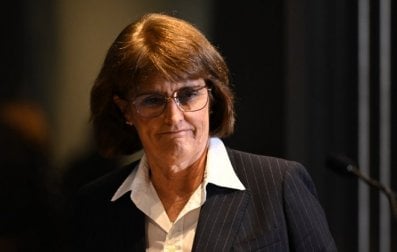
“We are required under the Sustainable Development Goals to halve poverty by 2030 according to national definitions – and we don’t have a national definition,” says acting chief executive Jacqueline Phillips. “It seemed to us that the wellbeing framework would have been a good place to do that.”
Treasurer Jim Chalmers tells The Saturday Paper: “We’ve done more than any other government to embed a wellbeing framework into economic policy and deliver better outcomes for Australians. We’ve acknowledged that there are gaps in the data and that’s why we’re providing millions of dollars to the Australian Bureau of Statistics to cover those gaps. Our wellbeing framework will continue to help shape our decisions into the future.”
Last year’s budget provided almost $15 billion over five years for the ABS to build out a General Social Survey dedicated to informing the MWM datasets. The MWM statement would remain the responsibility of the Treasury but come out only every three years. The second iteration is due this year, following the release of the new survey in May.
Independent economist Nicki Hutley is unconvinced by the data refurbishing. “Government knows where the wellbeing challenges are in our society – whether it’s Indigenous Australians or non-Indigenous Australians,” she says.
“The ideal behind it, to focus beyond pure measures of GDP, is 100 per cent right, but we need to make sure that we don’t just put some fluffy marketing spin on what wellbeing might look like.
“How many indices do we need to know about housing affordability? Relative to other countries, Australia performs pretty badly. How many more things do we need to tell us that this is a problem? And that’s not telling us what the right policy prescription is.
“Ultimately, we know that the economic indicator is the one they’re going to put first.”
Dr Cressida Gaukroger, a consultant specialising in wellbeing approaches to government, says the focus on data misses the bigger challenge of reform. “The real problem is that a measure on its own can’t really do much.”
The majority of developed countries have a wellbeing index of sorts, she adds, “because it is low risk, inexpensive and relatively quick to produce, but you need to do a lot more to change practice in government”.
She points to structural barriers throughout the budget process, as well as “cultural hurdles” relating to information sharing and politics within and between departments.
“There’s no point telling departments to work together and yet keep just giving them individual department budgets rather than thinking about shared budgeting. If you really wanted transformational change, that’s what you’d be working on,” Gaukroger says.
“The question is, ‘Are they doing that internal work?’ And I think if they are, they’re not doing it at the scale needed.”
According to an Australian National Audit Office review published last May, there are “no monitoring or evaluation arrangements in place to measure the embedding of MWM across government”. The stewardship of this work has since shifted to the Australian Centre for Evaluation, where the MWM working group is now relocated. This centre reports to Assistant Minister for Productivity, Competition, Charities and Treasury Andrew Leigh.
A brief reference to MWM does show up in the Budget Process Operational Rules – last amended in 2023 and made public for the first time by this government – but, Chelsea Hunnisett points out, “it’s not like Treasury officials themselves are using it extensively”.
One person with knowledge of the departmental process made a blunt summary: “Chalmers and his office have not been great at managing Treasury.
“There’s perhaps a naive view where they say, ‘Well, this is a priority for the treasurer and we want this to happen’, and then they walk away,” the source says. “There’s much more to it than that. In this case, they said, ‘Set up a unit to do Measuring What Matters’ … It had no internal champions. Or the internal champions were scattered and people move around a lot in Treasury and so it just got a bit lost.”
Warwick Smith says the rethinking of the budget process hasn’t been abandoned. He sees the possibility of a Commonwealth partnership with the states on a national prevention framework, similar to well-established models in the ACT and Victoria that factor longer-term wellbeing into budget planning as a cost-saving measure.
With New Zealand’s conservative government winding back the Wellbeing Budget initiatives of former prime minister Jacinda Ardern, Chalmers can see the risks of acting too slowly on lasting reform.
Truly transformational reform will take moral courage, says Cressida Gaukroger. “And, you know, this is a government that has an overwhelming majority, while the opposition eat themselves alive. If there was ever a time for that, this is the time.”
This article was first published in the print edition of The Saturday Paper on January 31, 2026 as "What happened to happiness?".
For almost a decade, The Saturday Paper has published Australia’s leading writers and thinkers. We have pursued stories that are ignored elsewhere, covering them with sensitivity and depth. We have done this on refugee policy, on government integrity, on robo-debt, on aged care, on climate change, on the pandemic.
All our journalism is fiercely independent. It relies on the support of readers. By subscribing to The Saturday Paper, you are ensuring that we can continue to produce essential, issue-defining coverage, to dig out stories that take time, to doggedly hold to account politicians and the political class.
There are very few titles that have the freedom and the space to produce journalism like this. In a country with a concentration of media ownership unlike anything else in the world, it is vitally important. Your subscription helps make it possible.
Subscriber exclusive
Send this article to a friend for free.
Share this subscriber exclusive article with a friend or family member using share credits.