World
Xi Jinping purges two generals. Albanese visits Timor-Leste to fast-track gas. Pro-regime party wins Myanmar election. By Jonathan Pearlman.
Second fatal shooting prompts Trump to ‘de-escalate a little bit’
Great power rivalry
China: Xi Jinping purged China’s highest-ranked general in a dramatic move that is set to further entrench his power and has raised questions about whether the military will – as Xi has ordered – be capable of seizing Taiwan by 2027.
China’s defence ministry revealed last Saturday that Zhang Youxia, and another general, Liu Zhenli, were under investigation for “discipline and law violations” – a vague statement that, unlike previous purges, did not refer to corruption.
The toppling of the pair followed a series of other purges of military commanders and left the Central Military Commission, which controls the two million-strong People’s Liberation Army (PLA), with just two remaining members: Xi and a general. Four other members of the commission had already
been purged.
Zhang, one of few serving veterans of China’s last war – its invasion of Vietnam in 1979 – had been repeatedly promoted by Xi, whose father was a comrade of Zhang’s father during China’s civil war.
Despite Xi’s long record of toppling officials, particularly as part of an anti-corruption campaign during the early years of his rule, the removal of Zhang was viewed as one of his most stunning purges. As New York Times journalist Chris Buckley noted, Xi could have ushered Zhang, who is 75 years old, into retirement but instead turned him into a pariah.
Yet the reasons for the ousting remain unclear. There has been speculation that Zhang may have leaked nuclear secrets to the United States, engaged in corruption, plotted a coup or amassed growing authority that made him a threat to Xi.
China watcher James Palmer wrote in Foreign Policy that the likely explanation was Xi has become concerned about the readiness of the miliary, particularly after uncovering corruption within the PLA Rocket Force and a scandal involving bribes to secure promotions. “The good news is that these developments make Chinese military adventurism less likely, including an invasion of Taiwan,” he wrote.
“For Xi to trust the PLA, it would require not only a complete change of personnel but confidence that corruption-induced logistical issues had truly been resolved.”
https://www.youtube.com/watch?v=9UGqmBxlFv4
The neighbourhood
Timor-Leste: Anthony Albanese made his first prime ministerial visit to Timor-Leste this week, committing to fast-track a long-awaited project to develop the Greater Sunrise gas fields amid concerns Dili could otherwise partner with Beijing.
Announcing a new cooperation agreement between the two countries, Albanese said Australia will give more than 30 per cent of the revenues it receives from the project to an infrastructure fund for Timor-Leste.
“Sharing opportunities for economic growth is fundamental to … strengthening the stability and prosperity of our region,” he said in an address to parliament on Wednesday.
Standing alongside Albanese, Timor-Leste Prime Minister Xanana Gusmão declared his longstanding commitment to processing the gas from Greater Sunrise in Timor-Leste.
Woodside Energy, which is due to operate the project and has a 33 per cent stake in it, reached a deal with Dili last November to explore options for developing a gas facility in Timor-Leste, which owns a majority stake in the gas fields. For years, Woodside insisted the gas should be developed in Darwin to ensure the project was viable, but the company eventually agreed to support a Timor-Leste plant.
Gusmão said at a joint press conference with Albanese on Wednesday that developing the gas onshore was “essential for our national development and for the long-term strength of our family”.
Canberra’s position was more restrained, saying it “acknowledges” Timor-Leste’s commitment to develop the gas onshore and will support “any commercially viable solution”.
Election watch
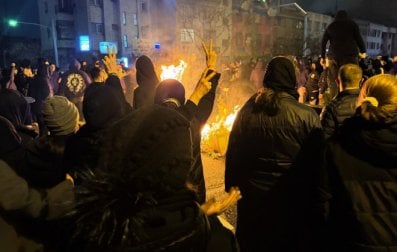
Myanmar: A pro-regime party won Myanmar’s first election since the military seized power in a coup in 2021, but the poll excluded the main opposition parties and was widely rejected by international observers.
Though the results have not yet been released, a Myanmar official on Monday said the Union Solidarity and Development Party, which is backed by the military regime, had won a clear majority after three rounds of voting. The election was viewed by analysts as a sham that was orchestrated by the military to try to legitimise its rule.
The Bangkok-based Asian Network for Free Elections said the regime had blocked parties that accounted for 90 per cent of seats won at the last election in 2020. New laws imposed 10-year prison sentences for criticising the election.
The Association of Southeast Asian Nations, an 11-nation regional grouping that includes Myanmar, said it would not recognise the results. The election was also rejected by the United Nations, the European Union, Australia and the United Kingdom. China, an ally of the ruling military, endorsed the election.
A UN expert, Tom Andrews, said in a statement: “International acceptance of this fraudulent exercise would set back the clock on genuine resolution to this crisis.”
The coup in 2021 sparked a brutal civil war that is believed to have caused at least 92,000 deaths and left parts of the country under the control of rebel armies and ethnic groups. Voting was not conducted in rebel-held areas.
Aung San Suu Kyi, the 80-year-old Nobel laureate, has been detained since the coup. Her party, the National League for Democracy, which won the last election in a landslide, has been banned.
A quarter of the parliament is reserved for the military, and the new president is due to be elected by MPs in March. Min Aung Hlaing, the military chief, has refused to say whether he will stand for the presidency.
Spotlight: Trump to ‘de-escalate’ in Minnesota
United States: After Renee Good was shot and killed by an Immigration and Customs Enforcement agent earlier this month, Alex Pretti, an intensive care nurse and fellow Minneapolis resident, joined other activists to monitor the agency’s activities.
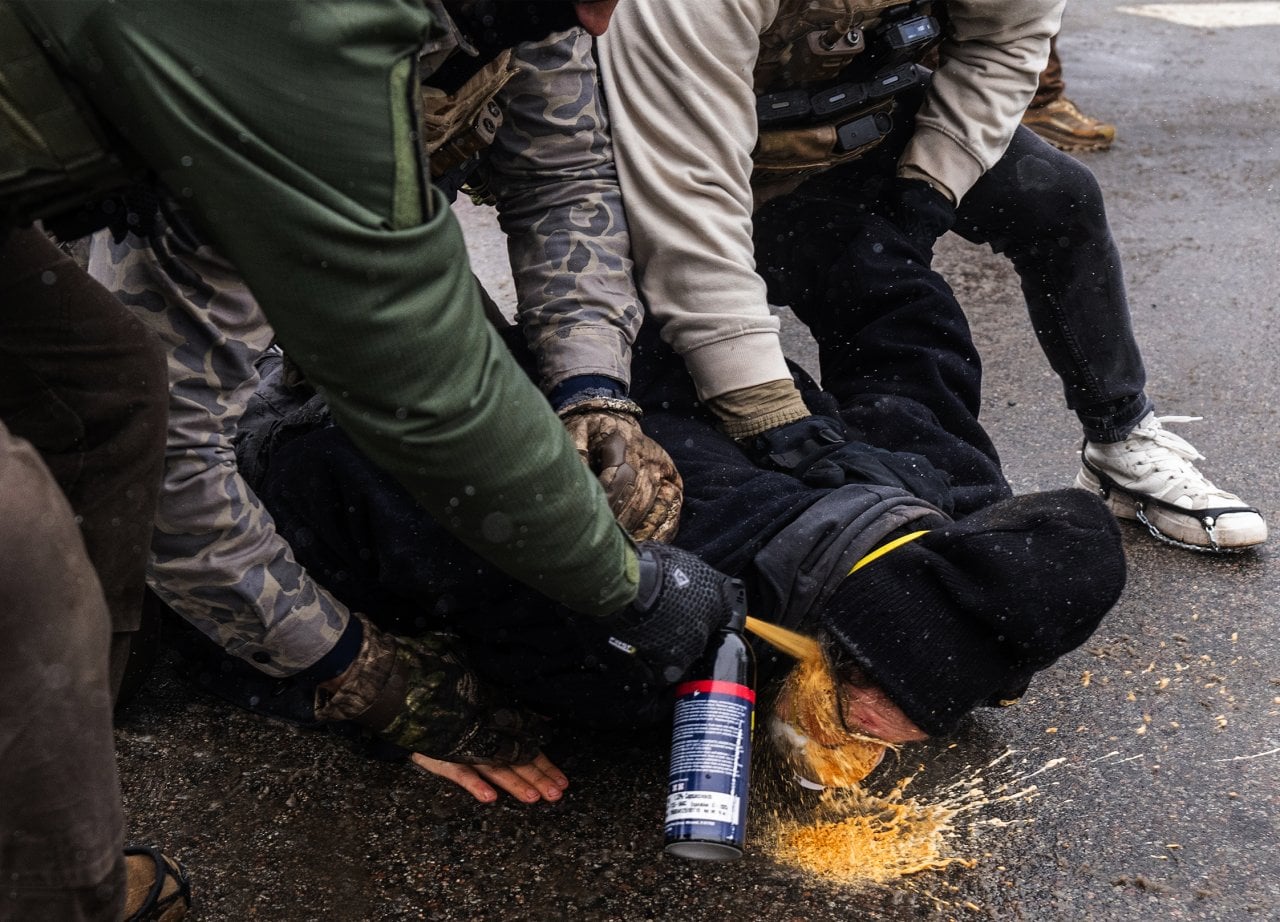
Last Saturday about 9am, Pretti, who, like Good, was 37 years old, was filming several agents and went to help two observers who were being squirted with pepper spray.
Pretti was pepper-sprayed and tackled by a group of agents when one noticed he had a holstered gun, which was removed. Two agents then fired at least 10 shots, killing him. It had been 17 days since the death of Good. At least 10 people have been shot during the crackdown since July, including four US citizens.
Following the death of Pretti, White House officials such as Kristi Noem and Stephen Miller claimed he was a “domestic terrorist” who had attacked ICE agents, but the claims were undermined by video footage, which led to a public outcry against the shooting and the violent deployment of ICE agents in cities across the country.
A Reuters/Ipsos poll on Monday found 58 per cent of Americans believe ICE’s operations have gone “too far”, 26 per cent believe they were “just right” and 12 per cent believe they have not gone far enough. The poll found 53 per cent of Americans disapprove of Donald Trump’s handling of immigration, up from 41 per cent a year ago.
Prominent Republicans this week denounced Trump’s tactics, including Texas Governor Greg Abbott, who said the White House needs to “recalibrate”, and Utah Senator John Curtis, who said Noem’s comments were “premature”. Gun rights groups condemned Trump and FBI director Kash Patel for saying Pretti should not have been carrying a gun, noting that Pretti was a licensed gun owner and was allowed to be armed while protesting.
The White House has now begun to change tone. On Monday, the fiery head of the migration crackdown in Minnesota, Gregory Bovino, who claimed Pretti had planned a “massacre”, was withdrawn from the city and replaced by Tom Homan, a longstanding law enforcement official who oversaw ICE’s deportations for former president Barack Obama. On Tuesday, Trump told Fox News he wanted to “de-escalate a little bit” in Minnesota.
“Both of them were terrible,” he said of the deaths of Good and Pretti.
As part of a recruitment campaign to implement Trump’s plan to conduct mass deportations of migrants, the training for new ICE agents has been reduced from 22 to eight weeks – or from four weeks to a 40-hour online course for police officers who join – and the age limit for new recruits was dropped from 21 to 18. Laura Jedeed, a journalist, wrote in Slate magazine that she was hired to become an ICE agent after attending a job fair in Texas. Her interview lasted six minutes.
This article was first published in the print edition of The Saturday Paper on January 30, 2026 as "Second fatal shooting prompts Trump to ‘de-escalate a little bit’".
For almost a decade, The Saturday Paper has published Australia’s leading writers and thinkers. We have pursued stories that are ignored elsewhere, covering them with sensitivity and depth. We have done this on refugee policy, on government integrity, on robo-debt, on aged care, on climate change, on the pandemic.
All our journalism is fiercely independent. It relies on the support of readers. By subscribing to The Saturday Paper, you are ensuring that we can continue to produce essential, issue-defining coverage, to dig out stories that take time, to doggedly hold to account politicians and the political class.
There are very few titles that have the freedom and the space to produce journalism like this. In a country with a concentration of media ownership unlike anything else in the world, it is vitally important. Your subscription helps make it possible.
Subscriber exclusive
Send this article to a friend for free.
Share this subscriber exclusive article with a friend or family member using share credits.