News
Succeeding Kevin Rudd as Australia’s ambassador to the United States, Greg Moriarty will need all his diplomatic acumen to navigate a volatile administration. By Patricia A. O’Brien.
‘Level-headed and respected’: Mr Moriarty goes to Washington
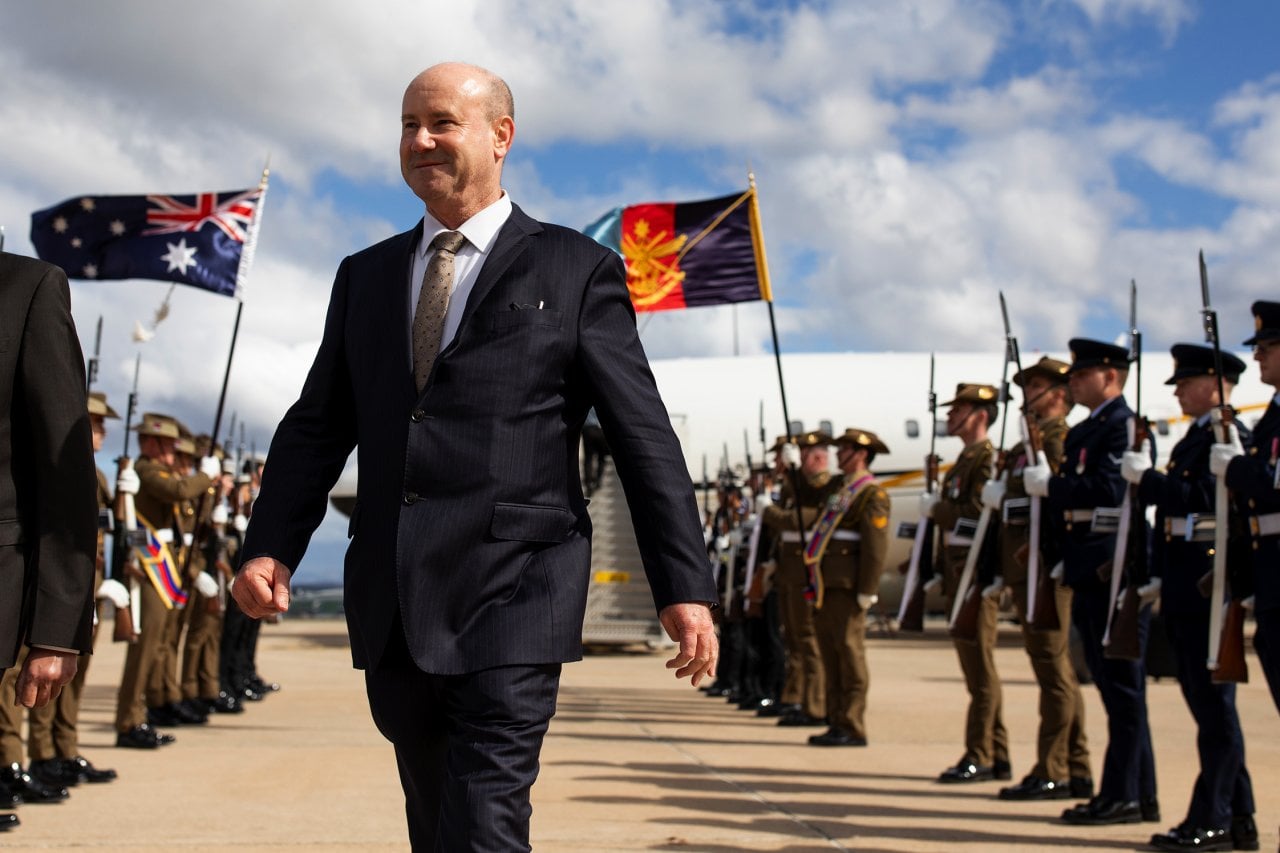
Greg Moriarty steps up as ambassador to the United States at a time when the stakes could not be higher for Australia’s relationship with America.
The senior public servant’s appointment is “good news for both countries”, said co-chair of the bipartisan Congressional Friends of Australia Caucus Joe Courtney, in a statement issued shortly after Prime Minister Anthony Albanese announced Moriarty would fill the position vacated by Kevin Rudd, who was in the role for three years. The Connecticut congressman noted that Moriarty is well known and respected in the US, and his will be “a zero learning curve for the duties and mission of this critical position”.
Moriarty is “the perfect choice”, says Michael J. Green, chief executive of the United States Studies Centre at the University of Sydney and formerly of the National Security Council during George W. Bush’s presidency. The new ambassador is “level-headed and respected in DC and trusted in Canberra”.
It is a great asset to Australia that Moriarty is known, liked and comes with extensive recent experience in Washington due to his lead role, as secretary of the Department of Defence, in implementing the AUKUS agreement since its September 2021 inception. He is a safe pair of hands for Australia’s agenda, has considerable experience in diplomatic postings and has headed missions in Iran and Indonesia. In addition, Moriarty brings relationships with the US military dating back more than 35 years, from when he served in the US Central Command during the First Gulf War.
Moriarty will need to hit the ground running, and fast, after he presents his credentials in April. He takes the reins of Australia’s diplomatic efforts in Washington, DC, at a time of widespread global conflict, great upheaval across the US and uncertainty in the world order. There will be much to navigate to protect Australia’s interests, one year into Donald J. Trump’s second presidential term, when no one knows what each day will bring.
Moriarty is now part of an 86-year history of diplomatic relations between Australia and the US. Australia sent Richard G. Casey as its first minister to the US in March 1940, three months after diplomatic relations began. Prior to this, Australia was represented through Britain’s mission, as were New Zealand and South Africa.
Casey oversaw the seismic shift in Australia’s foreign policy when it was apparent that Britain would not and could not protect its South Pacific dominion from imminent Japanese invasion. As war in the Pacific erupted in December 1941, prime minister John Curtin made a speech for the ages when he declared that “Australia looks to America”. More than one million US troops then rotated through Australia as part of the allied effort to defeat Japan.
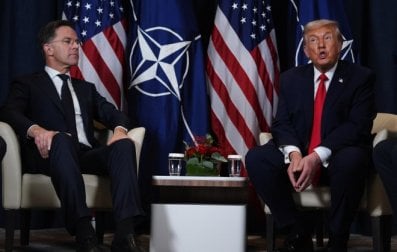
President Trump recently lectured North Atlantic Treaty Organization leaders at Davos about what Europe owes the US following its massive efforts during World War II. Australia, though spared a similar lecture, has a similar debt. The prodigious joint effort to repel the Japanese advance from Australia’s shores – costing the lives of more than 100,000 members of America’s “Greatest Generation” throughout the Pacific – is the bedrock of the Australian–US relationship.
Australia’s US security guarantee, born in 1941 and solidified in the 1951 ANZUS Treaty, endured through the Cold War despite times of Labor Party unease with Washington’s perceived great power overreach and intrusions on Australia’s sovereignty. The Washington embassy had to work through myriad testing issues to promote Australia’s national interests while ensuring the security guarantee remained, producing at times controversial policy directions.
In the post-Cold War decade that followed the fall of the Berlin Wall in 1989, US global power went unchallenged. John McCarthy, who was appointed ambassador to the US by the Keating government in 1995, has a unique perspective on the role in this short-lived unipolar moment and how Australia’s Washington mission operated in it.
McCarthy served in Washington until he was reassigned to represent Australia as ambassador to Indonesia from 1997 until 2001, when that relationship went through very testing times. Compared with what he faced in Indonesia with the fall of President Suharto and the East Timor crisis, McCarthy tells The Saturday Paper that Washington was “a great deal easier” to manage. The daily challenges in Jakarta “became public very quickly”, while in the US there were “no burning issues” generating publicity and political pressure. When then president Bill Clinton’s attention did turn Australia’s way, McCarthy recalls, it was positive. The biggest challenge, he says, was getting access, a symptom of where Australia ranked in US interests at the time.
Australia’s efforts in Washington ramped up when it sought a free trade deal, and Michael Thawley was appointed ambassador in 1999 to achieve it. The Sydney Olympics shone a bright light on Australia in 2000, and the embassy capitalised substantially on this attention. Yet it was 9/11 and the subsequent transformation of the security landscape that greatly elevated Australia’s importance to Washington. In 2003, the Congressional Friends of Australia Caucus was founded, which became critical to building out the relationship. Australia had already demonstrated its support for its ally with contributions to the Coalition of the Willing, supporting President George W. Bush’s invasion of Afghanistan in 2001 and, two years later, the invasion of Iraq.
The closer relationship brought more complexities as well as increased access. During the Bush and Obama administrations, Michael Thawley, Dennis Richardson and Kim Beazley, who came with a high public profile and encyclopaedic knowledge of defence issues and the American Civil War, were Australia’s ambassadors. Michael J. Green recalls from the US side that they were “so plugged in” to the White House that they often knew what was coming before the rest of the US government. Joe Hockey, Arthur Sinodinos and, during the Biden presidency, Kevin Rudd, also enjoyed high levels of access and engagement.
Circumstances changed from January 2025 when Trump was inaugurated for the second time. The rapid and dramatic shifts in Washington’s operating systems impacted every diplomatic mission. Like Rudd, Moriarty will have to navigate a landscape where the channels used by his predecessors no longer function and “there are surprises all the time”, Green says.
Given Australia’s security is ever more tightly bound to America, with bipartisan support for the US security guarantee in the AUKUS agreement, this new order of things in Washington presents an ongoing challenge.
Australia “offers something vital” for American strategy, Kim Beazley tells The Saturday Paper, “even with Trump’s changes”.
“The US will still need a western Pacific bastion” and Australian territory to operate its satellite systems, he says, and Trump has seen the value of our critical minerals and ability to process them. Beazley is reassured by Moriarty’s selection, saying he “arrives a full bottle on all of this and has vast experience in discussions with the Americans”.
Congress, particularly well-disposed Republicans, will be as crucial for Moriarty as they have been for Rudd, Beazley adds, since they have acted as a “corrective to some in the administration more sceptical” about the US–Australia relationship. As Rudd leaves the post, that relationship is in a much better state than virtually any other US alliance – an advantageous position for Moriarty’s launch.
In recent years, the embassy has also worked hard to draw attention to the Pacific Islands, given their significance to US interests as China exerts more influence across the region, and its rivalry with the US becomes more heated. This will be a delicate balancing act for Moriarty, amid the intensification of tensions particularly around China’s ambitions for Taiwan, and given the superpower’s importance to Australia as our largest trading partner.
That said, the US National Security Strategy released in December dials down the temperature on China tensions, which is welcome news for the Indo-Pacific region.
Moriarty comes well equipped to advance much-needed knowledge about this region in Washington. He served in the Papua New Guinea embassy, was a senior negotiator with the Peace Monitoring Group on Bougainville, and has invaluable insight into Indonesia, a nation that gets less attention than it should in the US capital.
Moriarty’s ambassadorship comes at a volatile time, but he brings impressive experience, respect and critical relationships to the role. He will have to draw deeply on all these reserves to navigate Washington in the years ahead.
This article was first published in the print edition of The Saturday Paper on January 31, 2026 as "‘The perfect choice’".
For almost a decade, The Saturday Paper has published Australia’s leading writers and thinkers. We have pursued stories that are ignored elsewhere, covering them with sensitivity and depth. We have done this on refugee policy, on government integrity, on robo-debt, on aged care, on climate change, on the pandemic.
All our journalism is fiercely independent. It relies on the support of readers. By subscribing to The Saturday Paper, you are ensuring that we can continue to produce essential, issue-defining coverage, to dig out stories that take time, to doggedly hold to account politicians and the political class.
There are very few titles that have the freedom and the space to produce journalism like this. In a country with a concentration of media ownership unlike anything else in the world, it is vitally important. Your subscription helps make it possible.
Subscriber exclusive
Send this article to a friend for free.
Share this subscriber exclusive article with a friend or family member using share credits.