News
ANALYSIS: The US president’s erratic campaign to acquire Greenland forces Europe to strategise for NATO’s demise, and Asia to think about the limits of American power. By Sam Roggeveen.
Trump, Greenland and the end of NATO
It has been common to read, over the course of this extraordinary week in world politics, that the United States is committing something like geopolitical suicide. It is said we are witnessing the voluntary dissolution of an international order that Washington created and that has served it well.
The American neo-conservative commentator Robert Kagan wrote in The Atlantic: “The American-dominated liberal world order is over. This is not because the United States proved materially incapable of sustaining it. Rather … the United States has decided that it no longer wishes to play its historically unprecedented role of providing global security.”
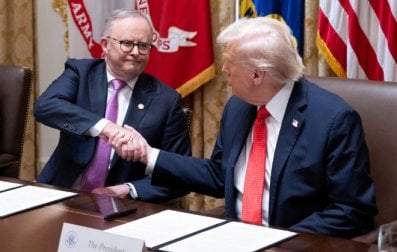
President Donald Trump has provided no shortage of evidence for such claims. This week alone, he has threatened European allies with tariffs because they oppose his plans to acquire Greenland, told the Norwegian prime minister in a text message that because he had been denied the Nobel Peace Prize, he “no longer feel[s] an obligation to think purely of Peace”, posted a picture to his social media account depicting a map of Canada as American territory, leaked private messages with foreign leaders, accused the British government of “great stupidity” and warned French President Emmanuel Macron that his resistance to Trump’s plans for a Gaza “Board of Peace” might see his country’s wine industry slapped with a 200 per cent tariff.
Yet claims Trump is presiding over the collapse of the global order are at best half true. Trump makes it easy to believe the US can just surrender its world role in a fit of self-destructive stupidity, but the US role is less decisive than commonly thought, particularly in Asia.
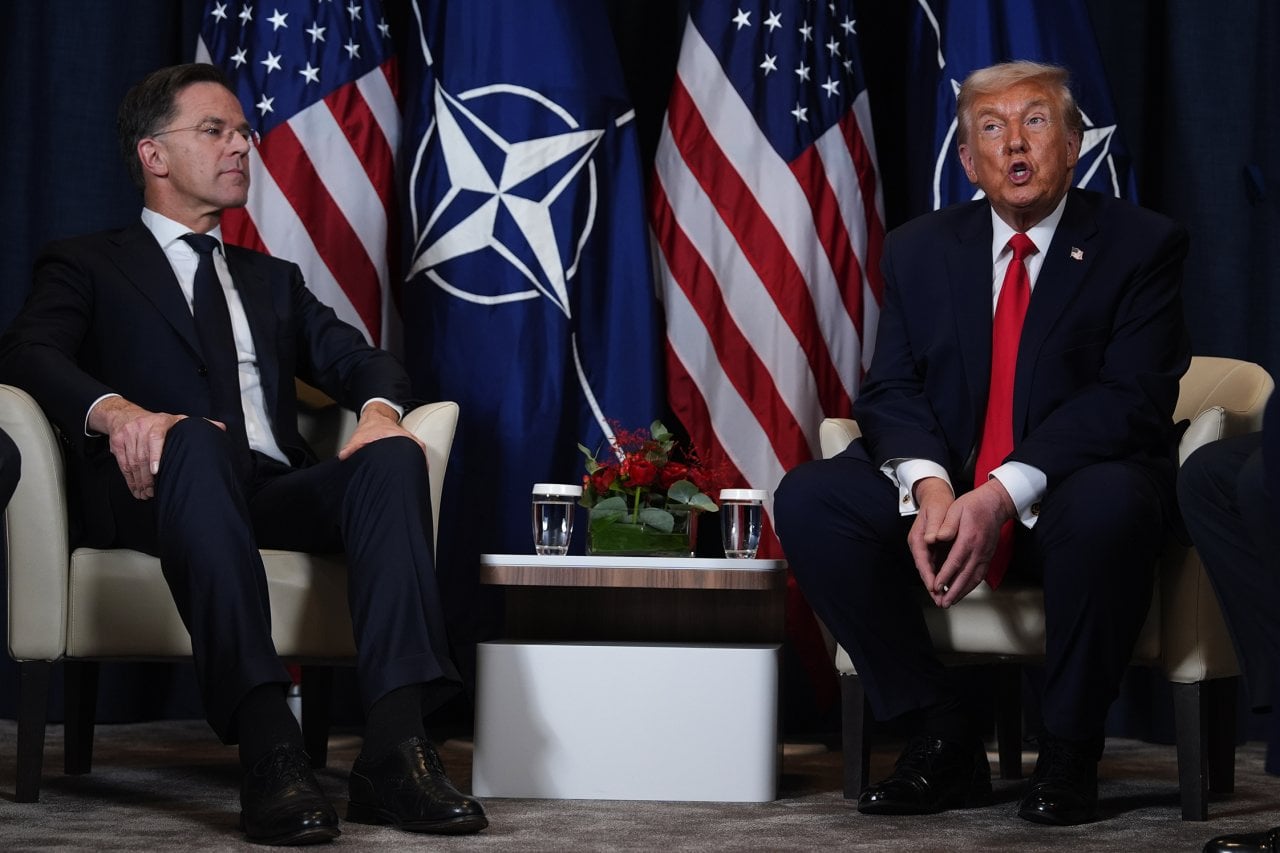
In Trump’s provocations and outrages we can indeed see an ominous turn in transatlantic relations that threatens at least the European portion of the global order. It is difficult to find a plausible argument for Trump’s fixation on Greenland, yet he has appeared so set on American ownership of the island that he openly contemplated the prospect that the North Atlantic Treaty Organization may not survive his quest to get it. Despite the vague “future deal” Trump flagged at this week’s World Economic Forum in Davos, Switzerland, with NATO Secretary General Mark Rutte – an apparent backdown from the president’s threats of tariffs and military intervention to secure the territory – European leaders too are now considering a post-American security order.
On paper, this should not concern them greatly. Collectively, Europe is easily wealthy enough to ensure its own security. Two European nations have nuclear arsenals and many of them develop and produce world-class weapons that attract customers from around the world. Germany alone has more than 180,000 people in military uniform. Certainly, this force lacks essential capabilities, but many shortcomings will be addressed in coming years as defence budgets rise there and across the continent. Those who argue that European nations are incapable of mobilising and lack martial spirit have short memories.
Europe’s problem is political rather than material. The US has led NATO since it was founded in 1949, and it’s hard to see how the organisation could function in Washington’s absence, because the remaining members would be dogged by the leadership question, which the formation of NATO and the European Union was meant to resolve or at least defer indefinitely. Both institutions were founded on the premise that Europe could not be secure if France and Germany were in competition. Raising either of them to leadership status would overturn that bargain and risk returning Europe to its dark past.
If no single European nation can lead a post-American NATO, responsibility would have to fall to Europe’s capital, Brussels. Yet despite the success of European integration since World War II, that project now faces a severe democratic deficit. The Brexit referendum and the rise of right-wing populism on the European continent suggest that an effort to form a fully united European military – which could only exist if Europe also had a single foreign policy and nuclear deterrent – would fail. As a political endeavour, it would surpass the creation of the single currency in scale and ambition, yet the political conditions for it appear highly unfavourable.
A wealthy but leaderless Europe would offer Moscow conditions ripe for exploitation. Its military prospects in the Ukraine war would improve, as would its negotiating leverage in settling the conflict. Even in a divided state, Europe would remain strong enough to deter a full-scale Russian assault on its territory. Moscow has been weakened by the Ukraine war and barring an unlikely economic recovery that could support massive rearmament, Russia lacks the scale to present a credible threat of invasion. But Moscow could employ salami tactics to undermine security on Europe’s periphery, and the question of where Russia’s European sphere of influence ended would remain a constant irritant.
If American withdrawal from European security affairs is potentially decisive, that is far less true in Asia. There, the claim that Trump is surrendering a position of advantage out of incompetence or ignorance is hard to support, and it is certainly not true that, as Robert Kagan had it, the US remains “materially capable” of sustaining its leadership if only it chose to.
Leadership of the kind the US enjoyed in Asia for decades is not simply a question of will but of resources, and for the first time in America’s history as a great power, a rival has emerged in Asia that can comprehensively challenge it. Inevitably, China’s economic rise has led to the expansion of its foreign policy ambitions and the military tools to pursue them. The US simply does not have the resources to maintain its leadership under those conditions, which means the security order that Washington has overseen since World War II is in the process of being overturned.
Americans should not blame themselves for this. It is not the product of a lack of willpower or strategic acumen. Occasionally one hears Americans lament that it was a mistake to let China into the World Trade Organization or otherwise open China to American and world markets – the implication being that the US had the power to stifle the ambitions of a billion Chinese even after the nation’s own leaders had loosened the socialist shackles on its economy. That is fanciful.
America did not “lose” China. It rose for the same reasons so many other Asian states got rich; through sound policies and strong cultural mores favouring education and work. The difference is that South Korea, Taiwan, Singapore and even Japan lacked the population to challenge American leadership, but China didn’t.
Australians should therefore resist the temptation to attribute American decline in Asia to Trump, because that same impulse could allow us to believe the US can, under a different president, return to its old role as Asia’s hegemon. We should not discount the possibility of much better US leadership in future, but whatever the talent or ideological position of a future president, they will face the same conditions and prospects that the US has confronted in Asia since China’s economic lift-off began.
The tendency to place the US alone at the centre of our thinking on world affairs might be a product of Trump’s omnipresence. Given the reach of modern media and the size of the world’s population, he is surely the most famous person ever, at least when measured in their own lifetime. This ubiquity in our news feeds, and our brain space, creates a perpetual risk of availability bias: the tendency to overestimate the significance of something based purely on how easily it comes to mind.
There is no question Trump is consequential. The Greenland episode is entirely attributable to his singular personality. He could yet influence Asian events in the same way, by precipitating a war or by closing a deal with Beijing or Pyongyang that transforms security in the Taiwan Strait or on the Korean Peninsula. But such agreements would constitute the details of Asia’s new order. The primary fact is not in dispute: Trump and his successors are powerless to stop Asia’s gradual shift away from American primacy and towards some kind of power balance.
Australia’s role in these circumstances is not to pick a side but to back itself. Trump’s behaviour on the international stage is already enough to cast doubt on the credibility of the US security guarantee to Australia. If Trump is prepared to contemplate war with his NATO allies to acquire Greenland, what store could we possibly place on the implicit promise of assistance in the ANZUS Treaty? We are effectively already alone. Now we need to start acting like it.
This article was first published in the print edition of The Saturday Paper on January 24, 2026 as "Trump, Greenland and the end of NATO".
For almost a decade, The Saturday Paper has published Australia’s leading writers and thinkers. We have pursued stories that are ignored elsewhere, covering them with sensitivity and depth. We have done this on refugee policy, on government integrity, on robo-debt, on aged care, on climate change, on the pandemic.
All our journalism is fiercely independent. It relies on the support of readers. By subscribing to The Saturday Paper, you are ensuring that we can continue to produce essential, issue-defining coverage, to dig out stories that take time, to doggedly hold to account politicians and the political class.
There are very few titles that have the freedom and the space to produce journalism like this. In a country with a concentration of media ownership unlike anything else in the world, it is vitally important. Your subscription helps make it possible.
Subscriber exclusive
Send this article to a friend for free.
Share this subscriber exclusive article with a friend or family member using share credits.