World
New Caledonia agreement signed in Paris. Protest death toll grows as Iran authorities reassert control. China’s shrinking population. By Jonathan Pearlman.
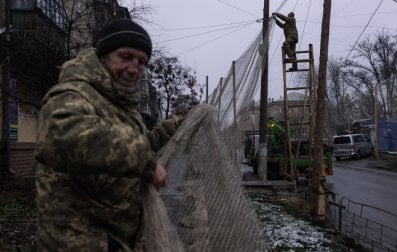
Russia intensifies strikes on Ukraine’s energy system
Great power rivalry
Ukraine: Russian strikes on Ukraine’s power grid left millions of people without heating in subzero temperatures this week, as the United States held separate talks with Russian and Ukrainian officials in Davos, Switzerland.
On Tuesday, Russia fired 339 drones and 34 missiles across Ukraine, according to Ukrainian officials. The strikes killed at least four people and left about half of the capital, Kyiv, which has three million residents, without power as temperatures reached minus 14 degrees. In Chernihiv, a northern region bordering Russia, 87 per cent of the population had no power.
Russia’s strikes on Ukraine’s energy infrastructure this winter have been the heaviest since its invasion in 2022.
Authorities in Kyiv have dimmed streetlights and closed schools until February to preserve energy. Olena Kozachenko, a 36-year-old in Kyiv, told The New York Times she supported the closures, saying her seven-year-old son had been wearing thermal underwear to school as the classroom temperatures were about 12 degrees.
Moscow said it only targeted facilities that supported Ukraine’s military.
The attacks came as US envoys met separately with Ukrainian and Russian officials on the sidelines of the World Economic Forum in the Swiss resort town of Davos. Officials from the three countries said the talks had been constructive, but it was not clear whether any new agreements had been reached.
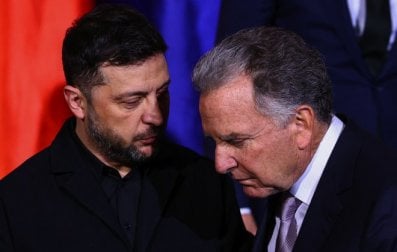
Ukrainian President Volodymyr Zelensky told reporters this week he wanted Washington to do more to pressure Russia. He initially cancelled plans to travel to Davos due to the energy crisis, but was expected to attend on Thursday after securing a meeting with US President Donald Trump.
The neighbourhood
New Caledonia: French President Emmanuel Macron and a group of New Caledonian political leaders signed a new political and economic deal this week aimed at working towards including the territory as a state within France.
The deal was signed in Paris by the leaders of five of the country’s pro-independence and anti-independence groups. But the main pro-independence coalition, the FLNKS, boycotted the talks, saying it wants full sovereignty. The FLNKS later offered to join the talks remotely, but the proposal was rejected.
The new deal, signed in Paris on Monday after four days of talks, was based on a draft plan agreed to in 2025 that proposed statehood and additional autonomy for the territory. That plan was also rejected by the FLNKS.
Macron this week praised the political leaders who reached the new deal for their “responsibility” and willingness to compromise. The deal included plans to boost the taxation powers of local provinces and to train personnel to establish local military, diplomatic corps, judiciary and law enforcement agencies.
Nic Maclellan, a journalist and researcher in the Pacific islands, told The Saturday Paper France was “once again forging ahead without a consensus of all groups, including the FLNKS”.
“The unilateral actions by the French state in 2024 triggered six months of violent conflict, but now they are acting again as if the FLNKS doesn’t matter,” he said.
France’s effort to finalise new arrangements for the territory follows months of violence in 2024 that left 15 people dead. The unrest was sparked by a French plan to expand voting rights to French citizens who had lived there for at least 10 years – a move that would weaken the voting strength of the indigenous Kanaks.
The new deal, which still needs the approval of the French parliament and a referendum vote in New Caledonia, would be followed by provincial elections later this year. The elections were due to take place in May 2024 but have been repeatedly postponed.
War zone
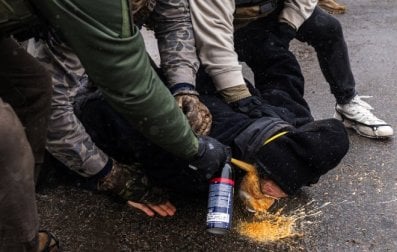
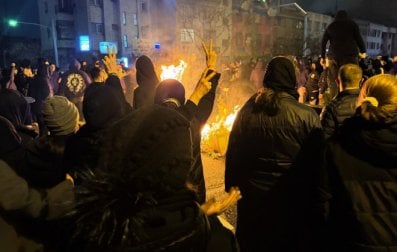
Iran: Ayatollah Ali Khamenei, Iran’s supreme leader, has acknowledged that thousands of “seditionists” were killed during a crackdown on protests that left as many as 10,000 people dead.
Authorities in Iran appeared to have reasserted control this week despite hackers briefly disrupting state television last weekend to air footage supporting the exiled crown prince Reza Pahlavi and calling on the security forces to put down their weapons. Internet shutdowns and unofficial curfews remained in place this week and a reformist newspaper was banned.
The Human Rights Activists News Agency, which is based in the US and is viewed as reliable, said on Wednesday the protests since late December had resulted in 4902 confirmed deaths and another 9387 deaths that were being investigated, as well as 26,541 arrests. Locals in Iran say 10,000 people died, though some medical staff believe up to 18,000 people died.
Khamenei said in a speech late last week thousands had been killed – “some in an inhuman, savage manner” – and blamed the protests on the US and Israel. He said Donald Trump was a “criminal” for supporting the protesters.
“By God’s grace, the Iranian nation must break the back of the seditionists just as it broke the back of the sedition,” Khamenei said.
Trump initially threatened military intervention last week but then held back, claiming Iran had halted plans to execute more than 800 prisoners. He later said it was time for Khamenei’s 37-year rule to end.
Iran’s leaders said on Monday they would impose harsh punishments on “rioters”, as state media aired confessions of people whose faces had been blurred.
Gholam-Hossein Mohseni-Ejei, the head of the judiciary, said on X: “Our main work at the judiciary about the recent developments has just started.”
Trump was reportedly still considering military action this week and has deployed an aircraft carrier and jet fighters to the region.
Asked about a potential attack, he told reporters on Tuesday: “We’re just going to have to see what happens.”
Spotlight: China’s shrinking population
China’s birth rate has hit a record low despite a series of incentives for having children, including cash handouts to parents, refunds of IVF costs, free kindergarten and replacing the one-child policy with a three-child limit.
Official data this week showed the population plunged by 3.4 million last year to 1.4 billion as the birth rate fell to 5.6 per 1000 people – the lowest since Communist Party (CCP) rule began in 1949. The fertility rate – about one child per woman – is among the lowest in the world.
China’s shrinking population has fuelled concerns about its economy, particularly the need to boost consumer demand – a challenge that could become harder as the population ages.
Data this week showed China’s gross domestic product increased by 5 per cent last year, in line with the CCP’s target. The growth was due to surging exports, but retail sales remained flat and the property downturn worsened.
Sarah Tan, from Moody’s Analytics, told the Financial Times: “Growth has become increasingly lopsided, propped up by exports while households hang back amid fragile domestic demand.”
China’s low fertility rate has been credited to young people’s concerns about their ability to provide for their family as they face high property prices and sagging wages.
The government’s latest measure to promote fertility was to impose sales taxes on condoms and birth control pills and devices. Prices increased by about 13 per cent on January 1.
But the price hike on these items, which are relatively cheap, is expected to do little to assuage Chinese concerns about the affordability of having children.
Daniel Luo, a 36-year-old who lives in the eastern province of Henan, told BBC News he had one child and did not plan to have more.
“It’s like when subway fares increase,” he said. “When they go up by a yuan or two, people who take the subway don’t change their habits. You still have to take the subway, right?”
This article was first published in the print edition of The Saturday Paper on January 23, 2026 as "Russia intensifies strikes on Ukraine’s energy system".
For almost a decade, The Saturday Paper has published Australia’s leading writers and thinkers. We have pursued stories that are ignored elsewhere, covering them with sensitivity and depth. We have done this on refugee policy, on government integrity, on robo-debt, on aged care, on climate change, on the pandemic.
All our journalism is fiercely independent. It relies on the support of readers. By subscribing to The Saturday Paper, you are ensuring that we can continue to produce essential, issue-defining coverage, to dig out stories that take time, to doggedly hold to account politicians and the political class.
There are very few titles that have the freedom and the space to produce journalism like this. In a country with a concentration of media ownership unlike anything else in the world, it is vitally important. Your subscription helps make it possible.
Subscriber exclusive
Send this article to a friend for free.
Share this subscriber exclusive article with a friend or family member using share credits.