News
The collapse of the Coalition is as much about the political compatibility of the Liberals and Nationals as it is an attack on Sussan Ley’s leadership. By Karen Barlow.
‘This is a disaster for us’: Inside the Coalition’s split
In the end, it was an ultimatum: if Sussan Ley caused any Nationals to resign for breaching shadow cabinet solidarity, all of them would go. The only possible outcome after that was the collapse of the Coalition.
The result is as much about the political compatibility of the Liberals and Nationals as it is about trying to blast Ley out of the leadership.
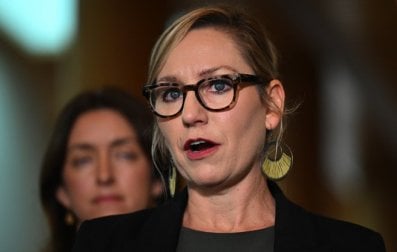
“Sussan has become a problem,” Nationals MP Llew O’Brien tells The Saturday Paper. “She dislikes the Nationals. She always has. There’s always been a dislike for the Nationals.
“I just cannot see how we can have a Coalition with Sussan as the leader. I just cannot see it. And the alternative then is… I just can’t see it. Look, this is a disaster. This is, truly is, a disaster for us.”
There’s a long history between Ley and the Nationals. In 2001, she entered parliament in the seat of Farrer, beating the Nationals as a Liberal candidate. Some say she was never forgiven for this and the Nats’ anger returned when she was made Liberal leader last year. O’Brien denies it is a factor.
“I really hoped Sussan would succeed,” he said, “but it’s become very apparent she isn’t succeeding and after this week I firmly believe she won’t.”
The issue came to a head late on Tuesday night, when three Nationals shadow ministers, Bridget McKenzie, Ross Cadell and Susan McDonald, voted against the Liberals in the Senate on the government’s hate speech bill in defiance of the opposition leader’s authority.
By Wednesday, the three senators had resigned from shadow cabinet. Within the space of a day, it was a full walkout, including Nationals leader David Littleproud.
By Thursday, Littleproud had announced the formal split of the Coalition. A few hours earlier, he had a phone call with Ley where he yelled at her and told her that if she wanted to fix the problem, she should resign. Liberal sources described the call as “unhinged”.
In the call, Ley asked Littleproud not to make a political point on the National Day of Mourning for victims of the Bondi massacre. He and a long line of Nationals members ignored the request.
“I think it’s time for the Liberal Party to work out who they are and what they are. We know who we are,” Littleproud told reporters in Brisbane soon after the call.
He said the Nationals were acting in solidarity over the “entirely preventable” resignations. He said he asked Ley to show leniency to the three frontbenchers who breached shadow cabinet solidarity, but Ley had them resign. Liberals insist Ley had no other choice.
“The reality is we’re at a juncture where no one in our ministry could work in a Sussan Ley ministry, and my party room made that clear,” Littleproud said. “That’s why the Coalition was made untenable, because of this decision to sack our three.”
In a later statement, he accused Ley of “protecting her own leadership ahead of maintaining the Coalition” and described her handling of the hate bill as “regrettable”.
A Liberal MP puts a different perspective: “You just can’t operate like this. His problem is he lied to shadow cabinet … David has not acted with integrity in respect of his relationship with shadow cabinet.”
Talk of a leadership challenge to Ley is circulating, with right-wing figures Andrew Hastie and Angus Taylor the leading candidates. If it were to happen soon, it would be pure opportunism, according to a key Ley supporter.
“His leadership’s in the gun,” the MP says, referring to Littleproud. “Hers is probably gone against the backdrop that they were going to challenge anyway after the state election in South Australia. If people are taking her leadership out, it’s because it’s opportunistic, rather than a unique set of circumstances. She may well be martyred for defending a core principle of the Liberal Party, which is ironic.
“Barnaby is putting his hand into this wound as well. It’s a mess. We can’t dress it up for you.”
The breakdown came over support for hate speech laws that ban groups such as extremist Islamist organisation Hizb ut-Tahrir and the neo-Nazi group the National Socialist Network that promote racial hatred. They also give the immigration minister more power to cancel visas.
Shadow cabinet had agreed on Sunday night to support the hate speech laws “in principle”, after the prime minister split the omnibus bill and cleaved off the gun reforms to get separate support from the Greens. The decision by Nationals senators to vote against the bill came as a shock.
A Liberal source says the Nationals only circulated their amendments to the bill an hour before they were to be voted on.
Ley insists she wanted to stay in the Coalition, but others feel differently.
“I’m quite comfortable with the idea of the Coalition not continuing at the moment, because I just think their objectives and our objectives are kind of too diverse and divergent, and I think, at the moment, we’re both hurting each other politically and I think we could do better apart,” a moderate Liberal MP tells The Saturday Paper.
“I’m a bit surprised it happened over this. This is not an issue core to the Nationals constituency.”
The Liberals and Nationals differ on what was actually in the final version of the bill, but Ley had negotiated additional safeguards with Anthony Albanese on Monday night.
This was after the prime minister dropped the most contentious element – an anti-vilification measure that many on the right saw as impinging on free speech – in a bid to get opposition support.
“Then there were other modifications through the bill that were changes that we then had issues with,” Bridget McKenzie told Sky News. “That was a hard line for our room, and that is why we voted against this.”
The Coalition and the Greens complained about the rush to pass the bill, even describing it as a “sham process”. Opposition members also point to the laws not going through usual processes, such as Senate committees and the party rooms.
On Thursday, after the phone call between the two leaders, Littleproud accused Ley of failing to properly negotiate the bill.
“This process wasn’t all Sussan Ley’s fault … but it has been mismanaged by Sussan Ley,” Littleproud said.
Some Liberals have seen that statement as a threat and demand – an intervention in the Liberal leadership that the Nationals are not in a position to make.
The backdrop to this is rising poll figures for One Nation. Insiders say the Nationals in particular are spooked by the support for the far-right party.
“There’s two things here,” another Liberal tells The Saturday Paper. “It is Littleproud’s leadership being undermined, so he flipped to save his leadership; but the rest of them panicked because of One Nation.”
A Nationals source says Littleproud’s leadership is more secure due to Barnaby Joyce’s defection to One Nation.
Littleproud says he is “more than comfortable” with his leadership and has told everyone to “take a chill pill” over One Nation. He says he is “really comfortable about the Nationals’ position” and “we would wipe the floor” with any other party.
Still, Llew O’Brien says One Nation is a factor. “I think that’s probably more the motivation to take a harder line and vote against legislation like this bill that went through more than ‘We want to get rid of Sussan.’ ”
By this logic, the Nationals could not be seen to support Labor legislation, even after the Liberals had negotiated changes.
Shadow arts and education minister Julian Leeser said the support was about standing with the Jewish community, while prominent backbencher Andrew Hastie said it was important that the Liberals stopped Labor from working with the Greens, as that would have produced a “far worse bill”.
Hastie says he is experiencing “nastiness” from online commentators, but he would vote for the bill again. “Purity,” he posted, “is for keyboard warriors and paid influencers.”
The role and influence of Nationals backbencher Matt Canavan in the Nationals party room has also been highlighted.
Liberal critics say Canavan “whipped up a frenzy and created uncertainty and doubt”, causing Littleproud to backtrack on what shadow cabinet had agreed to regarding the hate speech laws.
Canavan’s view is that the definition of hate speech was too broad and the laws could be used to target political and religious groups. It is not far from the Greens’ concerns about laws being used to crack down on political protesters.
“We just came to different views,” the Queensland senator told reporters on Wednesday. “And that’s not unusual on an issue like this, which goes to the heart of political freedoms in this country, and the balance of respecting those while trying to keep people safe.”
The split had started to become evident on the floor of the house. O’Brien and fellow Nationals LNP member Colin Boyce voted against the bill. They were joined by five crossbenchers, including former Nationals leader and One Nation recruit Barnaby Joyce.
Liberals say they were unsure what the Nationals were doing until they did it. Lower house Nationals frontbenchers abstained from the vote, an act still against the agreement of shadow cabinet.
In the Senate, McKenzie, Cadell and McDonald moved with Canavan to split from the Liberals and vote against the bill. Right-wing Liberal Alex Antic also voted against his party.
“It’s about us having a principled decision on a piece of legislation that we made in the national interest,” McKenzie later told reporters. “We did the right thing by our party room and by the people that have sent us here when we sat where we did. And we also did the right thing by tendering our resignations.”
The ramifications were immediately felt.
“The Nats staff were crying. Staff members were crying because they knew that they’d probably lose their jobs the next day,” a Liberal MP says.
“So don’t think they weren’t thinking about this either early in the morning and the day before. Why wasn’t that properly articulated to Sussan?”
Breaching shadow cabinet solidarity is a sackable offence and was used to remove Jacinta Nampijinpa Price from shadow cabinet in September after she refused to endorse Ley as leader.
“Shadow cabinet solidarity is not optional,” Ley said in a statement on Wednesday night. “It is the foundation of serious opposition and credible government.”
Price later said she was planning to vote against the hate speech bill, and her fellow Liberals, but the backbencher explained there was “an issue with the system upon which we rely” and she didn’t vote.
Ley and the Liberals insist they worked with what they had to make the laws better, accusing the government of “badly mishandling” the hate speech legislation and insisting the opposition is “not a doormat for government”.
“The Liberal Party will always strongly defend freedom of thought, freedom of worship and freedom of speech,” the opposition leader said.
Keeping the Coalition together has been a challenge since it immediately split and later reunited in the wake of the May 3 election loss.
Ley’s leadership has also been undermined by forces within the Liberals, but internally she is generally regarded as having had a good month placing pressure on the prime minister and forcing him to back down over the legislation and the call for the royal commission into anti-Semitism.
As well as the criticism of Ley’s leadership, there is also intense criticism of Littleproud.
“I like him as a person, but I think he’s behaved dishonourably through this. He’s now trying to sort of rewrite history about what happened at shadow cabinet on Sunday night,” the moderate Liberal says.
“For him to be in high dudgeon now, it’s just about him trying to salvage his leadership.”
Albanese’s standing has taken a hit in various opinion polls over the past month, but the Coalition has absorbed a far bigger hit as support moves to Pauline Hanson.
“A lot of Liberals have got the frustration, we actually kept our show together,” another unnamed Right-faction Liberal says. “And full credit to them, people like Andrew Hastie and Garth Hamilton and others, who had raised concerns about this bill. They took one for the team.
“It shows a maturity in Andrew’s thinking, in that he’s going to lose some skin with his online supporters, and he already has. Just go to his Facebook page to see it, but he did that as a team player and to show discipline.”
Hastie taunted the government in social media posts, boasting that the Coalition forced the prime minister to back down over the hate bill and said that the opposition had “gutted it like a fish” during negotiations.
“We made them blink,” Hastie said.
That’s not quite what happened, according to Albanese.
The government agreed to Coalition amendments to tighten the bill’s scope and address the freedom of speech concerns, but the prime minister said the Liberal negotiations were framed by an internal problem that saw them try to weaken the bill.
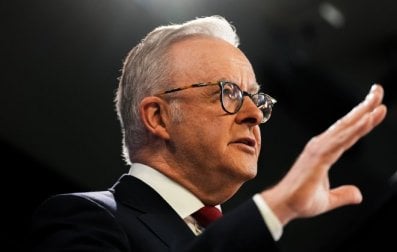
“The hypocrisy, Mr Speaker,” he said. “Call for the parliament to be resumed, they said it was too soon. Call for vilification laws in the Segal report. Called for all these measures to go forward, including on security and guns, and then voted against it. What we have done is work with the community in a collaborative way to get things done through this parliament in spite of, not because of, those opposite.”
Indeed, Albanese had a full month of intense criticism from the Coalition, some Jewish groups and large parts of the media, including the Murdoch press and the Nine newspapers, over his response to the Bondi massacre, particularly his arguing against holding a federal royal commission.
It took the prime minister more than 25 days to agree to hold a royal commission, but he says now his government was acting in an orderly way and addressing risk as it presented itself.
“The thing is the PM has so much cover for what he has and has not done because the opposition is so terrible,” one Labor MP notes.
Without a majority in the Senate, the prime minister says the legislative action is less than he wanted.
“Not as strong as we would have liked in tackling anti-Semitism … but what we could get through,” Albanese told parliament on Tuesday.
The Greens, concerned about the right to protest and free speech, were never in the frame to support Labor’s hate bill and describe the laws as “divisive”, “chilling” and “very scary”.
They supported Labor’s gun control reform, rejected by the then Coalition, including a national buyback scheme.
This week’s special parliamentary sitting saw a poignant line of condolence motions for the victims and families of the 15 people who were killed at Bondi.
Leeser, a Jewish MP, said he was crushed by the “loss of the truth that Australia is good to Jewish people”. Labor cabinet minister Jason Clare broke down as he described the recollections of a Bondi survivor. Former attorney-general Mark Dreyfus talked of the killings as a “wound felt across the nation”.
Pauline Hanson and the independent member for Kennedy, Bob Katter, have increased their criticism of Australia’s immigration policies, with Katter calling for an end to immigration from North Africa and the Middle East.
Hanson made a similar call on Monday. “It is about the people that we brought into the country,” she said. “They’re not people compatible and suitable for this country.”
Andrew Hastie, leaning into his populist presence, said militant Islam was a “cancer that needed to be cut from our communities before it kills more of us”.
According to the independent member for Wentworth, the seat that takes in Bondi, the political reaction to the attack has been disappointing.
“I don’t think anyone’s covered themselves in glory in the last month. I think it has been a really hard time,” Allegra Spender tells The Saturday Paper.
“I don’t think the prime minister has been strong, nor has the opposition leader. There have been significant problems, I’d say, with both, but I’m trying to not focus on the politics of this, because I think it is too important. We can fight on politics, on many other things, but this is something else.”
Spender, who failed in an attempt to expand protections in the new laws to cover LGBTQIA+ people as well as disability and religious groups, is worried about where the migration debate leads.
“There is a great danger in a time of fear and terrorism that we start to turn against ourselves because of fear,” she says. “As a child of a migrant, I have a deep fear of some of the conversations happening, or saying this is all about migrants. I have a deep fear for the Muslim community, where people go, ‘Well’, and I have heard this, ‘Well, this is just about Muslims.’
“That’s one of the reasons I supported the royal commission, because we actually need to get underneath what was the driver here. This is about deep, radical anti-Semitism … Extreme and so-violent extremism. This is not about all migrants and all Muslims. We’ve got to keep our eye on what is the enemy here.”
This article was first published in the print edition of The Saturday Paper on January 24, 2026 as "‘This is a disaster for us’: Inside the Coalition’s split".
For almost a decade, The Saturday Paper has published Australia’s leading writers and thinkers. We have pursued stories that are ignored elsewhere, covering them with sensitivity and depth. We have done this on refugee policy, on government integrity, on robo-debt, on aged care, on climate change, on the pandemic.
All our journalism is fiercely independent. It relies on the support of readers. By subscribing to The Saturday Paper, you are ensuring that we can continue to produce essential, issue-defining coverage, to dig out stories that take time, to doggedly hold to account politicians and the political class.
There are very few titles that have the freedom and the space to produce journalism like this. In a country with a concentration of media ownership unlike anything else in the world, it is vitally important. Your subscription helps make it possible.
Subscriber exclusive
Send this article to a friend for free.
Share this subscriber exclusive article with a friend or family member using share credits.