News
Murray Watt’s latest approval for Korea Zinc includes a table that explicitly permits the company to kill thousands of native animals a year, including critically endangered species such as the swift parrot. By Bob Brown.
Murray Watt’s licence to kill endangered species in Tasmania
It is illegal for Australians to kill birds or animals facing extinction. The Environment Protection and Biodiversity Conservation (EPBC) Act prescribes penalties of up to seven years in jail for such a crime.
If you are Korea Zinc, however, you can relax. You are already one of the largest zinc, lead and silver producers in the world, and no such law will prevent your growth.
Late last year, on Christmas Eve, Anthony Albanese’s minister for the environment, Murray Watt, quietly gave the go-ahead for Korea Zinc’s wind farm at St Patricks Plains on Tasmania’s Central Plateau.
The approval grants permission to Korea Zinc to kill a certain number of threatened and endangered species every year. It is extraordinarily blunt about this. The species are listed in a table, and alongside each animal is the number that can be killed without consequence.
Watt’s approval refers to this bloodlessly as the “annual impact trigger threshold”. Should it be reached, it does not mean the project will be halted. The approval instead allows the company three months to produce an “Impact Trigger Avoidance Review” that the minister can sign off to continue the operation. In other words, he’ll think about it. Nothing needs to be paused in the meantime. The killing can go on.
Start with the critically endangered swift parrot, the population of which is collapsing due to the Commonwealth allowing its nesting sites in Tasmania to be logged. This anodised-green little rocket, once seen in flocks of thousands, is thought to number just 300 and is predicted to be down to 70 by 2030. Dozens of Tasmanian environmentalists have been fined or jailed for defending the parrots’ nesting forests from logging, yet Watt has authorised Korea Zinc to kill one a year.
This approval is not short term. It has been listed out until September 30, 2090. In all, the company can kill 64 swift parrots without any changes to its operation.
As well as the swift parrot, Korea Zinc can kill 45 vulnerable-to-extinction blue-winged parrots a year. It is also allowed to kill one Tasmanian azure kingfisher and two masked owls annually.
Earlier Tasmanian government proposals to require payments of $100,000 for each endangered species killed by rotors have been quietly abandoned.
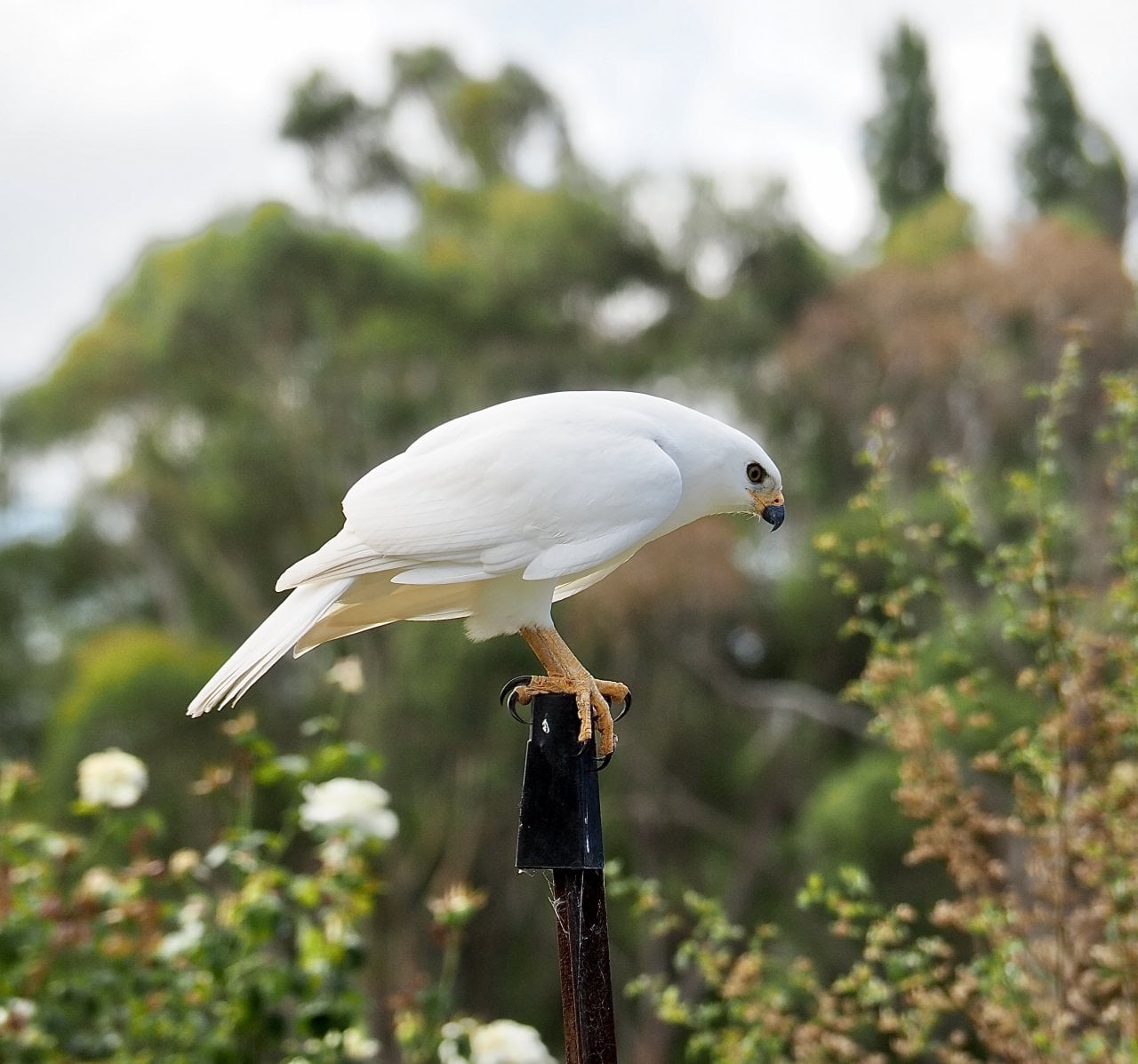
Watt’s grim table permits Korea Zinc to kill one grey goshawk each year, one Australasian bittern and one eastern curlew.
There are 40 endangered Tasmanian wedge-tailed eagles known to use the site. Eighteen nests have been identified. Watt will allow Korea Zinc to kill four of these mighty birds a year. That is 256 endangered birds across the life of the approval.
Ordinarily, companies can be fined up to $16.5 million for the killing of threatened or endangered species. As noted above, individuals can be sent to prison for seven years. Korea Zinc will face no such consequence.
Some birds found only in Tasmania, but not yet listed as facing extinction, will get even harsher treatment on St Patricks Plains. The strong-billed honeyeater is the nearest thing the island has to a woodpecker. Its black head has a white crescent and a white throat. Bushwalkers can be startled by this noisy eater, which forages by ripping apart bark in search for insects, sending shards flying in all directions. Korea Zinc’s wind farm on the St Patricks Plains will be allowed to kill 1350 a year, or four a day.
Tasmania’s endemic dusky robin fares better: Korea Zinc may only kill 360 robins a year – one a day or 23,000 this century.
The fastest bird for horizontal flight on Earth, the white-throated needletail swift, which migrates each year from East and Central Asia to Australia, including Tasmania, is listed. Watt’s department says this speedster is vulnerable to extinction because of a 30 to 50 per cent decline in its numbers over recent decades.
Nevertheless, Korea Zinc has the minister’s blessing to kill more. Watt has ticked off on its St Patricks Plains project killing up to 120 needletails a year.
Rather than avoiding significant impacts, the minister has been swayed by industry misinformation about the success of an avian collision avoidance system, IdentiFlight, as a primary measure to protect animals.
Evidence from the nearby Cattle Hill Wind Farm, which uses IdentiFlight, shows that 55 different bird species have been killed since the system became operational in August 2020. The recorded bird deaths include several EPBC listed species: nine Tasmanian wedge-tailed eagles, 21 blue-winged parrots and 10 white-throated needletails. The actual number killed is not accurately known because of the compromised dead bird survey method used. Additional wind farms planned in the vicinity, at Cellars Hill and Bashan, will further accelerate the path to extinction for protected species.
All eight species of Tasmania’s bats are protected and occur in the highlands. Harming them can be punished with a year in prison. Watt’s licence will allow Korea Zinc to kill between 40 and 180 of each species a year, up to a combined total of 760 bats with no jail for KZ.
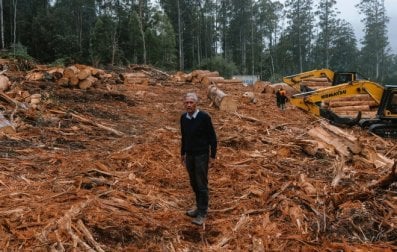
Also excused will be the environmental carnage as KZ’s machinery is brought in to make way for the 47 turbines on St Patricks Plains, with their associated roads, concrete, substations and transmission lines. Watt approved vegetation clearing that will allow rare Tasmanian species to be deprived of their local homelands, including Tasmanian devils and spotted-tailed and eastern quolls.
Up to 481.13 hectares of denning habitat – that is, the dens where the marsupials sleep and raise their young – can be bulldozed under the approval. It is an area much larger than the Sydney central business district.
The same approval allows for the clearing of 46.89 hectares of nesting habitat for the Tasmanian masked owl and 41.3 hectares of nesting habitat for Tasmanian wedge-tailed eagles.
The rare ptunarra brown butterfly has critical habitat in the middle of the wind farm’s footprint and will be affected by the noise if not the spinning rotors. The approval allows 229.41 hectares of its habitat to be cleared, which just happens to coincide with the area of habitat Korea Zinc wants to clear. There will be monitoring and, if the butterfly population crashes by 20 per cent, that may trigger offsets at Watt’s discretion.
Offsets are a corporate scam dreamt up to cheat the public into thinking that, when an endangered species is having its habitat destroyed, new habitat elsewhere can be bought for that species to go to or be transferred to and live happily ever after. You don’t need to have passed kindergarten to understand that nature sorted out which species could live where long before we started destroying it. If there is suitable habitat elsewhere for, say, the ptunarra brown butterfly, or those Tasmanian devils, they are already there. If they are not there, it is not suitable. The use of offsets confirms Watt is reducing the population, not increasing it.
Korea Zinc’s wind farm is reliant on the $5 billion Marinus cable across Bass Strait, to be funded by taxpayers. Its contracts with agreeable private landowners remain secret. It will destroy a number of the endemic and rare Liawenee greenhood orchids, but how many KZ cannot say. Watt’s okayed that, too.
The government’s approval of the needless destruction of biodiversity in the Tasmanian highlands, to suit the profit motives of megacorporation Korea Zinc, puts to rest notions that Labor’s amended Environment Protection and Biodiversity Conservation Act is much more than a recipe for Albanese-authorised destruction.
The Tasmanian highlands’ No Turbine Action Group, set up by highland shack owners opposed to the project, has analysed Watt’s approval and shown that Korea Zinc will be permitted to kill 2062 threatened birds a year up until 2090. Among them are four species listed as facing extinction.
The action group never got to see Watt about its EPBC concerns. Through the Tasmanian planning process, it did get some limits placed on the noise of the turbines impacting nearby properties. Their concerns received no coverage in the Tasmanian media.
The Albanese government claims it “remains committed to protecting Australia’s unique and diverse plants and animals”.
It says this is why “we fought so hard to introduce a national Environment Protection Agency and reform the EPBC Act at the end of last year”. Under those reforms, Labor says, “projects will need to demonstrate a net gain for nature to receive approval, providing stronger protections for threatened species and their habitats”.
Up on the high St Patricks Plains, the reality of these reforms is sadly obvious: not protection but an explicit licence to kill threatened and endangered species.
This article was first published in the print edition of The Saturday Paper on January 24, 2026 as "Licence to kill".
For almost a decade, The Saturday Paper has published Australia’s leading writers and thinkers. We have pursued stories that are ignored elsewhere, covering them with sensitivity and depth. We have done this on refugee policy, on government integrity, on robo-debt, on aged care, on climate change, on the pandemic.
All our journalism is fiercely independent. It relies on the support of readers. By subscribing to The Saturday Paper, you are ensuring that we can continue to produce essential, issue-defining coverage, to dig out stories that take time, to doggedly hold to account politicians and the political class.
There are very few titles that have the freedom and the space to produce journalism like this. In a country with a concentration of media ownership unlike anything else in the world, it is vitally important. Your subscription helps make it possible.
Subscriber exclusive
Send this article to a friend for free.
Share this subscriber exclusive article with a friend or family member using share credits.