News
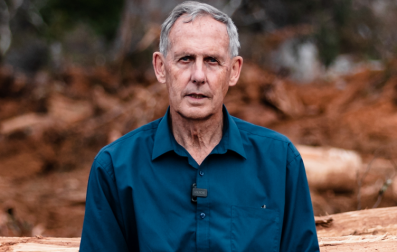
ANALYSIS: Murray Watt’s environmental reforms will do little to protect the environment and a lot to benefit big business. By Bob Brown.
Watt reforms leave door wide open to environmental carnage
The carnage of nature will continue in Australia. Nothing much has changed.
The brief media frenzy about Anthony Albanese’s amendments to John Howard’s Environment Protection and Biodiversity Conservation (EPBC) Act 1999 was more about Labor getting the bill through parliament than whether it will stop nature being destroyed.
The press gallery’s monocular view of politics had the Greens as winners and the Coalition as losers, with pitifully little analysis of how the new laws will slow the downward spiral of the nation’s environmental health and wellbeing.
Before, during and after his deal with the Greens, Albanese repeated the absurdity that the bill would both protect the environment and help exploiters to fast-track wrecking it. “Australia doesn’t have to choose between a cleaner environment and a stronger economy,” he said at his victory media conference, “because we are delivering both.”
The Greens, faced with improving or blocking Labor’s bill, were savvy to the reality that if debate was delayed until next year, the corporate sector would harangue the Labor government over summer to get an even worse outcome via the Coalition.
Part of Albanese’s delivery is the handing of federal powers to state governments. The corporate powerbrokers want this because it’s much easier to bury environmental outrage within the states. They long for a return to the bad old days before 1970, when there was no environment minister or law in Canberra.
In 1972, Gough Whitlam gave Moss Cass the “pisspot” job as Labor’s first minister for the environment and Cass took it seriously. He set up the Department of the Environment and, after a flying visit to meet campaigners for Tasmania’s needlessly doomed Lake Pedder, brought in the Environment Protection (Impact of Proposals) Act 1974 to ensure the Commonwealth was never again powerless in such a controversy. A key requirement of that law was that developers with projects threatening nature had to show there was no “prudent or feasible” alternative.
Whitlam Labor also signed the World Heritage Convention, obliging Australia to protect qualifying sites. These innovations saw federal intervention to save Tasmania’s Franklin River, Queensland’s Wet Tropics rainforests and Coronation Hill in the Northern Territory’s Kakadu.
Ditching such requirements, Howard’s EPBC Act looked fine for many environmentalists at the time but was laced with weasel words. The minister “may” rather than “must” protect nature. Howard relegated World Heritage nominations to the states.
The 2025 reform of the EPBC Act will hand more Commonwealth responsibility to the states and is riddled with more opt-outs for the minister. The corporate exploiters got a lot of what they wanted.
On the eve of the bill passing the Senate, a Wilderness Society poll in Tasmania showed a meagre 12 per cent of voters support native forest logging. However, willingly duchessed by the loggers, Albanese rebuffed the Greens’ determined effort to end native forest logging. Instead, he agreed to a requirement for loggers to abide by the same laws as other industries but not for the next three years. When push came to shove, the Greens had that delay halved to 18 months. Nevertheless, logging and incineration of native forests and wildlife will continue, subject to ministerial judgements and dependent on forest defenders taking high-risk legal action based on the new, sieve-like legislation.
Albanese refused point blank to make any goodwill gesture to actually save natural heritage such as Takayna, Australia’s largest temperate rainforest. Instead, the logging industry’s destruction of the habitats of rare and endangered species, such as black cockatoos, swift parrots and greater gliders, will continue unabated until 2027 and then according to standards to be negotiated with the industry.
As if acknowledging that the Greens had made a real advance in the future protection of native forests, Albanese will hand the logging industry another $300 million in compensation.
A more immediate Greens gain was to end the exemption from environmental law that allowed the massive clearance of woodlands in recent years, especially in Queensland. Albanese’s bill had provided for clearing of regrowth woodlands less than 50 years old with no federal assessment. The Greens amended the 50 years to 15 years, in recognition of the fact such woodlands have re-establishing ecosystems, often including rare native birds and animals, such as koalas and greater gliders.
The prime minister’s hand-picked “fixer” in all of this was the minister for the environment, Queenslander Murray Watt. He had served as minister for agriculture during Albanese’s first term, when thousands of hectares of woodlands were cut down in Queensland to facilitate the beef barons.
Attention on the ongoing damage to Australia’s environment will be diverted as Watt proclaims the setting up of a national environment protection authority. The authority promises to be little more than a carve-out of the Department of Climate Change, Energy, the Environment and Water’s current section tasked with assessing projects and implementing the law but with much less time for those tasks.
A lot depends on a set of as yet unreleased standards that will be put to parliament next year – and here’s where Labor is at its corporate conniving worst. Watt’s priority after the bill passed the parliament was to go south to consult with Tasmania’s job-poor native forest logging industry. Meeting 30 loggers at a Victorian-owned mill near Launceston, the environment minister’s perfidious goal was to reassure the native forest fellers and burners that their industry would continue, that there was more compensation coming, and that he would be consulting them in drawing up the new “standards”.
Watt has made it clear he has no time to meet or consult with the Bob Brown Foundation, a leader in the campaign to save the forests and their wildlife, including threatened species such as the Tasmanian masked owl, swift parrot, giant freshwater crayfish and Tasmanian devil.
Highlighting Albanese’s contempt for environmentalists and the 80 per cent of Labor voters who want native forest logging stopped, Watt has not met with any other environmental group or forest defender in Tasmania. Standing in stark contrast with Cass’s priority visit to the Pedder campaigners, and Graham Richardson’s close liaison with environmentalists in the 1980s, this set a new low in Labor’s environmental history.
It is tempting to go further into the interstices of the new legislation, item by item, but that would miss the point. The Albanese–Watt outcome will not stop the rapid degradation of our nation’s wealth of nature. The most poignant pointer to this is Albanese’s insistence that his minister for the environment gets no say on the single biggest threat to the environment: the greenhouse gas emissions causing climate change. This prime ministerial dictate is to satisfy corporate polluters and to ensure his “stronger economy” will rule over his “cleaner environment”.
As the scores of arrests at Newcastle, the world’s biggest coal port, showed last weekend, popular unrest at the spectre of global heating is growing while Albanese licenses more coalmines, gas fracking and forest burning.
Australia is a poorly performing part of an interlinked global ecosystem in which fossil- and forest-fuelled heating threatens everything, not least the economy. Albanese’s laws won’t pave the way to a “stronger economy” precisely because the new laws are puny and grossly inadequate to the job of tackling climate change. On current trajectories, global warming, which is already costing the Australian economy billions of dollars a year, will cost us $7 trillion between now and 2050.
Last January, the United Kingdom’s Institute and Faculty of Actuaries and the University of Exeter issued their assessment of environmental and economic health in a paper called “Planetary Solvency – finding our balance with nature”. The opening sentences are startling and direct: “The risk of Planetary Insolvency looms unless we act decisively. Without immediate policy action to change course, catastrophic impacts are eminently plausible, which could threaten future prosperity.”
Not at the extreme end of possibilities is their prediction of a world facing catastrophic results if it heats 2 degrees by 2050. That heating now seems certain.
Noting the high risk of crossing tipping points, such as the melting of polar ice caps and inversion of Amazonian forest carbon uptake, these experts predict a possible 25 per cent collapse of global productivity and two billion people dead due to climate change impacts by 2050. That’s 25 years from now.
For Labor, however, climate change is not a horrifying threat to our children but an economic impediment to be managed at the pleasure of the big end of town, not least the fossil fuel and woodchip corporations.
Intent and authenticity are important. As this legislation was evolving, Watt approved Woodside Energy’s massive gas exports from Western Australia to continue until 2070. He is also looking to license gas extraction from the giant Browse Basin, which sits beneath Scott Reef, Australia’s largest standalone coral reef atoll, in the Indian Ocean. Labor has approved or has under consideration 40 new coalmine projects.
The National Biodiversity Strategy and Action Plan envisions that “Australia will halt and reverse biodiversity loss by 2030, putting nature on a path to recovery, meaning that by 2050 we will be living in harmony with nature.”
That was the Canberra dream. Albanese and Watt are delivering more of an environmental nightmare.
This article was first published in the print edition of The Saturday Paper on December 6, 2025 as "An Act of contempt".
For almost a decade, The Saturday Paper has published Australia’s leading writers and thinkers. We have pursued stories that are ignored elsewhere, covering them with sensitivity and depth. We have done this on refugee policy, on government integrity, on robo-debt, on aged care, on climate change, on the pandemic.
All our journalism is fiercely independent. It relies on the support of readers. By subscribing to The Saturday Paper, you are ensuring that we can continue to produce essential, issue-defining coverage, to dig out stories that take time, to doggedly hold to account politicians and the political class.
There are very few titles that have the freedom and the space to produce journalism like this. In a country with a concentration of media ownership unlike anything else in the world, it is vitally important. Your subscription helps make it possible.
Subscriber exclusive
Send this article to a friend for free.
Share this subscriber exclusive article with a friend or family member using share credits.