World
Hundreds die in Indonesian flooding. Hong Kong arrests over high-rise fire criticism. Hegseth denies boat strike. By Jonathan Pearlman.
Ukraine war ‘neither further nor closer’ to resolution: Kremlin
Great power rivalry
Ukraine: Vladimir Putin this week warned Europe he was “ready” for war ahead of a meeting with Donald Trump’s envoy Steve Witkoff and son-in-law Jared Kushner, which lasted five hours but appeared to make little progress towards a peace plan for Ukraine.
Following the meeting in Moscow on Tuesday night, Yuri Ushakov, Putin’s foreign policy adviser, told reporters the talks were constructive but the two sides were “neither further nor closer to resolving the crisis in Ukraine”.
“There is still a lot of work to be done,” he said.
The United States had presented the Russian president with proposals based on an initial 28-point plan that heavily favoured Moscow but was later amended to take in Ukrainian and European concerns.
Russia is seeking a deal that would involve it acquiring the entire Donbas region, including territory still held by Ukraine, as well as requiring that Ukraine not join the North Atlantic Treaty Organization and have the size of its military capped. Ukraine has supported a ceasefire deal that freezes the current frontlines as part of further talks.
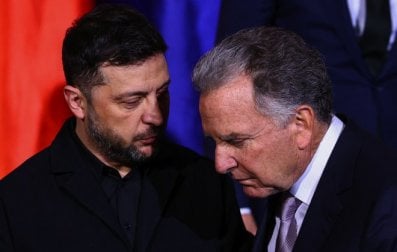
Ukrainian President Volodymyr Zelensky said on Tuesday a final deal must include security guarantees such as NATO membership. “We have to stop the war in such a manner that in one year Russia would not come back,” he said.
Ahead of the talks with the US envoys, Putin spoke at an investment forum in Moscow and blamed Europe for obstructing a deal, saying “they are on the side of war”.
“Russia does not intend to fight Europe, but if Europe starts, we are ready right now,” he said.
European countries have been looking to boost their militaries amid fears of a potential war with Russia.
Germany’s foreign office said in a statement last week that its intelligence showed Russia was preparing to be ready to attack NATO by 2029. “We have to deter further Russian aggression,” it said.
Russia has been making steady territorial gains in eastern Ukraine, though Ukrainian officials say Moscow has exaggerated its success to improve its negotiating position.
The Kremlin said on Monday it had captured the city of Pokrovsk, a strategically important logistics hub that has been under siege for almost two years. Ukraine said it was still fighting and that Russian “propagandists” planted a flag in the city before fleeing.
The neighbourhood
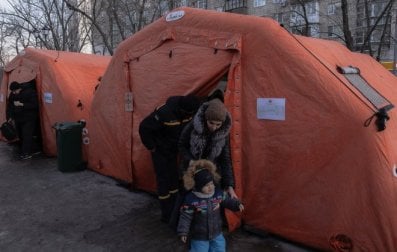
Indonesia: Flooding in Indonesia has left at least 700 people dead and prompted the evacuation of more than one million people, while more than 700 people were killed in Thailand, Malaysia and Sri Lanka.
The floods across the region were caused by separate weather events, including seasonal monsoons and a cyclone over the Malacca Strait that led to severe rains and landslides in Indonesia.
Prabowo Subianto, Indonesia’s president, visited North Sumatra on Monday, telling reporters “the worst has passed, hopefully”.
The floods in Indonesia have affected 3.2 million people and left 2600 injured. As of Wednesday, 712 people were reported dead and more than 500 missing.
In Padang Panjang, a city in West Sumatra, a resident, Mariana, told BBC News she was watching excavators clear debris and hoped they would find missing family members, including her 15-year-old son.
“I keep thinking, what condition will my child be in when they find him?” she said. “Will he still be intact? My mother, my brother-in-law … Looking at how it is here, maybe their faces won’t even be recognisable anymore.”
In Sri Lanka, where at least 410 people were killed and 336 were missing, the government declared a state of emergency and appealed for international support.
“We are facing the largest and most challenging natural disaster in our history,” Sri Lankan President Anura Kumara Dissanayake said in a national address. “Certainly, we will build a better nation than what existed before.”
Democracy in retreat
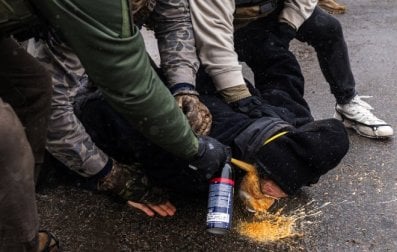
Hong Kong: Police in Hong Kong have arrested three people for criticising the government response to a fire in a high-rise apartment complex that killed more than 150 people.
As rescuers searched for 40 people still missing from last week’s blaze, public anger grew over safety violations by the construction company whose scaffolding caught alight as well as over the failure by authorities to enforce building standards at the site. Residents had reportedly complained about the renovations at the seven-tower complex for more than a year.
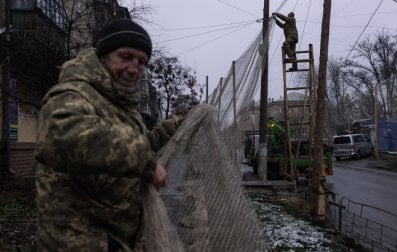
On Monday, Hong Kong’s Independent Commission Against Corruption said the construction business used cheap, substandard netting on the scaffolding but installed approved netting at the base, where samples are typically taken. The approved netting cost HK$100 per roll, compared with $54 for the unsafe netting.
On Wednesday, authorities banned the use of nets on scaffolding as the death toll from the fires rose to 159.
Twenty-one people have been arrested, including the directors of the company and six people linked to fire alarms that malfunctioned.
“They just wanted to make money at the expense of people’s lives,” Hong Kong’s chief secretary, Eric Chan, told reporters.
The government has launched a crackdown on public criticism of its handling of the disaster and has made several arrests.
Chris Tang, the secretary for security, told reporters authorities had responded to “inaccurate comments online” that threatened national security.
Miles Kwan, a 24-year-old student, was arrested last weekend for sedition over an online petition that made “four demands”, including support for victims and accountability for those at fault. Kenneth Cheung, a former district councillor, was also arrested.
Before his arrest, Kwan told reporters: “If these ideas are deemed seditious or ‘crossing the line’, then I feel I can’t predict the consequences of anything anymore, and I can only do what I truly believe.”
Spotlight: Hegseth denies boat strike
United States: Pete Hegseth, the US defence secretary, is under growing pressure over his role in an attack on a suspected drug smuggling boat in which an initial strike left two survivors, who were killed in a second strike.
During the operation on September 2, which marked the first in a series of US attacks on suspected traffickers in the Caribbean, Hegseth gave an order to “kill everybody”, according to a report in The Washington Post. The initial strike reportedly killed nine people and left two survivors who were seen clinging to the burning wreck. The commander of the operation then ordered a second strike that killed the survivors – an act that legal experts said was a war crime.
Hegseth told reporters on Tuesday the commander “made the correct decision”, saying the two survivors were not visible due to smoke. He said he watched the first strike but then left to attend a meeting and learnt of the second strike an hour or two later.
“It was the right call,” he said.
Donald Trump said he had not been briefed on the attack but “wouldn’t have wanted” a second strike. He told reporters on Tuesday: “Pete is doing a good job.”
The Senate and House of Representatives have launched separate inquiries into the attack.
Roger Wicker, a Republican who chairs the Senate Armed Services Committee, told reporters: “We’re going to find out what the true facts are.”
The US has destroyed more than 20 boats in the Caribbean and Pacific, killing at least 83 people. Several of the boats are believed to have been carrying fishers.
Trump said this week he would “start doing strikes on land, too”.
This article was first published in the print edition of The Saturday Paper on December 5, 2025 as "Ukraine war ‘neither further nor closer’ to resolution: Kremlin".
For almost a decade, The Saturday Paper has published Australia’s leading writers and thinkers. We have pursued stories that are ignored elsewhere, covering them with sensitivity and depth. We have done this on refugee policy, on government integrity, on robo-debt, on aged care, on climate change, on the pandemic.
All our journalism is fiercely independent. It relies on the support of readers. By subscribing to The Saturday Paper, you are ensuring that we can continue to produce essential, issue-defining coverage, to dig out stories that take time, to doggedly hold to account politicians and the political class.
There are very few titles that have the freedom and the space to produce journalism like this. In a country with a concentration of media ownership unlike anything else in the world, it is vitally important. Your subscription helps make it possible.
Subscriber exclusive
Send this article to a friend for free.
Share this subscriber exclusive article with a friend or family member using share credits.