Comment
Stan Grant
Understanding what separates Russia from the West
I make it a rule to try to look beyond orthodoxy, to eschew certainty. In my experience, certainty is for fascists and fools. Even that which I hold dear and true, such as my faith, I enrich with doubt and struggle.
I believe a questioning, open mind nourishes a beautiful soul. Yet I concede there are times when I find myself troubled by arguments or points of view that are undeniably convincing but that I do not wish to hold. I can find myself aligned with those whom I might otherwise view dimly.
This week is a case in point. I listened to a long interview with the Russian philosopher Aleksandr Dugin. Dugin is a Russian nationalist, a traditionalist of Orthodox faith, steeped in Slavic culture and history. He rejects hallmarks of Western liberalism, such as pluralism, tolerance, universalism and Protestantism.
He associates the rise of the West with the triumph of secularism, scientism and rationality. He traces it from the 16th century fracture of Christianity, the birth of contemporary democracy, and the preference for freedom over tradition.
He also associates this West with Russophobia. Dugin says Russia was excluded from the idea of the West, which is ordered by time and not space. The West is entirely new; it is a product of modernity, synonymous with a reinvention of time.
Space that holds tradition, roots and faith becomes hollowed out in favour of a rootless, restless progress.
The source of the modern West, says Dugin, is not Anglo-Saxon but French. It is French ideas of futurity and liberty that are the cornerstones of modernity, subsequently exported by British sea power.
Physics trumps theology. God loses his grip on time, which is brought to earth as history.
The German writer Aleida Assmann has written about this rupture of time. She says that as “the time of physics was being cleansed of all human values, experiences and cultural meanings, a concept of historical time … began to emerge”.
Not for nothing was the clock reset during the French Revolution. Historian Reinhart Koselleck nominates 1770, the eve of the Revolution, as ground zero for this new historical time.
Simply, the West is entropic. Russia is ordered.
Dugin’s assessment is inevitably simplistic. Debates continue to rage in the West about exactly what constitutes modernity. Yet Dugin is not wrong.
Russia does not sit comfortably in the West. Russia is a civilisational state, not a modern nation-state. So are India, China, Iran and Türkiye. Civilisational states have long memories and are born of dark, cold winters. Nation-states make a virtue of forgetting. There is always a sunnier tomorrow.
Yet although Dugin is not wrong, that does not make him right. His Russian Orthodox nationalism leads to Vladimir Putin and the holy war in Ukraine. It leads to the battle for the Russkiy Mir, the Russian world.
Indeed, Dugin has been called “Putin’s brain”. He certainly sees Putin as a defender of the faith. We cannot understand the war in Ukraine without seeking to understand what troubles the Russian soul.
Dugin leans far too heavily into certainty for my comfort. However, there is one comment he made that I find undeniably compelling: the world is a fight between modernity and eternity.
This is the fault line that imperils democracy. Entropy is by its nature disordered. A world built on tomorrow eventually runs out of time.
Throughout the West, there is a battle raging between tradition and progress. It is upending politics as we know it.
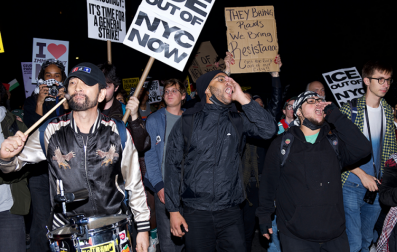
Thus far it has delivered Brexit, the rise of the ultra-nationalist right across Europe, Trump and MAGA, and Modi’s Hindutva. It is being felt in Australia with anti-immigration rallies, the resurgence of One Nation and the Coalition’s haphazard search for identity.
The West was always a project of reinventing the human, represented in the birth of America. No more would we be ordered by faith, kin and culture. We could be whatever we imagined. Citizenship became amorphous and transactional.
As the American revolutionary and writer Thomas Paine said, America was an opportunity to “begin the world anew”.
The American and later French revolutions set fire to the world. They are the bedrock of modernity. Yet universalism is straining everywhere, rejected by those who feel usurped or abandoned: those made redundant by technology, impoverished by market-first neoliberalism, left spiritually if not actually homeless by the unprecedented movement of people.
The popular refrain is “I have lost my country”. These people are angry at cosmopolitan elites and prey to calculating populists promising little more than catharsis, a chance to scream at the system.
Dugin says elite disdain for peasantry is a feature of modernity. The peasantry – the “real people” – don’t want power but rather dignity. Modernity does not offer dignity, he says, but rights. There is a difference. Political rights are what we can quantify and legislate; dignity is a birthright. Rights are necessary when dignity has been assailed.
A few years ago, the British writer David Goodhart pithily summed up the contemporary political schism as “Somewheres” versus “Anywheres”. Broadly, he meant the “elites” of the cities against the “peasants” of the regions.
This schism is increasingly complex and acute today, cutting across convenient categories. It is more than geography, economy, education or history. It is about the soul. It is not about modernity; it is about eternity.
In every modern Western democracy, there is a symbolic outpost of civilisational Russia with its own petty Putin. I don’t say this entirely as a criticism. It is a response to a world that leaves us untethered. It is heartfelt. I admit at times to sharing similar impulses.
Modernity by its very nature is unsatisfying. Tomorrow never arrives. Democracy’s compromise and perpetual negotiation leaves the powerless and the ignored feeling cheated and angry.
I recognise those impulses, but I don’t like them. I don’t like them in me and I don’t like them in others. I know where they lead and it is not good.
Yet liberal modernity is out of answers. Whatever answer it comes up with, it cannot be simply more or better liberalism.
Liberalism is a train to nowhere. It works while everyone buys a ticket but today more and more people – raised in the liberal modern West – won’t pay the price.
Of course, liberalism has delivered many valuable things – freedom of expression, recognition of rights, emancipation – but it is burdened by the weight of claims.
This is a dangerous time. As the saying goes, something is dying and something is yet to be born.
Immigration cuts to the heart of this crisis. Angry people blame other people. Elites who dismiss concern about immigration as racist will lose the argument.
Of course, racism is a factor, but this is existential. It goes well beyond racial difference; it is about what constitutes the human at a time when the very future of the human is perilous. It is about culture, tradition, belonging, history and identity. It is about deciding who we are and who we are not.
It is irrational and emotional. Western liberal modernity has no answer. Again, Dugin is right: it is eternity against modernity.
There is a burgeoning post-liberalism that values dignity, faith, community, culture. It recognises the soul-destroying aspects of the modern project. It seeks to correct the idea that humans are expendable or merely widgets and wallets – an extension of the factory and the shopping mall.
The more astute proponents seek a rapprochement with modernity, but there is yet to emerge a practical, governing principle.
So, the stand-off continues. Indeed, it worsens.
There are rays of light. This week, I was involved in a discussion at Charles Sturt University about the challenges of immigration and social cohesion, with some insightful minds from law, social policy and faith. It was a warm, cordial conversation that did not shy away from the sharper edges.
Among the participants was a lawyer who runs a successful immigration law firm. He was raised in Wagga Wagga, in regional New South Wales.
He grew up on cricket and swimming in the river. He was educated in Wagga and the city. His company has international offices. He chooses to live still in Wagga Wagga and raises his family there.
He has roots, he has tradition, he has faith, he has community.
As well as his law business, he owns a takeaway chicken shop. He says it means he gets to see and talk to and feed the people with whom he shares space.
This is his eternity, a place to call home, so rare in this homeless modernity.
Farhan Rehman is his name. A Pakistani Muslim from an immigrant family. Farhan is as Aussie as a barbecue chook and a yarn.
It might not be enough to build a nation let alone a civilisation, but it sure sounds like a place to start.
This article was first published in the print edition of The Saturday Paper on December 6, 2025 as "Listening to Putin’s brain".
For almost a decade, The Saturday Paper has published Australia’s leading writers and thinkers. We have pursued stories that are ignored elsewhere, covering them with sensitivity and depth. We have done this on refugee policy, on government integrity, on robo-debt, on aged care, on climate change, on the pandemic.
All our journalism is fiercely independent. It relies on the support of readers. By subscribing to The Saturday Paper, you are ensuring that we can continue to produce essential, issue-defining coverage, to dig out stories that take time, to doggedly hold to account politicians and the political class.
There are very few titles that have the freedom and the space to produce journalism like this. In a country with a concentration of media ownership unlike anything else in the world, it is vitally important. Your subscription helps make it possible.
Subscriber exclusive
Send this article to a friend for free.
Share this subscriber exclusive article with a friend or family member using share credits.