recipe
Îles flottantes (Floating islands)
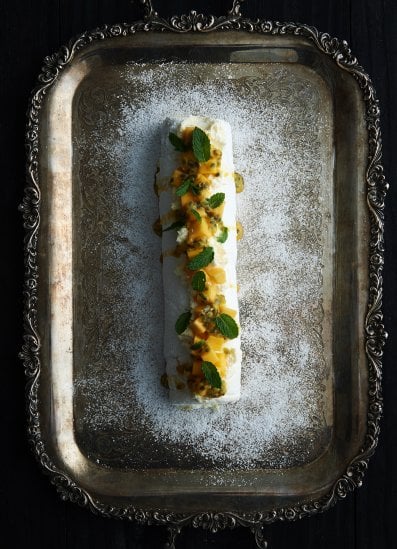
Îles flottantes, or floating islands, are deceptively simple to make. Sure, the preparation of any kind of meringue takes some patience, or at least practice. Here, it is the time-honoured and reliable flavour combination of vanilla, almond and caramel that is comforting, and the real feature is the dish’s luxurious texture.
A classic French dessert in its heyday, îles flottantes were often served from a large soup tureen sitting in pole position on the dessert trolley. This impressive centrepiece was paraded through the restaurant and a little island scooped up by the waiter as the trolley rolled past – a grand finale.
In short, the “islands” are individual cold soufflés that by themselves are not outrageously special. They have, however, the most decadent texture. This is a dessert that is truly the sum of its parts. It works just as well at home as on any restaurant trolley. Unlike baked soufflés that must be served hot and have only a one- to two-minute window before imploding, îles flottantes have a wonderful shelf life. The custard can be knocked up the day before and the soufflés a few hours before you wish to serve dessert. They go straight from the fridge onto the custard “moat” before being smothered in hot caramel at the last minute.
At first glance it seems a somewhat perplexing technique to poach a meringue, but believe me it does work and is easy to do. If you don’t believe me, alternatively the meringues can be prepared by gently steaming them in small soufflé dishes for about eight minutes or until they firm up. Take it slowly, though. If steamed too hot, they will rise and collapse in a hot mess. •
Time: 10 minutes (+ 15 minutes for the crème anglaise) + 10 minutes cooking per batch
Serves 6 (one island each)
- 6 egg whites
- 200g caster sugar
- 800ml crème anglaise (recipe below), chilled
- 150g sugar (for the caramel)
- 100g toasted flaked almonds
- Bring a stainless-steel frypan of water to the simmer.
- In a mixer whisk the egg whites until they start to build volume. Gradually add the sugar and continue beating slowly for a minute.
- Using two big kitchen spoons carefully shape large quenelles (oval balls) before gently sliding each meringue onto the water (it is best to cook in several batches so you do not overcrowd the pan). Simmer gently for three to four minutes. After four minutes the “islands” should be slightly firm. Use a slotted spoon to turn over each meringue and poach the other side for another three to four minutes. Once ready, carefully lift the meringue “islands” from the water with a slotted spoon and place them on a tray lined with greaseproof paper to cool.
- To serve, float the islands on top of the cold crème anglaise in a serving bowl large enough to snugly fit them all.
- To make the caramel, place the sugar in a heavy-based stainless-steel pan over medium heat. Add three tablespoons of water and melt the sugar, continuing to cook to a caramel colour. Now quickly and carefully drizzle the caramel over each meringue island.
- Leave the caramel to cool for 10 minutes before sprinkling the toasted flaked almonds over the top.
Crème anglaise
Can be made a day ahead and refrigerated.
- 1 vanilla bean, split lengthwise
- 6 egg yolks
- 150g caster sugar
- 500ml milk
- Scrape the seeds from the vanilla bean and add both the seeds and the pod to a small saucepan along with the milk. Bring to a simmer, then remove from the heat and leave the vanilla to infuse for 10 minutes.
- Meanwhile, whisk the egg yolks and the sugar for three minutes in a medium-sized bowl, until the mixture whitens and the sugar has dissolved. Add the warm milk to the egg yolks. Pour the mixture back into the saucepan. Heat slowly, stirring constantly with a wooden spoon. Do not allow the mixture to boil. As the custard cooks it will thicken. It is ready when the liquid coats the back of the spoon. Remove the saucepan from the heat and immediately pour the custard into a separate container to arrest the cooking. Leave the vanilla bean in the custard to continue to infuse flavour. Before using the custard, strain it through a fine sieve.
- Handy hack: If the sauce gets too hot and curdles and separates, pour it into a blender jug and blend it at high speed for a bit. This may save it.
This article was first published in the print edition of The Saturday Paper on December 6, 2025 as "Go with the float".
For almost a decade, The Saturday Paper has published Australia’s leading writers and thinkers. We have pursued stories that are ignored elsewhere, covering them with sensitivity and depth. We have done this on refugee policy, on government integrity, on robo-debt, on aged care, on climate change, on the pandemic.
All our journalism is fiercely independent. It relies on the support of readers. By subscribing to The Saturday Paper, you are ensuring that we can continue to produce essential, issue-defining coverage, to dig out stories that take time, to doggedly hold to account politicians and the political class.
There are very few titles that have the freedom and the space to produce journalism like this. In a country with a concentration of media ownership unlike anything else in the world, it is vitally important. Your subscription helps make it possible.
Subscriber exclusive
Send this article to a friend for free.
Share this subscriber exclusive article with a friend or family member using share credits.