World
Tonga’s new PM. Pro-democracy billionaire guilty of sedition. Chilean hardliner wins election. By Jonathan Pearlman.
Zelensky willing to trade NATO ambitions for peace
Great power rivalry
Ukraine: Volodymyr Zelensky, Ukraine’s president, said he was willing to drop a bid to join the North Atlantic Treaty Organization – meeting a key demand of Russia – in return for Western security guarantees as part of a deal to end the war.
As Donald Trump declared an agreement was “closer now than we have been ever”, Zelensky signalled he could abandon the NATO bid after United States officials offered guarantees equivalent to NATO’s assurances that an attack on one member is treated as an attack on all. The guarantees reportedly involve European troops operating in western Ukraine and the US providing intelligence support, although Moscow this week insisted it will not allow troops from NATO members to be deployed in Ukraine.
In a further apparent concession, Zelensky said he would accept the establishment of a demilitarised zone in the eastern Donbas region. Russia has demanded it be given control of the entire region, while Ukraine has ruled out making any territorial concessions.
Zelensky told reporters on Tuesday that he was willing to accept a proposal from Washington for a free economic zone in the Donbas as long as this “does not mean under the leadership of the Russian Federation”.
“They want our Donbas,” he said. “And we do not want to give away our Donbas.”
The offer of a security guarantee followed negotiations in Berlin between US, European and Ukrainian officials – including Zelensky, Trump representatives Steve Witkoff and Jared Kushner, and German Chancellor Friedrich Merz – but has yet to be presented to Moscow.
“The problem,” Trump told reporters this week, “is they’ll [Russia] want to get it ended, and then all of a sudden they won’t, and Ukraine will want to get it ended, and all of a sudden they won’t.”
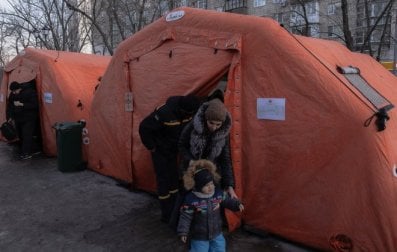
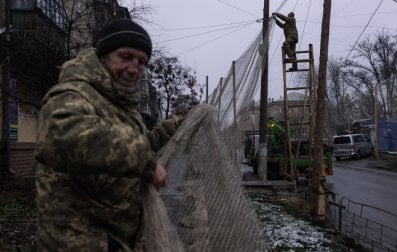
The talks came as Russian drone and missile attacks on energy infrastructure in Ukraine have left the country with faltering electricity and heating amid freezing temperatures. In the east, where fighting is heavy, residents may soon face a total loss of power. A European official told The Washington Post this week: “We are, if not at the brink [of a complete blackout], then very close to it.”
The neighbourhood
Tonga: Lord Fakafānua, a member of Tonga’s royal family, was elected prime minister this week, becoming the second noble to lead the country since it became a democracy in 2010.
Fatafehi Fakafānua defeated the current prime minister, ‘Aisake Eke, by 16 votes to 10 in a secret ballot in parliament following an election in November. The 26 MPs include 17 elected representatives and nine representatives elected by the country’s 33 nobles, including King Tupou VI.
Fakafānua, who is 40 years old, was reportedly backed by the nine noble representatives as well as seven of the elected MPs. He will replace Eke, who became prime minister in January after his predecessor Siaosi Sovaleni resigned amid tensions with the king.
Fakafānua is the youngest leader since 2010, when Tonga, an island nation with 105,000 residents, shifted the balance of power from the nobles and monarchy to elected MPs. The first prime minister under the new system was also a noble.
Fakafānua this week promised to try to achieve unity between the people’s representatives and nobles.
“This continued divisive politics is not only a waste of energy and taxpayers’ money, but it directs us away from the real priorities, and that’s to lift poverty and build the economy and help lower the cost of living,” he told Radio New Zealand.
Democracy in retreat
Hong Kong: Jimmy Lai, a pro-democracy campaigner and former media tycoon in Hong Kong, was found guilty of sedition and colluding with foreign forces in a trial that was viewed as a further step away from freedom and rule of law in the Chinese territory.
The 78-year-old billionaire faces life in prison after the High Court found he had “harboured his resentment and hatred of the PRC [People’s Republic of China] for many of his adult years”. The court noted Lai’s efforts to persuade Washington to support the democracy movement, including an opinion piece he wrote in The New York Times and his appeals to politicians such as former vice-president Mike Pence.
Lai’s popular pro-democracy newspaper, Apple Daily, was raided and eventually forced to close in 2021 following a crackdown by Chinese and Hong Kong leaders on pro-democracy protests that erupted in 2019. Lai was arrested in 2020 and has spent most of the time since then in solitary confinement.
The arrest and trial of Lai has been widely condemned by countries and rights groups around the world.
Elaine Pearson, from Human Rights Watch, described the conviction as “a cruel judicial farce”.
US President Donald Trump told reporters on Monday he had appealed to his Chinese counterpart Xi Jinping to release Lai.
“I feel so badly,” he said. “He’s an older man and he’s not well, so I did put that request out. We’ll see what happens.”
According to Reporters Without Borders, Hong Kong was ranked 140th out of 180 countries in its press freedom index in 2025, compared with a ranking of 73rd in 2019.
Spotlight: Chilean hardliner wins election
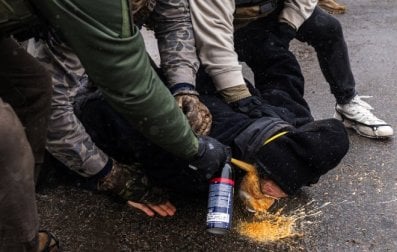
José Antonio Kast, a hardline anti-migrant conservative and admirer of former dictator Augusto Pinochet, has been elected president of Chile as countries across Latin America continue to shift sharply to the right.
Kast, who opposes abortion and same-sex marriage, received 58 per cent of the vote, compared with 42 per cent for left-wing candidate Jeannette Jara.
Addressing supporters after his victory, Kast said: “Here, no individual won, no party won – Chile won and hope won. The hope of living without fear.”
Kast, a former member of congress whose German-born father was a Nazi Party member, has pledged to build a border wall and conduct a mass deportation of Chile’s estimated 336,000 undocumented migrants, blaming them for rising crime levels.
A staunch Catholic, he has denounced multiculturalism and political correctness but toned down his rhetoric during the campaign to focus on migration and crime. He is viewed as the country’s most right-wing leader since democracy was restored after a violent military dictatorship led by Pinochet from 1973 to 1990.
Kast’s election follows a recent political swing away from the left across the region, including in Argentina, Bolivia, Costa Rica, Ecuador, El Salvador and Panama. But some analysts pointed out that the trend may reflect a rejection of incumbents rather than a public shift in political sentiment.
Following the election, Argentina’s right-wing president, Javier Milei, published a map of South America on X showing the top half coloured red and the bottom half blue. “The left is retreating, freedom is advancing,” he wrote.
This article was first published in the print edition of The Saturday Paper on December 19, 2025 as "Zelensky willing to trade NATO ambitions for peace".
For almost a decade, The Saturday Paper has published Australia’s leading writers and thinkers. We have pursued stories that are ignored elsewhere, covering them with sensitivity and depth. We have done this on refugee policy, on government integrity, on robo-debt, on aged care, on climate change, on the pandemic.
All our journalism is fiercely independent. It relies on the support of readers. By subscribing to The Saturday Paper, you are ensuring that we can continue to produce essential, issue-defining coverage, to dig out stories that take time, to doggedly hold to account politicians and the political class.
There are very few titles that have the freedom and the space to produce journalism like this. In a country with a concentration of media ownership unlike anything else in the world, it is vitally important. Your subscription helps make it possible.
Subscriber exclusive
Send this article to a friend for free.
Share this subscriber exclusive article with a friend or family member using share credits.