Television
The Saturday Paper’s television critic looks back at the highlights of 2025. By Sarah Krasnostein.
Best television: The Rehearsal and The Bear’s fourth act
“There are only two or three human stories,” Willa Cather wrote, “and they go on repeating themselves as fiercely as if they had never happened before.” In a crowded field of excellent TV shows, the best of 2025 handled the materials of human tragedy and comedy in unexpected ways, making old things new again.
Adolescence’s quietly horrifying hour-long episodes were filmed in a single continuous shot: a technique that powerfully articulated the long view of male violence. The virtuosity of the acting, scriptwriting and cinematography allowed us to understand 13-year-old Jamie’s (Owen Cooper) murderous rage as a slow train coming. By situating his emotional history in the context of the circumstances that radicalised him, Adolescence reveals how personal woundings interact with gendered norms and social media’s commodification of “hypermasculinity” to produce staggering rates of gender-based violence. Understanding this trajectory diffuses blame – deepening, rather than diminishing, disgust.
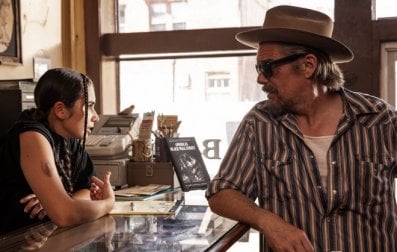
Sterlin Harjo’s neo-noir The Lowdown followed beleaguered Tulsa “truthstorian” Lee Raybon’s (Ethan Hawke) quest to uncover a prominent family’s dirty deeds. Showcasing Harjo’s ability to seamlessly unify tonal extremes – violence and vulnerability, humour and grief, amplitude and intimacy – this rare show explored the subtleties of character and relationship while maintaining fidelity to the attention-grabbing hooks of genre. The effect was a rollicking, richly populated story in which every character, regardless of screentime, was their own fully formed world.
The Bear’s fourth act continued to serve greatness while making every second count. For all its raw interpersonal tension, the most compelling beats were the stomach-churning uncertainties and tiny interior triumphs of personal growth. The episode about Sydney’s (the mighty Ayo Edebiri) non-culinary life was one of the year’s finest, while the ensemble cast continued to find new rooms of possibility within the four walls of the old sandwich shop.
Liz Meriwether and Kim Rosenstock’s Dying for Sex reimagined what we thought we knew about sex and death. After a terminal cancer diagnosis, Molly (Michelle Williams) leaves her husband in search of sexual fulfilment. Supported by best friend Nikki (Jenny Slate), the story is as concerned with true friendship as it is with Molly’s deepening conversation with herself.
The premise of The Rehearsal’s second season was as improbable as the fact it achieved real pathos. In season one, Nathan Fielder exactingly re-created social situations to “help” people prepare for challenging events. In season two, he used this method in the service of aviation safety, seeking to address the rigid hierarchy in the cockpit and its inhibiting – and sometimes lethal – consequences. Suggesting reality TV while evading it at every turn, this show was awkward, absurd and unexpectedly moving in its ever-expanding interrogations of the limitations and possibilities of performance.
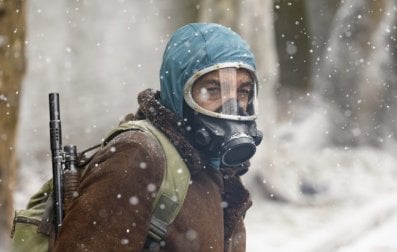
In terms of visually stunning storytelling – post-apocalyptic or otherwise – Vince Gilligan’s sunnily dystopian Plur1bus landed a few weeks before the end of the year and blew everything else out of the water. When Earth’s population is grotesquely assimilated into a “benevolent” hive mind, author Carol Sturka (a phenomenal Rhea Seehorn) finds herself seemingly the last woman standing. Her angry efforts to resist that glad collective in the name of self-determination form the basis of this dazzlingly creepy sci-fi series. A compelling human drama in its own right, Plur1bus deftly functions as an extended metaphor for the rise of both the internet and AI which have, too often, made us far less than the sum of our parts.
In non-scripted television, Matt Wolf’s two-part documentary, Pee-wee as Himself, was a clever, compassionate and complex portrait of the life and work of actor Paul Reubens. It was also an elegant exploration of the tensions inherent in telling true stories about the lives of others.
The most significant shows of 2025 were not only inventively transporting in their representations of Wordsworth’s “mighty world of eye and ear”, they invited interpretations that opened up personal, political and existential implications. In dramatically different ways, each advocated for the powers of the fully realised individual self. Not in the sense of Dickens’s unreformed Scrooge – “as solitary as an oyster” – but in order to best serve our collective life. What better medium than the inescapably collaborative one of television to array before us the endless permutations of that eternal human story?
ARTS DIARY
EXHIBITION r e a: c l a i m e d
Australian Centre for Contemporary Art, Naarm/Melbourne, until March 15
VISUAL ART Attachment Styles: Modes of Belonging in Modern and Contemporary Art
Art Gallery of Western Australia, Whadjuk Noongar Country/Perth, until October 11
MUSIC un:send Festival
Taungurung Country, Victoria, December 30 – January 1
CULTURE 5th National Indigenous Art Triennial: After the Rain
National Gallery of Australia, Ngambri/Canberra, until April 26
MULTIMEDIA Shapeshifting: The Art of Helen Wright
Art Gallery at Royal Park, Stoney Creek Nation/Launceston, until February 1
PHOTOGRAPHY Young | youth in Australian photography
Museum of Australian Photography, Naarm/Melbourne, until February 22
MUSICAL Anastasia
Regent Theatre, Naarm/Melbourne, until February 20
MULTIMEDIA The Art of Celebration: Reflecting 50 Years Plus of Canberra Art Workshop
Belco Arts, Ngambri/Canberra, until February 1
EXHIBITION Bluey's World
Northshore Pavilion, Meanjin/Brisbane, until March 15
This article was first published in the print edition of The Saturday Paper on December 20, 2025 as "The year in reviews".
For almost a decade, The Saturday Paper has published Australia’s leading writers and thinkers. We have pursued stories that are ignored elsewhere, covering them with sensitivity and depth. We have done this on refugee policy, on government integrity, on robo-debt, on aged care, on climate change, on the pandemic.
All our journalism is fiercely independent. It relies on the support of readers. By subscribing to The Saturday Paper, you are ensuring that we can continue to produce essential, issue-defining coverage, to dig out stories that take time, to doggedly hold to account politicians and the political class.
There are very few titles that have the freedom and the space to produce journalism like this. In a country with a concentration of media ownership unlike anything else in the world, it is vitally important. Your subscription helps make it possible.
Subscriber exclusive
Send this article to a friend for free.
Share this subscriber exclusive article with a friend or family member using share credits.