Profile
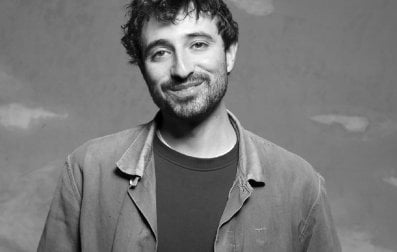
Dubbed the world’s greatest tenor, Jonas Kaufmann has forged his stellar career on a mix of thrilling talent, relentless hard work and extraordinary dramatic ability. By Shamistha de Soysa.
The world’s greatest tenor is his own worst critic
For the opera superstar Jonas Kaufmann, honest feedback can be hard to obtain. “Even my wife is difficult [to trust] because she’s in love with me – at least I hope so,” he laments mischievously.
“I’d have lessons with great-name teachers and they would say ‘Fantastic!’, and I would remind them, ‘I don’t pay you to tell me that I’m good, I pay you to tell me what’s missing.’ I don’t need comforting; I need people to challenge me. If you cannot be true to yourself, you can’t make a long career. You have to be your own worst critic.”
There are many shades to this chameleon, dubbed “the world’s greatest tenor”. His combined social media following nudges half a million. His album of songs from German operetta, Du bist die Welt für mich (You Mean the World to Me), outranked Lady Gaga on the German pop charts. In 2009, GQ magazine named him Man of the Year (classical music) and he’s been featured in Vogue.
Speaking from Salzburg, where he lives, Kaufmann exudes an aura of unbridled energy. His voice is rich and finely modulated, his English near-perfect, hesitant at times, seeking the exact word. He is upbeat, generous with his insights and laughs readily. His wife, opera director Christiane Lutz, is working in Munich and Kaufmann is at home on dad duty in between performances of Tosca in Zurich. His fourth child, aged seven, has just started school.
Over three decades, Kaufmann’s repertoire has grown from music by J. S. Bach and Mozart to Puccini, Verdi and Wagner. He has graced the stages of opera houses, recital halls and recording studios around the world. His portfolio contains more than 70 operatic roles and dozens of recordings, which have earnt high accolades from Gramophone, ECHO Klassik and Diapason d’or.
The timbre of Kaufmann’s voice is certainly distinctive. From a caressing head voice to Wagnerian heft, the range and spectrum of tones from high tenor to near-baritone is unique. His mastery of prolonging the softest of notes with unmatched control while still reaching the bleachers is legendary.
Kaufmann’s pace is unrelenting. He released his latest CD/DVD, Doppelgänger, in September, recorded with his former teacher and collaborator, pianist Helmut Deutsch. It includes two of Schubert’s iconic song cycles, Dichterliebe and Kerner-Lieder, along with a theatrical production of Schwanengesang, directed by Claus Guth and performed at New York’s Park Avenue Armory in 2023.
Endearingly, Doppelgänger includes private, newly released video of Kaufmann performing excerpts from Dichterliebe, recorded in 1994 during his student years. Asked his reaction to seeing and hearing his younger self, Kaufmann guffaws. “The first reaction was big, big laughter because I would not have recognised my voice. It is very difficult to clear your thoughts in a performance of all the stress and pressure. That was the very first time I performed Dichterliebe in front of an audience.
“To be able to focus on the words, the meaning and the emotions, let alone the technique and low register. It surprised me that even back then I had enough brain capacity to concentrate on interpretation. Comparing now and back then, it was more fun than real artistry.”
In Kaufmann’s authorised biography, written by Thomas Voigt, German music critic Jürgen Kesting describes two exceptional moments in “Celeste Aida” on Kaufmann’s Verdi Album. “The pianissimo reprise, which he sings with a single breath, and the top B flat at the end. Kaufmann sings it exactly as Verdi notated it, namely morendo.” This is a fiendishly difficult but impeccably controlled dying of the phrase on a dizzyingly high note.
Kaufmann’s mix of thrilling talent, relentless hard work, extraordinary dramatic ability and artistic integrity is a winner. Add to that his musical acumen, dark good looks and rock-star style and writers are left flailing, resorting to widely quoted clichés such as “The new Adonis” (Stern) and “The handsomest tenor in the world” (Bild).
More pointedly, Voigt quotes Nikolaus Bachler, former director of the Bavarian State Opera in Munich, who extols Kaufmann’s mix of intelligence and intuition. “Jonas Kaufmann is a tremendously multi-layered artist,” says Bachler. “And in my view it is this complexity that makes him unique. I know of no one who could be compared to him on this point.” Sir Antonio Pappano, former music director at London’s Royal Opera, describes Kaufmann in John Bridcut’s 2017 documentary, Tenor for the Ages, as ultimately one where the quality of the voice and the personality behind it stand out: “The thinking man’s tenor.”
Kaufmann’s Australian debut was a heart-racing recital at the Sydney Opera House in 2014. This was no assortment of popular songs and crossover music but a serious collection of operatic repertoire, performed with the then Australian Opera and Ballet Orchestra, which included arias by Puccini, Mascagni and Massenet. It was the night the audience would not go home. Kaufmann rewarded the rapturous standing ovation with three encores.
He next visited Sydney in 2017 and 2019 for sell-out concerts of Parsifal and Andrea Chénier. In 2022 he sang the title role in a fully staged Lohengrin in Melbourne and in 2023 he was back in Sydney for his role debut as Enzo in a concert version of La Gioconda.
Next year was to be his sixth tour, as Radamès in Franco Zeffirelli’s lavish outdoor production of Aida in Adelaide. Planned for February 2026, the tour has been deferred due to logistical problems. He debuted the role at the Bavarian State Opera in his home town of Munich in 2015 and sang it again in Zeffirelli’s outdoor Verona production in 2022. “To do an opera on a big scale in a stadium is something new to me,” Kaufmann says.
“The first big challenge when singing Radamès is the aria, “Celeste Aida”, at the very beginning. It’s a tender and soft overture, you come onstage and almost nothing has happened. You have two sentences with Ramfis the High Priest, and off you go with the aria. I always say you’re booked as a warrior, but the first impression that the audience gets of you is as a tender lover. For an unexperienced audience, it’s quite surprising to see you in armour and suddenly unfold your heart to this beautiful woman.
“It’s vocally very challenging because the orchestration doesn’t help you. The big moments like the confrontation between Amneris and Radamès are hugely demanding because it is very loud and brutal how they fight with each other. Then you go back to super-duper tender, the love duet and the two of them dying together in the tomb. You need to keep your voice in shape for the entire evening.
“What I love about this opera is that you don’t show just one colour of your voice but many. There are roles when you come onstage and sing your guts out for 20 minutes and it’s over. That may be impressive, but I prefer the ones where you show all the different shades and colours a voice can supply.”
Born in Munich in 1969, this lifelong Bayern Munich fan grew up with his parents and older sister in social housing. His father worked for an insurance company while his mother, a kindergarten teacher who was unable to teach as a Protestant in Catholic Bavaria, worked for a building contractor. His parents met after fleeing the German Democratic Republic. The family was immersed in music – Kaufmann recalls being taken to see his first opera, Madama Butterfly, at the Bavarian State Opera, a stage where he would perform dozens of times. Sophisticated fare for a child of only six or seven.
He describes himself as a boy who was easily bored, “a rebellious, cheeky prankster”. Aged 14, he was designated the “worst troublemaker” in the group and sent to another class to break up his clique. He listened to Dire Straits, Genesis, Peter Gabriel and AC/DC. Still nurturing a passion for singing, he enjoyed the school’s choral program.
After answering a newspaper advertisement, the precociously gifted 17-year-old scored a job at Munich’s second opera house, the Staatstheater am Gärtnerplatz, as the youngest member of its extra chorus. This, and work as a VIP chauffeur for BMW, provided him with an income. Singing excerpts from Schubert’s Winterreise for his school leaving exam, Kaufmann abandoned his plans to study maths and physics and won a place in the Hochschule für Musik und Theater in Munich, graduating in 1994.
From regional opera houses in Europe, Kaufmann added cities such as Chicago, Zurich, Milan and Paris to his schedule. His breakthrough came as Alfredo in Verdi’s La traviata at New York’s Metropolitan Opera in 2006. Auditioning in 2000 for the then director of The Met, James Levine, at Munich’s Philharmonie, rehearsals were held elsewhere, and opening night was the tenor’s first time performing on those hallowed boards.
Ominously, he bumped his head on a lamp onstage, generating an audible crack and laughter from the audience, but it had the effect of dissipating his tension, and the audience greeted his bows with a wild standing ovation.
Opera has since changed dramatically. Amplification and high-definition cinematography leave the 21st century opera singer with little room to hide. Does Kaufmann sing differently when he’s miked and on film? His response is a resounding “No!”
“I don’t sing differently. It’s not like a pop singer who knows that a technician will amplify everything to the necessary volume. You sing the way you naturally would sing in an opera house, and the amplification is to bring the sound to the last row.
“I’ve been asked if I change to a big scale in the arena where movement and gesture need to be read from a distance, and the answer is definitely I do not, because what I learnt over the decades is that when you act truthfully, especially when you are so much into the character, all the gestures and all the movement are not what you trained for but are things that happened because of the emotions. Then it reads also from a distance because it is the most natural thing.
“We also listen with our eyes and we concentrate with a focus like a zoom lens and forget everything else. That is how it works in this production. There is the opportunity to create the necessary intimacy.”
Selling opera to future generations is a challenge that Kaufmann acknowledges and addresses in his 2024 appointment as artistic director of the Erl Festival in Austria. “There’s not a general recipe,” he says, “but my festival in Erl has a youngster program starting from toddlers to teenagers to get this first contact going with opera and classical music so they can feel what it is like in an opera house or in a concert hall surrounded by this beautiful live music.”
Kaufmann contemplates the future with equanimity. There’s little left for him to accomplish, although he’d like more roles in English after singing the exacting Peter Grimes, his first English language character, in Vienna in 2022 under conductor Simone Young.
“I will do Fedora in a couple of years, but most of the boxes that there are for tenor I have ticked, so I’m pretty happy with what I’ve achieved. It’s true, Hermann [in Tchaikovsky’s The Queen of Spades] is a role I regret that I have not done, because the lazy Kaufmann didn’t want to learn Russian to play this part, and also memory isn’t getting easier over the years, but this is one of the few that I really would want to do.”
This article was first published in the print edition of The Saturday Paper on December 17, 2025 as "The perfect tenor".
For almost a decade, The Saturday Paper has published Australia’s leading writers and thinkers. We have pursued stories that are ignored elsewhere, covering them with sensitivity and depth. We have done this on refugee policy, on government integrity, on robo-debt, on aged care, on climate change, on the pandemic.
All our journalism is fiercely independent. It relies on the support of readers. By subscribing to The Saturday Paper, you are ensuring that we can continue to produce essential, issue-defining coverage, to dig out stories that take time, to doggedly hold to account politicians and the political class.
There are very few titles that have the freedom and the space to produce journalism like this. In a country with a concentration of media ownership unlike anything else in the world, it is vitally important. Your subscription helps make it possible.
Subscriber exclusive
Send this article to a friend for free.
Share this subscriber exclusive article with a friend or family member using share credits.