Music
Once an incubator for Australia’s indie music scene, Triple J’s Hottest 100 is now little more than a tired listicle. By Shaad D’Souza.
What’s the point of Triple J’s Hottest 100?
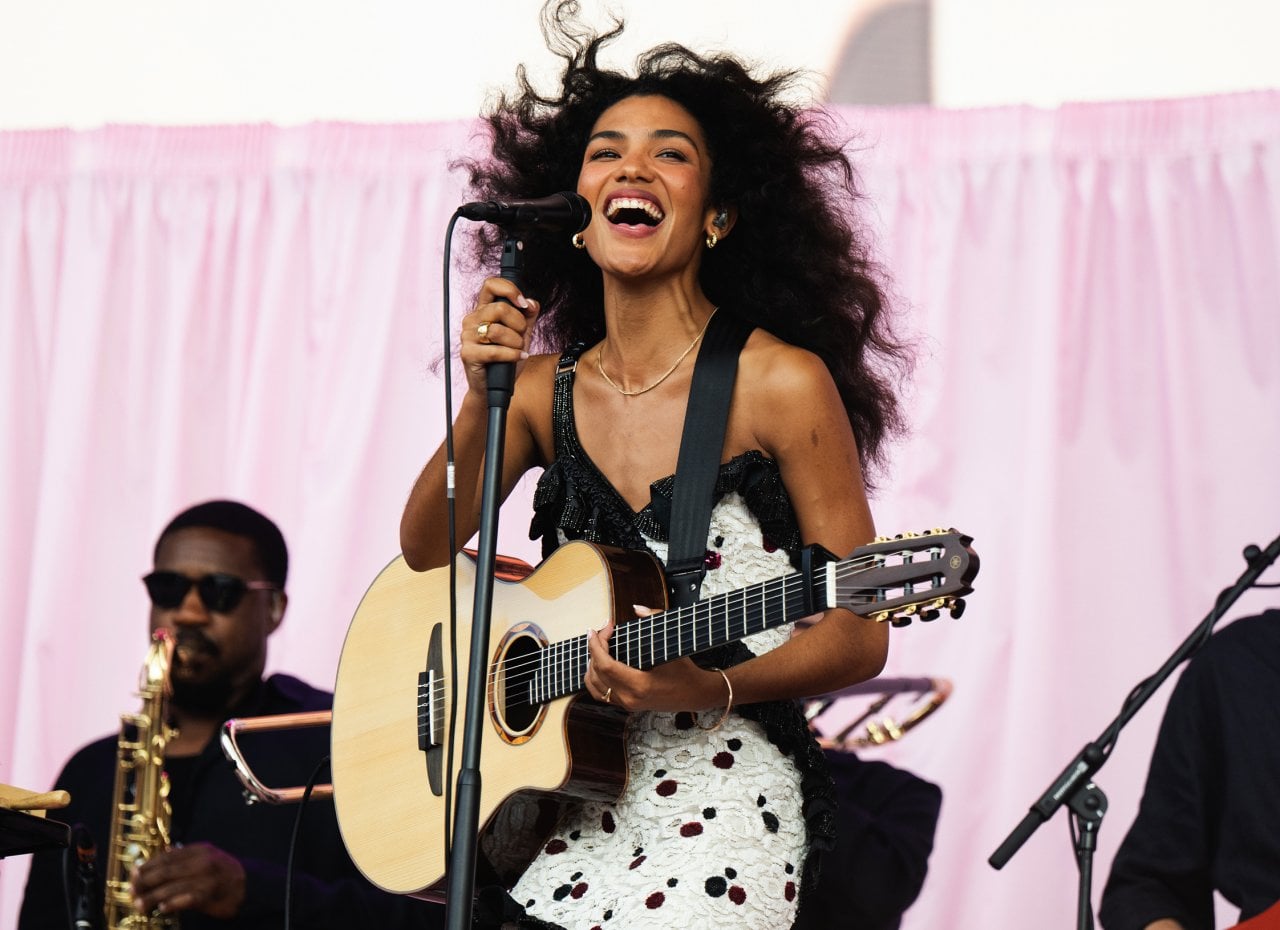
The young British soul singer Olivia Dean’s track “Man I Need” is fantastic – almost everyone thinks so. I know this because I hear it everywhere.
In Melbourne, it seemed to play on every pop station at least once every couple of hours. In London it plays at every mall and near-constantly on BBC Radio 1. I am currently in Durham, North Carolina, and I heard it playing at a Walmart the other day. Someone just showed me a video of a guy in Philadelphia blasting it in his car during a snowstorm. And it was voted best song of 2025 in Triple J’s Hottest 100, the long-running and long-in-the-tooth flagship franchise of Australia’s beleaguered, fighting-for-relevance youth radio station.
There used to be handy industry calculus when it came to the aftermath of a Hottest 100. Generally, anything that placed in the top 10, or even top 20, would surge in popularity and make it straight onto the commercial radio playlists for the following year. This pathway resulted in local bands such as Gang of Youths, Ocean Alley and The Rubens becoming arena-selling household names in Australia. There were always pop hits mixed into the countdown – Silverchair’s “Straight Lines” or Missy Higgins’s “Scar” or La Roux’s “Bulletproof” – but for the most part the Hottest 100 served as a handy litmus test for what defined mainstream indie music in Australia in the previous year and proved that Triple J had remarkable power to nurture artists from fledglings into commercial juggernauts.
Now the Hottest 100 seems a lot like any other listicle or chart that simply tells you the most popular songs in the world. Looking at the countdown’s top 20 is fascinating. It includes four songs by Dean, who was already a major-label chart and streaming success by the time she made her way onto Triple J’s playlist, and three by Sombr, another mainstream success story whose sound, somewhat ironically, bastardises the kind of indie-rock that was Triple J’s bread and butter in the 2010s.
Just under 75 per cent of the songs in the top 20 of this year’s countdown were released on major labels. The independent songs tend to be by artists such as Raye, Keli Holiday and Tinashe, who spent time in the major-label system and leveraged large followings to launch independent careers.
The Australian artists who dominated the countdown – groups such as Spacey Jane, Ocean Alley and Royel Otis – are what you might call “legacy” Hottest 100 artists: Triple J success stories who have maintained a perch at the station. They jostled for space with musicians such as Tate McRae and Reneé Rapp – young pop stars who, perhaps because of their popularity with Gen Z, receive regular play on the station, despite the fact they are avowedly mainstream artists who have little in common with the average musician who might upload their music to Unearthed, Triple J’s platform for unsigned artists.
At 28 I have been too old to care about what happens on Triple J for many years, but because Australian music is still disproportionately oriented around the whims of the station, I am forced to pay at least a little attention. That the Hottest 100 has, for three years in a row now, centred mainstream, major-label artists whose rise had nothing to do with Triple J – and that the station had to enforce a “five songs per artist” rule to avoid a repeat of last year, when Billie Eilish and Charli XCX each placed eight songs – suggests that it has wholly outlasted its usefulness.
As it stands, the Hottest 100 only serves to reinforce the notion that alternative culture is largely dead and that, among Gen Z especially, pop has never been more central to contemporary music. The Hottest 100 becomes a self-fulfilling prophecy: Triple J’s listeners vote that Olivia Dean or Chappell Roan or Doja Cat made the best song of the year, and Triple J begins playlisting and featuring more mainstream, major-label music as soon as it’s released, leading to even more dominance in the Hottest 100.
There is a tangible flow-on effect from this. Although Triple J’s market share has been steadily decreasing over the past decade, it still influences Australian music: the artists played on the station get booked on festival line-ups and play bigger shows. Playing the same artists that are dominant on commercial radio means fans are more likely to save their money to spend on arena shows and less likely to support homegrown musicians.
Triple J’s mandate is to cater to a youth audience. Although the station still maintains a strong presence among under 25s in some markets, its core listenership has aged with the station. It could be argued that the station’s shift towards the mainstream represents a conscious attempt to regain the youth listenership it ostensibly exists for, but if you were an under-25 fan of Dean or Chappell Roan, why would you bother listening to Triple J when everything you want to hear can be found via streaming or on commercial stations that don’t pepper playlists of your favourite major-label artists with songs by Spacey Jane and Ball Park Music? If you’re one of the many Gen Z listeners whose taste largely centres on internet-spawned subgenres such as digicore or zoomergaze, why would you listen to a radio station that only plays the most mainstream Gen Z artists?
That Triple J has struggled to build any real market share among Gen Z by trend-chasing suggests that little would be lost by overhauling the Hottest 100. Why not limit its purview to Australian artists only, or truly independent artists? As it stands, the countdown only shows what little point of view the station has left. It playlists a lot of the same music as Fox and Nova, and is breaking relatively few Australian artists in the way it once did. The year’s big Australian success story, the Central Coast producer Ninajirachi, is more about internet success than Triple J.
The biggest Australian song on this year’s Hottest 100 was “Dancing2” by Keli Holiday, aka Peking Duk’s Adam Hyde, which charted at No. 2 on the countdown. “Dancing2”, ironically, makes a strong argument against Triple J’s continued support for Australian music. The song has been blasted for its supposed similarities to “All My Friends”, a 2007 single by the American band LCD Soundsystem, which has become a Millennial classic over the past two decades. A love song written for Hyde’s girlfriend, the influencer Abbie Chatfield, who heavily promoted the track on social media, “Dancing2” is laughably bad and a neat reminder that, when it wants to, Triple J can still uplift trite local songwriting to mainstream success.
This article was first published in the print edition of The Saturday Paper on January 28, 2026 as "The tepid 100".
For almost a decade, The Saturday Paper has published Australia’s leading writers and thinkers. We have pursued stories that are ignored elsewhere, covering them with sensitivity and depth. We have done this on refugee policy, on government integrity, on robo-debt, on aged care, on climate change, on the pandemic.
All our journalism is fiercely independent. It relies on the support of readers. By subscribing to The Saturday Paper, you are ensuring that we can continue to produce essential, issue-defining coverage, to dig out stories that take time, to doggedly hold to account politicians and the political class.
There are very few titles that have the freedom and the space to produce journalism like this. In a country with a concentration of media ownership unlike anything else in the world, it is vitally important. Your subscription helps make it possible.
Subscriber exclusive
Send this article to a friend for free.
Share this subscriber exclusive article with a friend or family member using share credits.