News
An interest-rate cut seems like a positive start for a government heading into an election campaign – that is not how many voters are responding to the Reserve Bank’s decision.
By Emily Barrett.Will the RBA’s rate cut help Labor?
In 2007, Prime Minister John Howard said he was sorry. It was November and he was facing an election, and the Reserve Bank of Australia had just raised interest rates.
“I would say to the borrowers of Australia who are affected by this change that I am sorry about that,” Howard said, “and I regret the additional burden that will be put upon them as a result.”
It escaped no one’s notice that the then governor of the RBA, Glenn Stevens, had criticised government spending as home mortgage rates headed for 9 per cent.
The apology presented a terrific opportunity for the then Labor opposition leader, Kevin Rudd, and he seized it, reminding voters of Howard’s promise at the previous election that he would keep borrowing costs at record lows.
For Howard’s government, the regret was too little, too late.
Too little, too late might now be Labor’s problem. This week the RBA lowered interest rates by a quarter percentage point, to 4.1 per cent. The move finally eased the cash rate off the 13-year high it had held at since November 2023. It was the first sign of relief for home owners whose repayments have risen sharply over the most aggressive rate-hiking cycle many have experienced. For a $500,000 mortgage – the Australian average is close to $650,000 – the increase over almost three years has been more than $1200 a month.
The RBA’s decision may seem like a good footing from which to launch an election campaign – an announcement is expected any day now for a date before May 17 – and the treasurer highlighted the news minutes after the central bank’s statement on Tuesday.
The rate cut hasn’t warmed voters particularly to Labor, however.
Kos Samaras, a former Labor strategist and now director of polling firm RedBridge Group, isn’t hearing any praise for Labor’s economic plan in response to the decline in inflation and lower interest rates, particularly in Western Sydney and outer suburban Melbourne. “Uniformly across all our groups, the response is ‘No … We’re the ones who actually suffered to bring these rates down.’ ”
Australian households are the most indebted in the world after Switzerland, carrying a collective $1.6 trillion in mortgage debt. They’re also especially vulnerable to interest rate moves because the vast bulk of this debt is variable.
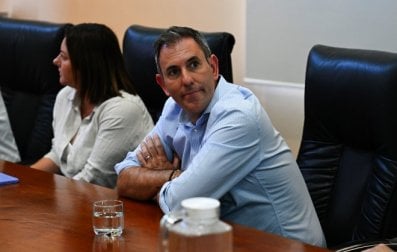
Chalmers cautiously framed the cut as relief “Australians need and deserve”. He conceded it won’t fix household budgets – the $500,000 loan holder will likely save only about $80 a week – but it’s nevertheless “a demonstration of the progress that Australians have made together”.
Samaras notes that the treasurer “understands the nuance” of this political messaging. “Very careful, very humble. No pictures of his family dog or anything.”
Labor needs to claim some credit. Albanese’s polling has deteriorated, with the latest now showing Peter Dutton potentially best placed to form a minority government. This post-pandemic wave of inflation – driven first by supply shortages and then heavy public spending to stave off recessions around the world – has been brutal.
Labor’s term has seen inflation fall from its peak of 7.8 per cent at the end of 2022, back to 2.4 per cent, within the RBA’s 2-3 per cent target range. That’s the blunt force of 13 interest rate hikes, along with much larger global factors such as the post-pandemic repair in supply chains and production and falling commodity prices.
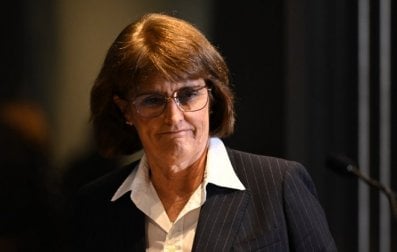
It’s notable that the RBA governor, Michele Bullock, has rejected suggestions the government is spending too much on cost-of-living relief measures. Its expenditure isn’t cited in the latest statement among the things that could push inflation up again.
These are esoteric concerns to Australian voters, many of whom, according to this month’s Essential poll, were unaware of the signature reforms under Albanese’s government, such as the broadened stage-three tax cuts and plans to increase social housing spending.
That may be explained by what social researcher Rebecca Huntley describes as a major shift in people’s framing of economic hardship and what’s driving it. The major parties “either can’t, won’t or haven’t recognised that the cost-of-living crisis that we’re in is being felt as systemic, even existential, rather than cyclical”.
Over two decades, she has seen many voters moving from a sense of hardship as surmountable and temporary towards a belief their problems are structural – and politicians lack the resolve to tackle them.
Roughly a third of the country rents their home, and none of those householders are celebrating a rate cut. “Any person in their 20s is still living with their family … even if their parents are going to get an interest rate cut, it’s not enough to then go, ‘Here’s a deposit,’ ” Huntley says.
“The systemic cost-of-living crises are things like insurance premiums, healthcare, education. Nobody thinks it’s going to become any easier.”
That’s a problem for the opposition, too, Huntley says. “If Peter Dutton tried to do the ‘interest rates are higher with Labor’, you know, those kinds of tricks did work in the past – they have a lot less potency now.
“About two years ago, when we’re asking people [what was to] blame for higher energy costs, they tended to say the Ukraine conflict. Now they say it’s profiteering, energy companies. Do they think that governments will do anything about it? Nope.
“The bigger problem is larger and larger groups of people who are fatalistic about the ability of the current political status quo to help address these core issues: energy transition, housing affordability and accessibility. An interest rate cut is just not going to cut it.”
While both Huntley and Samaras say a rate cut doesn’t hurt, it seems there’s little more to be gained. There is only one more RBA meeting before the election must be held and Bullock was clear in her press conference not to expect another move any time soon, telling reporters that money market forecasts for three more interest rate cuts by the middle of next year were “unrealistic”.
The central bank revised its inflation forecasts slightly higher and cited among risks the historically low unemployment rate of 4.1 per cent. Some commentators remarked on the ambiguous tone of its accompanying statement, which may just as easily have been drafted to support the case for leaving rates unchanged.
Former RBA board member Warwick McKibbin had expected the central bank to do just that, given the potential inflationary consequences of global trade wars, along with whatever United States President Donald Trump plans to demand from various governments on defence spending. “Why would the central bank be cutting interest rates in a period where there’s excess demand in the economy and when we have incredible uncertainty coming from the US in terms of macro policy … I think the upward pressure on inflation globally now is higher than it was six months ago, before the Trump election.”
He points out the dilemma for US Federal Reserve chairman Jerome Powell, who cut interest rates several times last year to stimulate economic growth, and is now holding them steady, with inflation stuck above its target. In the meantime, Powell faces constant demands from the president on social media to lower rates further – a move that would only fan price pressures.
“Were they better off not to cut or they’re better off to cut and then realise that now they’ve got to change direction completely and they’ve got an overheating economy?” asks McKibbin.
If there were sliding doors moments in the course of the RBA’s two-day meeting, its board may well have reflected on the last time the central bank was seriously contemplating a rate cut in the vicinity of a federal election. In 2019, then governor Philip Lowe was trying to avert a recession and inflation was at 0 per cent. They held off, Scott Morrison was re-elected, and a series of cuts was delivered just in time to tide the economy over into the biggest shock of a generation – the pandemic.
The lesson from that is perhaps twofold. First, the future can entirely upend even the most meticulous of deliberations. Second, the delay didn’t necessarily alter the government’s fortunes. Morrison was returned to office as the electorate simply wasn’t ready to embrace the alternative. Labor will be hoping it’s similarly turned off this time around. As McKibbin and Huntley suggest, however, this is shaping up to be a very different world.
This article was first published in the print edition of The Saturday Paper on February 22, 2025 as "At this rate".
For almost a decade, The Saturday Paper has published Australia’s leading writers and thinkers. We have pursued stories that are ignored elsewhere, covering them with sensitivity and depth. We have done this on refugee policy, on government integrity, on robo-debt, on aged care, on climate change, on the pandemic.
All our journalism is fiercely independent. It relies on the support of readers. By subscribing to The Saturday Paper, you are ensuring that we can continue to produce essential, issue-defining coverage, to dig out stories that take time, to doggedly hold to account politicians and the political class.
There are very few titles that have the freedom and the space to produce journalism like this. In a country with a concentration of media ownership unlike anything else in the world, it is vitally important. Your subscription helps make it possible.
Subscriber exclusive
Send this article to a friend for free.
Share this subscriber exclusive article with a friend or family member using share credits.