Profile
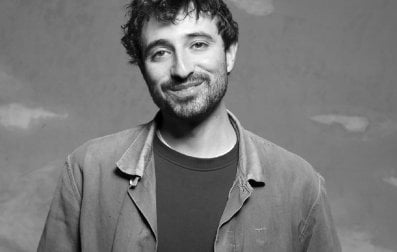
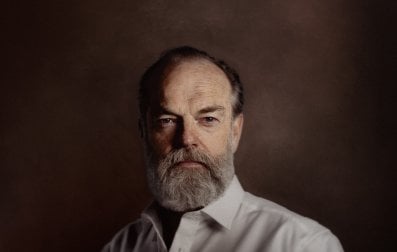
The prison drama Inside, the debut feature from Australian Palme d’Or winner Charles Williams, was written on the edge of his nerves.
By Stephen A. Russell.Inside director Charles Williams
When filmmaker Charles Williams was growing up in the Victorian regional town of Kilmore in the 1990s, it wasn’t easy to get hold of a copy of Max Ophüls’ daring anthology film La Ronde, or even Orson Welles’s Shakespearean dalliance Chimes at Midnight. His mother, Kathy, raised five kids single-handedly and money was hard to come by.
“We didn’t even have a car, which is no fun in the country when you’ve got to walk kilometres,” Williams says. “She had nothing to give in terms of material things, but I was the beneficiary of my mum looking at me with amazement. Her love and attention was there in spades, and that goes a long way.”
When they eventually got wheels, Williams would often make the pilgrimage to Melbourne to watch double features on the historic Astor Theatre’s towering single screen. “I’d drive home in my mum’s car that didn’t even have a radio, so you could just be in silence, bathed in the mood playing in your head.”
Eventually he found a way to engage with cinematic riches without having to trek so far afield. “The Victorian government would buy a copy of every single VHS they could, and if you were a low-income family, you could pay a certain amount a year and write them a list of the movies that you wanted to watch,” Williams says. “Then they would post six at a time to your local library every two weeks for you to swap. It was a goldmine of films that your local country video store would never think of having.”
This snail-mail lifeline was how Williams first encountered the murky morality of Martin Scorsese’s Goodfellas – a film unafraid to centre un-good fellas – which had a profound impact on him. “It was a terrifying movie, like a documentary mixed with a musical,” he says of the gangster classic. “It was this lyrical thing, and it didn’t feel like the actors were acting. It felt like everyone meant what they were saying. Like, Joe Pesci’s not kidding.”
The violence of Scorsese’s story connected to his own childhood. Williams steers around this topic tentatively as we speak in a cloistered wine room at Rydges Hotel during last year’s Melbourne International Film Festival (MIFF), where his most recent film, Inside – which opens in Australian cinemas this week – was showing. “The characters reminded me of the people I grew up around,” Williams says. “You know, the kind of random violence when everything’s funny, and then it’s not.” Williams’ father left home when Charles, whose main response was relief, was nine. Williams’ uncle later suicided in prison and Williams’ brother has also been in and out of prison.
Scorsese films led to those of John Cassavetes and so on. Soon Williams was borrowing school equipment to experiment with in his first ungainly forays into the art.
“You’d have to edit with two VHS machines, and you can imagine they were clunky as they can get,” he says. “I made these shorts ripping off whatever movies I liked in the ’90s.”
Determined to pursue filmmaking, he attended short courses and shadowed on countless sets while washing dishes at the local butcher’s or working behind the desk at the local video store. By 19, Williams shot his first film for public consumption, the comic short I Can’t Get Started, which featured duelling men at a urinal. “I spent all the money I had saved on making a short film on 35mm with a professional crew,” he chuckles. “I’d never met anyone my whole life that had done anything creative.”
Entering Tropfest paid off. Williams won the Best Young Director Award and took home $13,000 of filmmaking equipment. “So I got a computer and stuff that I could never have afforded and was editing movies on that for years,” he says.
While dabbling in advertising and editing films by other people, Williams worked up a series of shorts that increasingly turned towards that thrumming undercurrent of danger he had experienced as a kid. But he almost gave it all up. “I was causing myself a lot of pain, bashing my head against the wall,” he says. “You think, at what point is it causing you more harm? There was a while there where I had to rebuild my life because I was just broke.”
Williams had to seriously question where his life was going when his partner, Olivia McDonnell, was pregnant. “It’ll certainly put a fire under you, knowing you’ve got a baby coming,” he says. At this point he was writing his most successful short, 2018’s fever dream of family unravelling, All These Creatures. “Knowing I was about to be a father, I was thinking about that perspective that I was bringing into the world and then re-evaluating my upbringing.”
Looking back, he has more empathy for the situations the men in his family found themselves in. “Growing up, I remember wanting to avoid becoming that person, and also the awareness that that may not be possible,” Williams says. “Over time, you revisit that. Are these people authoring the kind of damage they’re causing? Even when they’re intending to do it, are they really responsible for that impulse? Once you’re not a victim of it anymore, you can have a more philosophical viewpoint. But the bigger thing is, maybe these people aren’t totally responsible, but they are still accountable.”
For his daughter’s sake, Williams wants to be an accountable father. “Stability” is the goal, he says. “You almost strive to be boring. You know, there’s a selfish part of you that wants to be impressive for your kids, but mostly I think the best thing is just to be so reliable they roll their eyes.”
All These Creatures was selected to debut in competition at the Cannes Film Festival, and went on to win the top prize, the Palme d’Or, in the short film category. More than 50 awards followed, including Best Australian Short Film at MIFF. Its international success failed to open doors back home. “It led to absolutely zero offers to do anything in Australia,” Williams says.
Undefeated, he knew it was time to focus on something bigger. Inside – the screenplay that just won Williams an Australian Writers’ Guild award – shares plenty of DNA with All These Creatures. Both films explore the inheritance fathers bestow on their sons. But Williams stresses that his absent father’s shadow isn’t a big deal. “For some reason, I’m making these films that lend themselves to a father–son lens, but I’m not really that qualified to talk about that relationship,” he says. “I was very fortunate to have unwavering belief from my mum, who unfortunately died when I was in my mid 20s. But while she was here, she filled you up with brilliant confidence.”
Newcomer Vincent Miller demonstrates remarkable confidence in Inside’s central role of Mel, a troubled, tight-lipped young offender ageing out of juvenile detention and into an adult jail. There he’s courted by competing would-be mentors. Guy Pearce’s rough-around-the-edges Warren is feeling his way to redemption via self-help. “A lot of us, in trying to improve ourselves, sometimes you’re just telling yourself a better excuse for the same shit you’re already doing,” Williams says.
In the other corner, Shōgun actor Cosmo Jarvis is an unpredictable agent as the newly evangelical Mark, Warren’s competitor. “He’s gone for a spiritual way to change, to forgive himself.” But who is the best father figure? And can Warren reconnect with his real son? Played by Toby Wallace, Warren’s son appears in a devastating sequence in which Warren learns some home truths the hard way. It was the first scene Williams sketched out, six years before the film came together. “That’s the beauty of that scene,” he says. “The absolute naivety.”
Williams cast a wide net to find Miller. “I had a feeling that we probably needed someone younger than the character, because I wanted an innate innocence to them [that] you could feel despite Mel’s choices,” he says. “We flew him and the other kids into Sydney and did a workshop, and it was clear Vinnie was the right choice. So I visited him and his family in Ballina and hung out for a bit, giving him a sense of Vinnie’s life to try and find a meeting point between the character and him.”
Miller turned 16 during the shoot. Williams’ research also threw light on Mel’s predicament. “In juvie, if there’s 80 kids, there’s 80 officers, but if you go to a medium-security adult prison, like a lot of people who have killed somebody, there are about four officers for 80 men. So that’s a scary environment, because where’s all the protection for me here?”
Pearce was the first person to sign on. Although Inside was Williams’ first feature, he wasn’t too spooked directing a veteran. “It’s the job and also the fun of it,” he says. “If you’re going to get intimidated about getting something right, then that’s just going to go badly. People need help and guidance, and everyone has their own language in front of the camera. I’ve got a lot of empathy for that.”
Casting real prison staff and former inmates to populate Inside’s prison added a further layer of authenticity. Not that Williams wanted it to be too rigid in its prison drama bones: Inside is a shimmeringly nonlinear film that folds feeling into every shot, an unspoken guide to how its characters arrive where they are and where hope might lead them.
“I wanted the film to have a softer sensibility than you usually see in these things,” Williams says. “There’s a very internal, emotional landscape that the film’s exploring and it’s difficult to do, particularly with ephemeral, lyrical flashbacks. There’s no real easy way to know exactly what the impact of those will be until they’re in the edit, even though you plan them very carefully. So it’s about adapting to how those things impact the story and layering them.”
His partner says that when Williams is deeply into his writing, he reminds her of John C. Reilly in the Johnny Cash-inspired satire Walk Hard: The Dewey Cox Story. “There’s a hilarious bit when Tim Meadows says, ‘Dewey Cox needs to think about his whole life before he goes out onstage’, and Olivia used to say that to me when I was writing, just to make fun of me. So it became a joke, of how masochistic a writer is, thinking about his whole life before he writes a sentence.”
And yet, as Inside proves, the process works. “It ends up coming from your nervous system if you’re working properly, and the more you pretend it’s not personal, that’s when you’ll accidentally say all of that stuff because you’re not speaking from your ego: this is who I really am,” he says. “Olivia watched the finished version in our last sound mix and got very tearful. But she said to me afterwards, ‘Don’t do that to yourself again.’ ”
Life has a way of coming back around. Williams has invested in a tribute to those days of long drives to the Astor. “I’ve got two seats at home … that are the same as [the ones at] the Astor,” he says. “If I get stuck writing or something, I sit in them and think about what would I want to see and hear on that screen.”
When we meet, a screening is planned for the Astor that very evening. But Williams won’t sit in – not because a filmmaker sees their movies countless times in the edit but because the reverie of watching Inside there would be too overwhelming.
“It’s like going to the church you grew up in,” he says. “There’s an emotional connection I have to that place, right? I would like to be able to sit through my own work there, but it feels almost sacrilegious. Maybe I’ll just peek from the back.”
This article was first published in the print edition of The Saturday Paper on February 22, 2025 as "Inside out".
For almost a decade, The Saturday Paper has published Australia’s leading writers and thinkers. We have pursued stories that are ignored elsewhere, covering them with sensitivity and depth. We have done this on refugee policy, on government integrity, on robo-debt, on aged care, on climate change, on the pandemic.
All our journalism is fiercely independent. It relies on the support of readers. By subscribing to The Saturday Paper, you are ensuring that we can continue to produce essential, issue-defining coverage, to dig out stories that take time, to doggedly hold to account politicians and the political class.
There are very few titles that have the freedom and the space to produce journalism like this. In a country with a concentration of media ownership unlike anything else in the world, it is vitally important. Your subscription helps make it possible.
Subscriber exclusive
Send this article to a friend for free.
Share this subscriber exclusive article with a friend or family member using share credits.