World
Trump and Zelensky back revised peace plan. Gunmen kidnap 300 children from Nigerian school. US ‘may go in’ to Venezuela. By Jonathan Pearlman.
Frantic hunt for survivors as Hong Kong towers burn
Great power rivalry
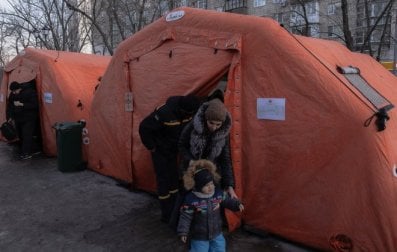
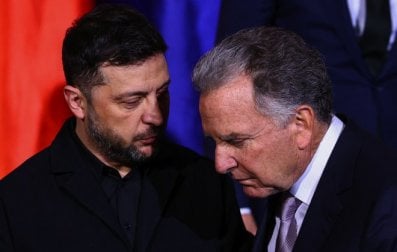
Ukraine: Donald Trump and Volodymyr Zelensky this week backed a 19-point peace plan for ending the war in Ukraine after revising a previous 28-point plan that was released by the United States and was seen as heavily favouring Russia.
The initial plan, based on secret consultations between Washington and Moscow, involved Ukraine ceding the entire Donbas region and Crimea and parts of two other provinces, as well as agreeing to cap its military at 600,000 personnel – down from about 850,000 – and to commit to never join the North Atlantic Treaty Organization (NATO).
The plan guaranteed Ukraine’s security if Russia invades again, and allocated US$100 billion from frozen Russian funds for reconstruction, with the US receiving 50 per cent of any profits.
European leaders condemned the plan as a capitulation, and some Ukrainian officials dismissed it as “absurd”. Several of Trump’s fellow Republicans also criticised the deal, including Nebraskan congress member Don Bacon, who posted on social media: “We hate appeasing Putin’s Russia & throwing Ukraine, who wants freedom and independence, under Putin’s bus.”
On Monday, Ukraine and the US said they had agreed on a new 19-point plan. Though details were not released, the plan reportedly did not cover territorial concessions or an agreement not to join NATO, and capped the Ukrainian military at 800,000 troops.
Trump said on Tuesday the initial plan had been “fine-tuned” and there were only “a few remaining points of disagreement”. He said on social media he would meet with Russian President Vladimir Putin and Zelensky “ONLY when the deal to end this War is FINAL or, in its final stages”.
But Russia’s foreign affairs minister, Sergey Lavrov, indicated Moscow would not agree to substantial changes to the earlier proposal. Trump’s envoy, Steve Witkoff, was due to travel to Moscow to meet with Putin, while US Army Secretary Daniel Driscoll held talks this week with Russian and Ukrainian officials in Abu Dhabi.
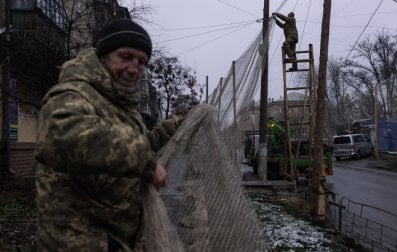
As the talks continued, Russia stepped up its strikes on Ukrainian cities and infrastructure, including an attack in Kyiv involving 22 missiles and more than 460 drones that killed at least seven people. Ukraine also launched drone strikes, including an attack in southern Russia that killed three people.
The region
Hong Kong: Rescue teams were frantically searching for survivors after a fire devastated apartment towers in Hong Kong’s Tai Po district this week, leaving at least 55 people dead and hundreds missing.
The fire erupted on Wednesday about 2.50pm and spread across seven 32-storey towers at a 1980s public housing estate that includes about 2000 apartments. As of Thursday, 279 people were missing and 45 were in a critical condition in hospital.
The blocks were being renovated and were encased by bamboo scaffolding, an ancient building technique that authorities started phasing out in March and replacing with fire-resistant steel. The scaffolding was wrapped in a green mesh that may also have contributed to the fire.
Police on Thursday said they had arrested three men from the construction company – two directors and an engineering consultant – on suspicion of manslaughter.
Lai Yee Chung, a Hong Kong superintendent, said the mesh and some plastic surrounding the building may not have met fire standards and highly flammable foam had been found on an unaffected building.
“We have reason to believe that the company’s responsible parties were grossly negligent,” she said.
In high-rise fires where flames are beyond the reach of hoses from below, firefighters typically enter the building and move upstairs. But authorities said falling debris and scaffolding at the Tai Po complex, and extreme temperatures from the blaze, made it difficult to enter the buildings. By Thursday, fires in four of the seven blocks were under control.
A resident who escaped, Jason Kong, aged 65, told Reuters a neighbour called to tell him he was still trapped in one of the blocks.
“I am devastated,” he said. “I do not know what is going on anymore. Look, all the apartments are just burning.”
Democracy in retreat
Nigeria: Gunmen kidnapped 303 children and 12 teachers from a school in Nigeria, marking the country’s largest mass abduction.
The kidnapping occurred late last week, when gunmen entered a Catholic school in the central state of Niger and forced hundreds of students to leave their dormitories and enter a forest. About 50 students escaped, leaving more than 250 – including 39 preschoolers – missing. No group has claimed responsibility.
The attack came days after gunmen abducted 25 girls – and killed the vice-principal – from a mostly Muslim school in the north-west state of Kebbi. One girl later escaped.
Nigeria has experienced at least 17 mass abductions since 2014, when Boko Haram, an Islamic extremist group, kidnapped 276 mostly Christian schoolgirls. Some escaped or were released, some gave birth in captivity, and, as of last year, 100 were still missing.
Most of Nigeria’s mass kidnappings are believed to have been conducted by criminals wanting ransoms or by extremists such as Boko Haram. About 54 per cent of Nigeria’s 237 million residents are Muslims, mainly concentrated in the north, and 46 per cent are Christians, concentrated in the south. Violence in the centre between Christian farmers and mostly Muslim nomads has left at least 12,000 people dead since 2010.
Donald Trump has threatened military action against Nigeria, accusing the government of failing to prevent mass slaughter of Christians.
Bola Ahmed Tinubu, Nigeria’s president, last weekend pledged to recruit an additional 50,000 police and reassign police who are currently used as bodyguards for politicians and government figures. Recent analysis by the European Union Agency for Asylum said more than 100,000 of Nigeria’s 371,000 police officers are being used as bodyguards.
Spotlight: US may ‘go in’ to Venezuela
For the past three months, the United States has been destroying small boats – believed to be smuggling drugs – in the Caribbean and Pacific.
The attacks have killed 83 people on 21 vessels, including 11 off the coast of Venezuela, six off Colombia and three off Mexico.
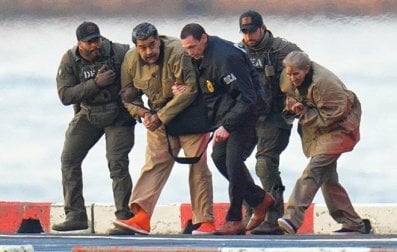
Donald Trump has said the attacks are part of efforts to combat the fentanyl crisis in the US and has largely blamed Venezuelan President Nicolás Maduro for the offshore drug trafficking. In the year to April, about 43,000 people have died in the US from overdoses of synthetic opioids, mostly fentanyl.
But the boats hit by US strikes are all believed to have been carrying cocaine rather than fentanyl, which mostly enters the US across the Mexican land border and is produced from chemicals made in China. Cocaine trafficked through Venezuela mostly goes to Europe, rather than the US.
Trump’s campaign has prompted speculation he is seeking to target – and possibly oust – Maduro, whose leftist government has long been at odds with the US. Maduro is widely believed to have retained power through voter fraud after losing elections in 2018 and 2024.
In August, the US doubled a reward for information leading to the arrest of Maduro to US$50 million, saying he was “one of the largest narco-traffickers in the world”. On Monday, the US Department of State effectively branded Maduro’s regime a terrorist organisation after designating the Cartel de los Soles – which it says is headed by Maduro – a terrorist group. Maduro’s government denied the “group” exists and accused Washington of a “vile lie to justify an illegitimate and illegal intervention in Venezuela”.
Adding to speculation that Trump may militarily intervene in Venezuela, the US has deployed several warships to the region, including its most advanced aircraft carrier.
American officials told Reuters last weekend that the US was preparing action against Maduro, likely starting with covert operations. Trump said in October he had authorised CIA operations, saying Venezuela had allowed drugs and illegal migrants into the US.
On Monday, Maria Salazar, a Republican member of congress, told Fox News Maduro “understands that we are about to go in”.
A CBS poll last week found 70 per cent of Americans oppose invading Venezuela and 76 per cent believe Trump has not explained the US position on military action.
This article was first published in the print edition of The Saturday Paper on November 28, 2025 as "Frantic hunt for survivors as Hong Kong towers burn".
For almost a decade, The Saturday Paper has published Australia’s leading writers and thinkers. We have pursued stories that are ignored elsewhere, covering them with sensitivity and depth. We have done this on refugee policy, on government integrity, on robo-debt, on aged care, on climate change, on the pandemic.
All our journalism is fiercely independent. It relies on the support of readers. By subscribing to The Saturday Paper, you are ensuring that we can continue to produce essential, issue-defining coverage, to dig out stories that take time, to doggedly hold to account politicians and the political class.
There are very few titles that have the freedom and the space to produce journalism like this. In a country with a concentration of media ownership unlike anything else in the world, it is vitally important. Your subscription helps make it possible.
Subscriber exclusive
Send this article to a friend for free.
Share this subscriber exclusive article with a friend or family member using share credits.