News
Behind the glowing tributes to Graham Richardson is a factional deal that the controversial former minister helped broker to make Anthony Albanese leader. By Jason Koutsoukis.
The Richo pact: How Graham put Albanese in charge
In 2016, after Labor’s loss at the federal election, Richard Marles made a bid to replace Penny Wong as shadow foreign affairs minister. He was rebuked and sought counsel from a controversial source: disgraced former minister Graham Richardson.
Richo’s advice was simple. He told Marles to get closer to the NSW branch and, above all, to Anthony Albanese. Very soon, there was an unofficial pact. When Bill Shorten stumbled again as leader three years later, Marles and Albanese acted immediately on the Richardson-brokered alliance.
One of the quieter revelations since Richardson’s death this month has been just how close Albanese was to Richardson and for how long their friendship had prospered.
“Graham Richardson is the one who saw the potential of the Albanese-Marles combination and put them together,” a close confidant of Marles tells The Saturday Paper. “Once you know that, it doesn’t leave you feeling quite as confused as to the glowing statements and why he is getting a state funeral. It’s like the missing piece of the puzzle: Richardson the matchmaker.”
Many have been puzzled by the prime minister’s decision to grant a state funeral to a man accused of decades of corruption and who was the subject of multiple investigations. Few understand that Albanese owes his leadership in part to Richardson’s deal-making and his cultivation of Marles.
A close observer describes Marles’s relationship with Richardson like this: “By the end, yes, they were very close. Richardson also clearly had a view as to how this worked and who would be good and who would not. And I suppose he saw a degree of that stagecraft from Richard. He clearly saw something in him.”
Marles alluded to this on Wednesday, telling parliament that Richardson “in many ways reached out to me simply to offer his wisdom and his counsel if ever I needed it – and need it I did”.
“I found myself speaking to Graham frequently. As all of us come across problems in this place, which feel at times completely intractable, Graham was a source of advice, and, more often than not, he offered a way through,” Marles said.
“He was really clear about what needed to be done. He didn’t pull any punches, if that involved doing difficult things, but he was deeply encouraging in the ability for us to achieve it. It was a counsel and a wisdom and a friendship which mattered to me greatly.”
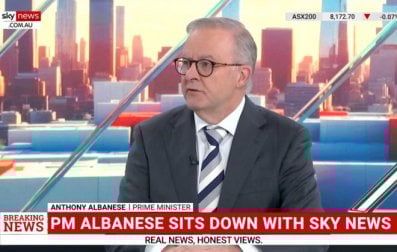
Moving a condolence motion on Tuesday to honour Richardson’s life, Albanese described the controversial former Hawke and Keating government minister and former general secretary of the Australian Labor Party’s NSW branch as not just a Labor legend and a tribal figure but a Sydney identity.
“Richo knew everyone and everyone knew Richo, yet there was more to Graham than the long lunches and tall tales. His pragmatism was paired with real passion and a true sense of service to party, to the Labor movement and to our nation,” Albanese said.
“That’s why, when Graham left parliament, he never left politics. He remained a thoughtful, perceptive and engaged observer, commentator and source of counsel and insight to so many across the political spectrum, including myself.”
For anyone who came of age inside the tribal certainties of Labor in the 1980s and ’90s, this statement would have seemed implausible. Albanese, the emblematic figure of Labor’s Left, and Richardson, the ruthless general of the NSW Right, were meant to be natural antagonists.
Richardson spent decades crushing the Left’s ambitions in New South Wales, while Albanese built a career resisting the dominance of Richardson’s faction and everything it represented.
What is missed in this, however, is Albanese’s evolution. Over time, he absorbed the lesson that underpinned Richardson’s career: ideology only gets you so far; pragmatism is what keeps you in the game.
Albanese still carries the Left’s language, but the method – the controlled caucus, the tightly managed factions, the preference for unity over purity – is Richardson’s.
The subtext of Albanese’s condolence motion was unmistakeable: the prime minister had long since made peace with the Right’s most formidable practitioner because he had taken something from him. He had learnt, as Richardson learnt before him, that survival in Labor politics rests not in doctrinal fidelity but in the capacity to do what the moment requires.
It is this thread – the convergence of two men from opposite sides of the party’s ideological divide – that helps explain why Albanese’s tribute to Richardson surprised so many.
“For all the Left–Right mythology that still governs our internal story, Albanese understood Richardson in a way only a fellow pragmatist could,” says one Labor insider.
“That’s what makes me think that Albanese’s praise for Richo was less a eulogy than an admission: part of the stability Labor now trades on was inherited directly from a man once presumed to be his factional enemy. And, I would guess, that when Albanese was the lone Lefty in Sussex Street, that’s where he learnt the art of pragmatism.”
Speaking on Wednesday in the Federation Chamber, a debating chamber parallel to the House of Representatives, used to handle less contentious business, such as condolence motions – Marles thickened the sentiment, describing Richardson’s legacy as being “titanic” in its scale.
“That Graham was so successful as a minister spoke to his intelligence, his passion, his drive but also to his fundamental ability to get things done in this place,” Marles said of Richardson. “Yet, of course, we all know that Graham Richardson was much bigger than all of that. Politics is about the exercise of power, and that exercise is a competitive business.
“There are those who are involved in the organisation of that power, and it is far and away the most difficult task which is undertaken in political life. Graham was a person who performed that role,” Marles said. “Now, all of us in our journeys have known those who have sought this role for all the wrong reasons. So to have a person who comes to it with the right motives and the right interests makes their place all the more precious.
“Graham was empathetic, he cared about the Labor Party first and foremost, he was intelligent in the way in which he went about his business and, most of all, he was willing to do hard things and make difficult decisions – quite often to his own personal detriment.”
Reflecting on the Hawke–Keating government Marles observed growing up – a government, he said, that was filled with heroes – he saw Richardson as a giant.
Later, Marles said, when he entered parliament and walked the same corridors as those he had once admired, he came to the realisation that politics was ultimately a pursuit of understanding – of how the Labor Party works, how power operates, how the broader system functions, and how the country itself is run.
“And it occurs to me that, when Graham Richardson left this place back in 1994, his understanding of all of that was as great as anyone who has ever lived,” Marles said.
Many of Marles’s caucus colleagues were quietly astonished by the speech – not only by the effusiveness of his praise for a man accused of serial corruption but by what it revealed about the depth of Marles’s relationship with him.
“You needed to go and have a shower after listening to that, because all of the allegations that have plagued Richardson for most of his adult life, they’re always sitting there in the back of our minds,” one Labor MP tells The Saturday Paper. “I think there are a lot of people that are like, ‘That’s just not a part of our heritage that we want to necessarily celebrate.’ ”
Richardson’s reputation as one of Labor’s most effective powerbrokers was inseparable from the controversies that shadowed him from his earliest days in the movement.
As a young organiser, he operated inside a culture of crude branch-stacking and internal thuggery, where ballot papers routinely disappeared, fistfights broke out in party offices and intimidation was a tool of the trade. His own rise was marked by allegations of violent factional encounters and whispered stories of backroom coercion – the kind of behaviour that made him feared as much as respected.
Later, his name became indelibly linked to the Offset Alpine affair, the tangled web of Swiss bank accounts and hidden shareholdings that was revealed after a suspicious fire at Rene Rivkin’s printing plant.
Although he was never charged, the revelation that Richardson had secretly benefited from the insurance windfall – and his insistence that hundreds of thousands of dollars received from Rivkin were merely “gifts” – cemented his reputation for operating on the edge of legality.
While his ministerial career had its share of successes, it was also marred by controversy. Questions clung to his relationships with lobbyists, his dealings with businessmen and the perception that even in cabinet he retained the instincts of a fixer rather than a steward of public trust.
When he was finally pushed from the front bench in 1994, scandal followed him, with persistent rumours about his involvement with escort services, and damaging reports that appeared to confirm aspects of his private conduct.
His shift into media commentary did little to soften public perceptions. His fiery on-air persona, willingness to settle old scores and readiness to offer paid political advice blurred ethical lines that critics said he had long ago abandoned.
Even admirers concede that Richardson embodied the contradictions of the era that produced him: a formidable organiser who could deliver election-saving deals but also a practitioner of the darker arts who kept Labor locked in factional warfare and fed a public cynicism about politics itself.
In the view of current parliamentary members of the NSW Right, the faction that Richardson once dominated, Marles’s words of praise for Richardson were a lesson in grovelling.
“Marles has all the loyalty of flesh-eating bacteria,” says one MP. “He was laying it on thick, trying to ingratiate himself with the faction but also trying to demonstrate, as the notional head of the national Right, that he was honouring a fallen member of the Right. But it’s so obvious that no one – no one – believes him.”
The same MP puts a slightly different spin on how the Albanese–Marles relationship has evolved since 2016.
“He just fucking sucked up to Albo,” says the MP. “But what he doesn’t understand is that Albo sees him as a great doormat, because he knows that Marles is never going to challenge him or be a problem for him. It was Machiavelli who said, you know, pick a dumb leader that you can manipulate – but this is Machiavelli in reverse. Albo has got himself a dumb deputy that he knows will never show any spine or never be a problem. He’ll always do what Albo wants.”
Another senior Labor figure compared Marles to the Sebastian Love character from the British sketch series Little Britain: “His greatest skill is grooming people above him.”
More notable, when it comes to Richardson’s condolence motion, were all the people who didn’t speak to it.
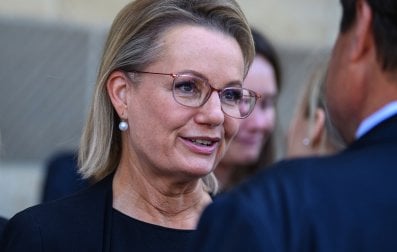
From the House of Representatives, there were only five speakers in addition to Albanese and Marles: Opposition Leader Sussan Ley, former Nationals leader Michael McCormack, Attorney-General Michelle Rowland, Assistant Minister to the Prime Minister Patrick Gorman, and Labor backbencher Matt Burnell. In the Senate, where Richardson sat for 11 years, only one Labor senator spoke: Penny Wong, the leader of the government in the Senate.
None mentioned what is Richardson’s most significant contemporary legacy: the pact that put Albanese in the leadership and gave Labor its longest hold on power in more than a decade.
For a man who built his reputation on force, threat and unvarnished pragmatism, it’s a strange final act. He was known as Richo the fixer, Richo the enforcer. Yet it is Richardson the matchmaker who now stands as his last, and perhaps most durable, creation.
This article was first published in the print edition of The Saturday Paper on November 29, 2025 as "The Richo pact: How Graham put Albanese in charge".
For almost a decade, The Saturday Paper has published Australia’s leading writers and thinkers. We have pursued stories that are ignored elsewhere, covering them with sensitivity and depth. We have done this on refugee policy, on government integrity, on robo-debt, on aged care, on climate change, on the pandemic.
All our journalism is fiercely independent. It relies on the support of readers. By subscribing to The Saturday Paper, you are ensuring that we can continue to produce essential, issue-defining coverage, to dig out stories that take time, to doggedly hold to account politicians and the political class.
There are very few titles that have the freedom and the space to produce journalism like this. In a country with a concentration of media ownership unlike anything else in the world, it is vitally important. Your subscription helps make it possible.
Subscriber exclusive
Send this article to a friend for free.
Share this subscriber exclusive article with a friend or family member using share credits.