News
Anthony Albanese’s decision to grant Graham Richardson a state funeral has confounded some within the Labor Party and drawn attention to the tribalism that still binds it together. By Jason Koutsoukis.
Why did Albanese grant Richo a state funeral?
A joke circulating among veterans of New South Wales Labor last week held that John Faulkner, Laurie Brereton and Paul Keating had all put their hands up to be pallbearers at Graham Richardson’s state funeral at Sydney’s St Mary’s Cathedral on December 9.
The punchline was that none of them would ever go near the coffin.
Faulkner – a stalwart of the NSW Left – had always despised Richardson. He had served as assistant general secretary through the 1980s, when Richardson was at the height of his influence in the Right.
Brereton and Keating – once close factional allies of Richardson – had long since recoiled from the company he kept and the behaviour that made him both feared and indispensable.
The joke is a light illustration of the complex relationship Labor has with Richardson. It also highlights the surprise that accompanied Prime Minister Anthony Albanese’s decision to grant Richardson the rare honour of a state funeral.
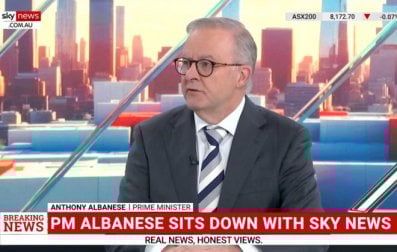
In an effusive tribute released after Richardson’s death, Albanese sketched a portrait of a Labor titan who “loved and lived all of what politics can be: service, calling, art and craft”.
“With the passing of Graham Richardson,” Albanese declared, “we have lost a giant of the Labor Party and a remarkable Australian.”
Highlighting Richardson’s rapid ascent – arriving in the Senate at 33, serving in three cabinet portfolios, and carving out a legacy as environment minister – Albanese said Richardson would be most remembered for “saving the Daintree”.
Even Richardson’s notoriety was reframed gently.
“Richo’s life was often colourful, and sometimes controversial, but what lay at the heart of it was his sense of service, underpinned by his powerful blend of passion and pragmatism,” Albanese said. “He gave so much to our party, to our nation and to the natural environment that future generations will cherish.”
For a prime minister whose now dominant Left faction owes Richardson nothing, the generosity of the language was striking. Albanese spoke of a man who “never left politics”, who remained a source of “counsel and insight to so many”, and who continued sharing his “lifetime of wisdom … right up until the end”.
To say the statement raised eyebrows inside the federal Labor caucus, and across the party’s rank and file, would be putting it mildly. As one senior Labor figure put it after reading Albanese’s paean: “Who the fuck was that bloke? I don’t remember him.”
The decision to grant a state funeral to a man responsible for extraordinary maleficence, most of it without consequence, also prompted a quieter, more procedural question among Labor insiders: What exactly are the rules around state funerals?
The clearest explanation is the one elicited, ironically, by then Labor senator John Faulkner almost 20 years ago, when he pressed officials from the Department of the Prime Minister and Cabinet to spell out the criteria.
The department’s answer could not have been more explicit: no person is entitled by right to a state funeral.
“There is actually no official entitlement on anybody to a state funeral,” then assistant secretary Frank Leverett told the Senate committee. By convention, he said, the honour is extended only to a narrow group of officeholders – prime ministers, governors-general, chief justices, presiding officers and members of the executive council – with occasional exceptions for distinguished Australians whose national contribution merits the recognition.
As all Commonwealth ministers are sworn in as executive councillors, the constitutional body that gives formal legal effect to cabinet decisions, it is on that basis, as a matter of convention rather than entitlement, that Richardson qualifies.
As one current Labor adviser put it: the decision to extend the honour, made at the request of Richardson’s widow, was less an expression of personal warmth than a function of Richardson’s position. It was a formal nod to his place in Labor’s history, delivered with Albanese’s characteristic deference to courtesy and protocol, even when the gesture ran against the sentiment of much of his own party.
Whatever else Labor insiders think about the decision to grant Richardson a state funeral, one Labor luminary prepared to publicly question Richardson’s legacy is Bob Hogg – the party’s national secretary during the 1990 election campaign victory that Richardson is often credited with helping to mastermind.
For years, the story inside Labor has been that it was Richardson’s deft deal-making with the Greens that rescued Bob Hawke’s government in the middle of a brutal recession and delivered a fourth consecutive victory. It is, by many accounts, one of the cornerstones of his legacy. Hogg disagrees.
In a private note shared on social media last week, titled “A different view of one of the fallacies about Graham Richardson”, Hogg begins by saying:
“I don’t want to sound churlish, but some of the articles about Graham Richardson are nonsense. He was very good at creating his own history. Why should I bother responding? Some records need to be accurate.”
For Hogg, the record begins not with Richardson delivering the campaign, but with what he sees as Richardson nearly derailing it. Far from securing Labor’s win, Hogg argues, Richardson’s high-profile partnership with Bob Brown and the Greens almost sent traditional Labor voters packing.
“The 1990 Federal Election, was not won by Graham’s brilliance, rather it was threatened by his love in with Bob Brown and the greens,” writes Hogg. “The joint press conference he did with Brown on the environment simply opened the way for pissed off labor ‘stick ons’ to shift their vote.”
Alarmed, Hogg went straight to Hawke.
“I went and saw Hawke and told him this action by Graham was a potential disaster, our disaffected will shift in droves and not all will come back by way of preferences. He snarled at me in response. He supported Graham’s initiative.”
In late December 1989, about four months before the 1990 election, Hogg convened a seminar of MPs, senior advisers and campaign staff.
As he approached the lectern, Hogg says Richardson intercepted him. “Mate, mate, we’re fucked, we can’t win this one,” Richardson whispered. Hogg says he simply replied, “We’ll see,” and went on his way.
“The research showed that our traditional voters were leaving us in large numbers,” Hogg continues. “People who had always voted Labor. The problem we faced was the leakage of second preferences. This cohort had always followed the labor ticket. Problem was it wasn’t our ticket they were going to take.
“Mid campaign, I went to Hawke and said we need to forget the primary vote and acknowledge ‘that the loyal labor voter’ was pissed off with us and we had to run a second preference strategy. Risky, yes. But Hawke was facing defeat, his gambling instincts kicked in, he said ‘go ahead’.
“We did. Basically the line was, don’t wake up on Sunday and say, ‘Fuck we didn’t mean that.’ We appealed to the once traditional voters, ‘however you vote make sure you put the liberal last’.
“There was some resistance to the strategy from some Queensland members of parliament, so then State Secretary, [Wayne] Swan arranged a phone hook up between me and his right wing members of parliament. [Arch] Bevis asked the question, ‘what happens if we don’t run a second preference campaign?’ I replied, ‘nothing much Arch, you’ll just lose your seats.’ The debate ended. On polling day, we got around 80% of green and democrat preferences.
“The Dems and Greens combined had around 23% of the primary vote. We were below 40%, around 37-8%. The lowest for that period of a labor government. Graham didn’t win that election, he almost cost us a loss.”
Confirming the accuracy of his social media posting, Hogg played down another cornerstone of Richardson’s legacy, namely that as NSW Right faction boss he had played the decisive role in ousting Bill Hayden from the Labor leadership and installing Hawke as Labor leader in 1983.
“He was very adept at claiming credit,” Hogg told The Saturday Paper. “For example, the simplistic repetition by too many journalists that he got Hawke the leadership. In fact, there were many involved in the change. Example: read John Button’s memoir. He wrote a letter and delivered it to Bill Hayden at the national executive meeting. It asked Bill to stand down. Sections of the Left met in Melbourne after the disastrous Flinders byelection and assessed that we couldn’t win with Bill.
“So, parts of the Left shifted to Hawke, as did parts of the centre. Richardson marshalled the Right – no hard task. Not a kingmaker, but part of the equation.”
Asked this week to reflect on Richardson’s legacy as environment minister, Bob Brown remains unequivocal.
“Extraordinary,” Brown tells The Saturday Paper. “Along with Moss Cass, the strongest environment minister we’ve ever had. And it was because he was prepared to take on the bullies perpetrating environmental destruction.
“All the criticism that’s being levelled at him is missing the point that in a world where eco bullies are destroying nature at the greatest rate in history, and it’s even accelerated since Richardson’s time, he was prepared to take them on because he knew how to operate amongst them.
“He was like no other environment minister since in terms of being able to confront the environmental threats and at the same time advocate for the environment. And, you know, he did so openly. He wasn’t covert about it.”
Brown is equally adamant that Richardson deserves the credit for Labor’s 1990 election win.
“He wanted us to support Labor, but we went open ticket. So he went around the country himself, saying, ‘If you’re voting Green, give your preference to Labor,’ ” Brown says. “So before people condemn everything about a flawed character like Graham Richardson, have a look at the damage the real bullies are doing to this nation and its economic and environmental future, because Richardson was the first one to bring up climate change in any cabinet, anywhere that I know of, in 1988, and we’re now paying the cost of inaction on that.”
Brown’s reference to Richardson’s “flawed character” is not a line many in Labor would dispute.
For all his achievements, Richardson’s career was threaded with episodes that even his admirers struggled to explain. To trace his rise through the NSW Right is to walk a path lined with long lunches, curious alliances and a series of controversies that trailed him for decades.
The most notorious, and the one that still haunts the NSW Right, was the 1980 bashing of then NSW state MP Peter Baldwin, who had been investigating rorted membership records of the ALP’s Enmore branch, an attack widely linked to the internal warfare over branch stacking and the Right’s control of the NSW branch.
In his police statement, Baldwin pointed to two men as potential suspects: Joe Meissner, an underworld figure and karate expert who served as the Enmore branch secretary, and Tom Domican, who was working at the time as the driver for Labor’s Marrickville mayor, John Harrison. Both men were eyeing seats either in state parliament or the local council.
A rising figure in the party’s Left, Baldwin was found collapsed outside his Marrickville home after midnight on July 16 with his head savagely beaten.
In an interview with journalist Marian Wilkinson, for her 1996 book The Fixer: The untold story of Graham Richardson, John Faulkner recounted his shock when he visited Baldwin in hospital later that morning.
“It still remains. I mean you see some shocking things but nothing remotely in politics has ever had a greater impact on me,” Faulkner said. “It was just appalling what they had done. I remember the doctors saying one or two millimetres [closer] with the bash of the iron bar and he would have been a vegetable or dead.”
At the time, and ever since, Richardson strenuously denied any prior knowledge of or involvement in Baldwin’s bashing.
However, in a 2005 recorded interview with investigative journalist Kate McClymont, Joe Meissner pointed the finger directly at Richardson. McClymont published the details in The Sydney Morning Herald last week, in a scathing account of Richardson’s life.
Richardson always denied any involvement, but the culture of the Right he helped build, and the ruthlessness of its methods, meant the suspicion never faded. Among many in Labor, Baldwin’s battered face became shorthand for an era in which the NSW machine’s hunger for dominance crossed lines no democratic party should ever approach.
There were other stories, too, that spoke to Richardson’s blurred boundaries between public life and private indulgence.
His name surfaced repeatedly in connection with allegations of regularly consorting with sex workers, including the infamous “Love Boat” scandal that involved Richardson making regular visits to sex workers housed on a luxury yacht in Sydney Harbour. He denied this, as well as other allegations that he accepted visits with sex workers as payment for political favours.
In one case, he was paid with two sex workers at the Hyatt Sanctuary Cove hotel on the Gold Coast. In another, officers from the Independent Commission Against Corruption waited downstairs at the Sheraton in Sydney to serve him with a subpoena after he took two sex workers up to a room. He once boasted that the secret to his affairs was to conduct them “west of Five Dock and south of Brighton-le-Sands”.
The most serious cloud for Richardson, however, hung over the Offset Alpine affair.
Offset Alpine, a decrepit printing plant in Sydney’s Silverwater, owned by stockbroker Rene Rivkin, burnt to the ground on Christmas Eve in 1993. The insurance payout that followed – an extraordinary $53 million, more than 10 times the plant’s value – immediately drew scrutiny, not least because a significant parcel of Offset Alpine shares was hidden behind a tangle of Swiss bank accounts.
A decade later, investigative reporting by The Australian Financial Review’s Neil Chenoweth and Shraga Elam revealed that Rivkin had told Swiss authorities the mystery parcel was controlled by three men: himself, businessman Trevor Kennedy and Graham Richardson.
That disclosure set off years of inquiries by corporate regulators, who attempted to untangle the ownership structures and determine whether any offences had been committed.
Those efforts ultimately went nowhere. The offshore arrangements were so convoluted that no definitive case could be made. Richardson consistently denied ever owning the shares, insisting that the large sums he received from Rivkin were gifts – a claim that only deepened scepticism about the entire affair.
The episode left behind no convictions, but it did cement Offset Alpine as the most enduring question mark over Richardson’s financial dealings and the company he kept, and hardened the belief that Richardson operated in a world where transparency was optional and accountability negotiable.
Individually, these episodes might have been dismissed as the rough edges of a rougher political era. Taken together, they formed a portrait of a man whose power was matched only by the shadows it cast. For many in Labor, this was the Richardson they remembered: sometimes brilliant, unquestionably influential, but indelibly marked by the controversies that haunted him.
Labor insiders say Richardson embodies both the best and the worst of the party’s machine politics. He was a man who could shift votes, charm opponents, champion causes, but also leave behind a trail of doubts that no state funeral can smooth over.
Whatever is said at St Mary’s Cathedral on December 9 – and exactly who will stand up to say it – will capture only part of the story: achievements worth marking, controversies impossible to ignore and a party still unsure how to weigh the two.
None of the competing versions of Graham Richardson – the fixer, the reformer, the environmental saviour, the factional enforcer – quite cancel out the others.
This article was first published in the print edition of The Saturday Paper on November 22, 2025 as "For Richo and poorer".
For almost a decade, The Saturday Paper has published Australia’s leading writers and thinkers. We have pursued stories that are ignored elsewhere, covering them with sensitivity and depth. We have done this on refugee policy, on government integrity, on robo-debt, on aged care, on climate change, on the pandemic.
All our journalism is fiercely independent. It relies on the support of readers. By subscribing to The Saturday Paper, you are ensuring that we can continue to produce essential, issue-defining coverage, to dig out stories that take time, to doggedly hold to account politicians and the political class.
There are very few titles that have the freedom and the space to produce journalism like this. In a country with a concentration of media ownership unlike anything else in the world, it is vitally important. Your subscription helps make it possible.
Subscriber exclusive
Send this article to a friend for free.
Share this subscriber exclusive article with a friend or family member using share credits.