News
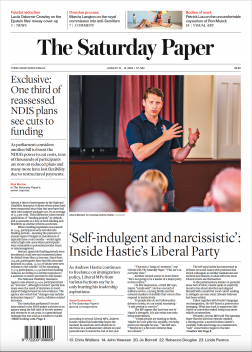
Sussan Ley has reasserted her position as Liberal leader, although moderates in the party are worried she may cave in to extreme rhetoric on immigration. By Karen Barlow.
Your subscription makes these exclusive articles possible
Subscriptions make these exclusives possible SUBSCRIBE NOW
Exclusive: ‘They have an unlimited appetite for stupidity’
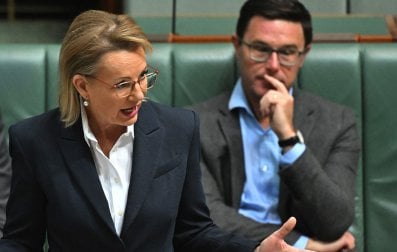
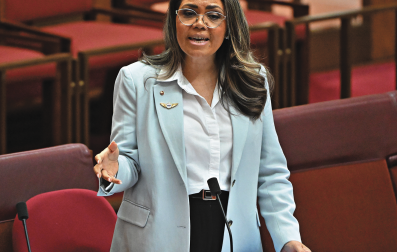
Sussan Ley is defiant as she stares down the final parliamentary sitting week of the year.
“I’m the leader of this party,” she says. “That leadership was decided six months ago. We’ve settled a very important policy area in energy. It’s a policy we all believe in.”
Ley is referring to the decision to abandon the Liberal Party’s commitment to net zero, while maintaining that her party will not leave the Paris Agreement.
“It’s responsible when it comes to emissions reduction,” she says. “It recognises concerns about climate, and it also puts as its priority affordable energy, because if we don’t have affordable energy, we start to go backwards.”
Urban seats, lost to the teal independents and Labor over successive elections, are still within sight, she says, “because every Australian is struggling with cost of living”.
Ley insists she is a model of compromise. She is eyeing the next policy stoush over immigration while trying to sell the energy deal.
“I’m very confident that we are united behind that plan, and more importantly, it’s the right plan for now. When it comes to energy, everybody is struggling now,” she says.
“I have six grandchildren. I absolutely care about the climate. I believe in renewables. I believe in an energy transition, but I don’t believe in my children, in my grandchildren, inheriting a lower standard of living than their parents. That is not acceptable.”
According to supporters, Ley had “no option” but to drop net zero and sell hard-right policies to hold the Coalition together. If she challenged the right on climate, she “would have been rolled”. Another says if Ley was not leader, the resulting policy would have been “much harder”.
Those in the party who feel they lost the policy debate on net zero are now concerned over how Ley will handle immigration policy, with the hard right again pushing the party’s agenda.
“My worry is that after they’ve had their victory, they’re going to ask for more. I don’t think they’re going to stop. And I think that’s an error. They have an unlimited appetite for stupidity,” a Liberal source says.
“If they were looking at trying to be vaguely electable, they would have made a compromise which is sensible for inner-city seats on net zero.
“You might have ‘We need to cut migration to allow for housing’, right? Let’s just say that’s the mantra. But then what’s Andrew Hastie going to say? Because he has very unusual language, if I could put it politely. He has worrisome language.”
Hastie has an “Australians first” argument and says the current migration rate is “uncontrolled” and “hurting Aussies”. Last week he posted: “If we lock down energy and immigration, we can win. Stay tuned.”
At the virtual joint partyroom meeting last Sunday, held to sign off on the climate policy, moderates peppered the leadership group with questions and concerns about potentially subsidising coal-fired power.
Several sources say Hastie, a populist leadership aspirant, made a sudden intervention on coal, to put on the record his praise for the fossil fuel and to thank the leadership for the coal aspect of the new policy.
“I think everyone, all sides, was like, ‘Did he just do that?’ ” one source said. “He didn’t need to say it. It just rubbed it in everybody’s faces. It was very bizarre.”
Moderates and some in the party’s centre right are furious at the Coalition’s dumping of net zero. They say they got nothing out of the decision.
“I’m being truthful – nothing,” the Liberal source tells The Saturday Paper. “If you’re going to be out campaigning in the Victorian city seats, you’re not going to get a cracker out of this, because, effectively, you’ll be sold as, and rightly so, climate denying or uncaring on climate or the environment, and not really concerned about transitioning our energy sector.”
Andrew Bragg, a leading moderate who threatened to quit the front bench if the Coalition walked away from the Paris Agreement, maintains there was a win for climate action in the decision.
“Well, I think that we can burnish strong credentials when it comes to emissions reduction by virtue of our involvement in the Paris accord,” he told the ABC on Wednesday. “The Paris accord is actually about getting to net zero. That’s the whole point of it. If you weren’t wanting to do that, then you wouldn’t be in it.”
Others, such as centre-right Liberal senator Andrew McLachlan, want more for the environment.
“Voters will find it difficult to be attracted to any party that is careless with the future of the next generation,” he tells The Saturday Paper.
“You cannot have an energy policy that looks to the past. It needs to be focused on substantially reducing emissions and building a sustainable economy.”
Despite talk from Bragg and others about leaving the front bench, no one has resigned over the party’s position. Liberals take that as a positive.
“There is anger about what’s happened,” a senior Liberal, who is a supporter of Ley, tells The Saturday Paper. “The anger is not at Sussan directly. There’s some anger that she didn’t fight harder. However, I think that’s only in certain elements of the mods.
“I think most people are realistic that the right have the numbers in relation to this policy, regardless of any construct of the party room, because it is quite a conservative party room.”
Those who are critical of the party’s position, especially the decision to continue to subsidise coal, say there was not adequate consultation in the party room. Only top-line material was shared.
“We just basically had words shoved to us, and they were very high level and carefully crafted,” one says. “But no one said, ‘Okay, well in there you can underwrite coal.’ ”
Another Liberal, a moderate, says the ongoing support for coal is a “massive stretch”.
“We’re pretty unhappy with it,” they told The Saturday Paper. “We don’t think anybody takes that seriously, except those people that just want to wave it around as a bit of a victory flag for themselves.
“No one’s going to do it. The market’s not going to do it. There’s no interest in doing it. But they want to be able to say, ‘You might be able to do it.’ ”
There is concern that similar opportunism might shape the migration debate for the party. Liberal senator Maria Kovacic urges caution.
“Australia was built by people who arrived here with courage and hope, not privilege. We should debate migration numbers openly, especially when housing and other infrastructure are under pressure, but never in a way that weaponises the issue or drifts into racist undertones,” she says.
“Limiting migration to an elite few ignores both our history and the Liberal values of aspiration and opportunity.”
For Ley, it is largely an “infrastructure piece”. Since taking the leadership she has been insisting that the migration numbers under the Labor government are too high, but she won’t use the populist rhetoric of “mass migration” and at this stage won’t outline cuts in the intake or what sectors the opposition would target.
“By the end of the year we will have our principles in place,” she tells The Saturday Paper. “I make it very clear that these infrastructure pressures are not the fault of any migrant or migrant community. They are failures of governments to build the infrastructure that our cities need. And that is simply how it is.
“By taking the time to work through this properly and get it right, that’s being led by Jonno Duniam with Paul Scarr, and we think the government has really got this all wrong.”
According to many in the party, however, the Coalition should have already sorted out its positions on these issues.
“If you look back at the last term of parliament for the Coalition and the Liberal party, one of the strengths was our unity, but looking back, it could be really characterised as a weakness, because we didn’t have the tough policy discussions to work out where we want to go moving forward,” a right-aligned Liberal says.
“Part of politics is to be able to have robust, respectful policy disagreements. That’s what we should have now, preferably behind the scenes.”
These debates have brought on renewed discussion about the viability of Ley’s leadership. An interview with the other leadership aspirant, Angus Taylor, published in The Daily Telegraph last week, in which he boosted factionally aligned colleagues and talked about how he has “learnt a lot” over the past six months, has been labelled by factional rivals as “blatantly provocative” and “unhelpful to himself”.
“What’s head-scratching about it…” a senior Liberal says, “he has learnt quite a lot, but he hasn’t learnt that wasn’t the right time to do that article.”
Parliament is heading into the final sitting week of the year, making it the last gathering of the various party rooms and typically a killing season for leaders. It is also a Newspoll week, although there are various views on whether the poll actually matters, particularly at this relatively early stage of the electoral cycle.
“I’ve been around a long time,” the senior Liberal says, when asked about the prospect of a leadership spill. “There are no signs that anyone is going to, wants to, or is capable or really has that intention. I can’t see it.”
That said, there is a problem. “The right just can’t cope with a more moderate leader. They are not coping with her being more on the modern side. They’re not coping with her being a woman. They’re not coping with any of it. They just can’t cope. It’s a big shock to their system.”
The source from the party’s right has a similar view. “When the horses are running, they’re running. I think last week settled it. Were they running? If we didn’t land where we landed on Sunday, were they running?
“But genuinely, Sunday’s pulled it up. And there’s sort of this perspective of, ‘Sit back. Let Sussan sell this. See where it lands.’
“People moved on to migration, and that’ll be the next internal. I do remind people that you might have won the internal battle on net zero, but you haven’t won the war, which is the actual selling of the policy.”
Bragg has written to disappointed New South Wales Liberal members urging them to not walk away from the party. “It’s important that we don’t see a fragmentation of the centre right,” he says. “They should stay and engage. And the worst thing that they could do would be to walk away.”
Ley is seen by her supporters as “holding the line” and doing the best she can to centre the party in “very difficult circumstances”.
“I don’t think anyone has had a worse time of being opposition leader than she has,” the moderate Liberal says. “Those people that have contributed to that should really reflect on who they are and what they represent.”
This article was first published in the print edition of The Saturday Paper on November 22, 2025 as "Exclusive: ‘They have an unlimited appetite for stupidity’".
For almost a decade, The Saturday Paper has published Australia’s leading writers and thinkers. We have pursued stories that are ignored elsewhere, covering them with sensitivity and depth. We have done this on refugee policy, on government integrity, on robo-debt, on aged care, on climate change, on the pandemic.
All our journalism is fiercely independent. It relies on the support of readers. By subscribing to The Saturday Paper, you are ensuring that we can continue to produce essential, issue-defining coverage, to dig out stories that take time, to doggedly hold to account politicians and the political class.
There are very few titles that have the freedom and the space to produce journalism like this. In a country with a concentration of media ownership unlike anything else in the world, it is vitally important. Your subscription helps make it possible.
Subscriber exclusive
Send this article to a friend for free.
Share this subscriber exclusive article with a friend or family member using share credits.