World
Russia–Ukraine battle for Pokrovsk intensifies. Indonesia’s high-speed rail off track. International force proposed for Gaza. By Jonathan Pearlman.
Mamdani’s mayoral win in New York buoys Democrats
Great power rivalry
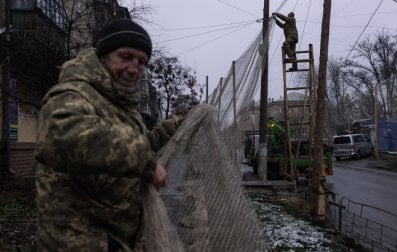
Ukraine: Russia and Ukraine engaged in fierce battles this week in the eastern city of Pokrovsk, which could prove crucial to Russian efforts to gain control of the entire Donbas region.
Russia has been trying for about a year to capture Pokrovsk, a logistics hub and transport gateway in the Donetsk region, and has escalated its campaign in recent weeks.
Ukraine estimates about 170,000 Russian troops have been deployed and about a third of all frontline clashes are currently occurring in the city.
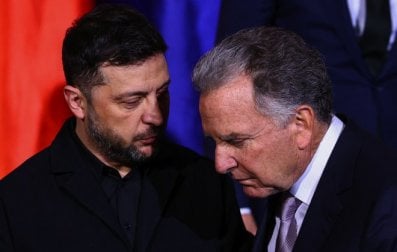
Volodymyr Zelensky, Ukraine’s president, this week visited a command post outside Pokrovsk, which had a prewar population of 60,000 and now has almost no remaining residents.
“This is our country, this is our East, and we will certainly do our utmost to keep it Ukrainian,” he said.
Russian troops have been steadily advancing in Donetsk, gaining 461 square kilometres in the region in October, according to analysis by AFP. Russia now controls 81 per cent of Donetsk and 99 per cent of neighbouring Luhansk, which together make up the Donbas.
Russian drones and missiles have targeted electricity, oil, gas and water infrastructure across Ukraine in recent weeks, causing blackouts and forcing Kyiv to impose restrictions on power and water. Ukraine has targeted Russian oil infrastructure, aiming to disrupt the flow of its exports. The attacks are believed to have reduced Russia’s refining capacity by 20 per cent.
The neighbourhood
Indonesia: A Chinese-funded high-speed rail line that opened two years ago in Indonesia is struggling due to a lack of passengers, raising concerns that the Indonesian government may need to bail it out.
The US$7.3 billion line connecting the capital Jakarta to Bandung, Indonesia’s third-most populous city, opened amid much fanfare in 2023 and was a flagship project of China’s Belt and Road Initiative.
Despite cutting the journey time from about three hours to just 45 minutes, the 145-kilometre line has attracted about a third as many passengers as expected, due to the high cost of tickets and stations being too far from the city centre.
Indonesia favoured China as an investor over Japan, partly because Beijing did not insist on the government providing funding. But Jakarta eventually offered loans and guarantees as the costs soared. Sixty per cent of the project’s funding was invested by Indonesian state-owned enterprises and 40 per cent by Chinese state-owned companies.
Eko Listiyanto from Indonesia’s Institute for Development of Economics and Finance told the Financial Times this week: “It’s not China’s fault. We’re the ones who set ourselves up for a trap.”
Former president Joko Widodo strongly backed the project, but it could require current president Prabowo Subianto to provide funding to help Indonesian investors repay their debt. Prabowo is under pressure over the affordability of his own high-spending project to provide free meals to schoolchildren and pregnant women.
Bobby Rasyidin, the head of the largest Indonesian shareholder in the rail line, told a parliamentary hearing in August: “It’s a ticking time bomb.”
War zone
Gaza: Hamas and Israel moved closer this week to completing the first phase of a ceasefire in Gaza as the United States proposed that an international force should be deployed to the enclave for at least two years.
As Muslim countries met this week to discuss contributing troops to the international force, Hamas handed over the remains of four hostages – seven bodies are still to be returned – and Israel handed over 60 bodies of Palestinians.
The US has drafted a resolution to deploy a force that would work with Israel and Egypt to demilitarise Gaza and train police. The resolution is due to be presented for the consideration of the United Nations Security Council by mid November.
A group of Muslim-majority countries, including Indonesia, Pakistan and Saudi Arabia, met in Türkiye on Monday to discuss contributing troops to the force. The group said it wanted to ensure Palestinians were ultimately able to govern the enclave and “ensure their own security”.
Separately, Palestinian parties and armed groups, including Hamas and Fatah, which leads the Palestinian Authority based in the West Bank, met in Egypt this week to discuss the future administration of Gaza.
Mousa Abu Marzouk, a Hamas official, told Al Jazeera it had reached a deal with the Palestinian Authority to share temporary oversight of Gaza. He would not say whether Hamas would agree to disarm.
“If it is disarmed, there will be other weapons and other groups [in Gaza],” he said. “Just as in Iraq, when the Iraqi army was disbanded, chaos followed – al-Qaeda and ISIS emerged.”
In Israel, the military’s chief legal officer, Yifat Tomer-Yerushalmi, was arrested this week over the leak of a video that showed Israeli soldiers abusing a Palestinian prisoner. The soldiers were charged over the assault, prompting a backlash from far-right Israelis. Tomer-Yerushalmi resigned last week, saying she leaked the video due to attacks on her and her staff. She said in her resignation letter: “Even in a prolonged and painful war, there is an obligation to investigate suspicions of unlawful acts.”
Spotlight: Zohran Mamdani wins in NYC
United States: On Wednesday, Zohran Mamdani, a Democratic Socialist, was elected mayor of New York – the largest city in the US – after promising to make buses and childcare free and to freeze rents in rent-controlled apartments.
The 34-year-old, who was elected to the state’s assembly in 2021, will be the city’s first Muslim mayor, the first born in Africa – he was born in Uganda to Indian-born parents – and the youngest since 1892.
Mamdani won 50 per cent of the vote, defeating his main rival Andrew Cuomo, an independent who was endorsed by Donald Trump. Cuomo, who resigned as the state’s Democratic governor in 2021 after facing multiple sexual harassment allegations, received 42 per cent of the vote.
Mamdani, who was effectively unknown before the mayoral race, attracted a devoted following through popular social media videos. His campaign focused on addressing the city’s bleak levels of inequality and glaring unaffordability, yet he remained smiling, enthused and optimistic about the city’s future.
Mamdani faced criticism over some of his positions, including his refusal to condemn the phrase “globalise the intifada”, and descriptions of the city’s police department – the nation’s largest – as racist and corrupt. He promised to run an inclusive administration – he stood by his history of pro-Palestinian activism but said he would discourage use of the phrase, and he issued an apology to police.
Mamdani’s victory came as Democratic candidates won decisively on Tuesday in governor races in Virginia and New Jersey. The results buoyed the party, which has struggled to find its identity during Trump’s second term. As the party looks to next year’s midterm elections, it faces a choice over whether to pursue Mamdani-style progressivism or a more traditional centrism, or to find a way to accommodate both.
Before the elections, Trump threatened to cut funding to New York and deploy the National Guard if Mamdani were mayor, saying he did not want to provide money to “a communist”.
During his victory speech, Mamdani told supporters: “Hear me, President Trump, when I say this: To get to any of us, you will have to get through all of us.”
This article was first published in the print edition of The Saturday Paper on November 7, 2025 as "Mamdani’s mayoral win in New York buoys Democrats".
For almost a decade, The Saturday Paper has published Australia’s leading writers and thinkers. We have pursued stories that are ignored elsewhere, covering them with sensitivity and depth. We have done this on refugee policy, on government integrity, on robo-debt, on aged care, on climate change, on the pandemic.
All our journalism is fiercely independent. It relies on the support of readers. By subscribing to The Saturday Paper, you are ensuring that we can continue to produce essential, issue-defining coverage, to dig out stories that take time, to doggedly hold to account politicians and the political class.
There are very few titles that have the freedom and the space to produce journalism like this. In a country with a concentration of media ownership unlike anything else in the world, it is vitally important. Your subscription helps make it possible.
Subscriber exclusive
Send this article to a friend for free.
Share this subscriber exclusive article with a friend or family member using share credits.