World
Russian troops advance in Ukraine. Pakistan-based militant group blamed for Delhi bombing. BBC in crisis. By Jonathan Pearlman.
Australia and Indonesia sign landmark security treaty
Great power rivalry
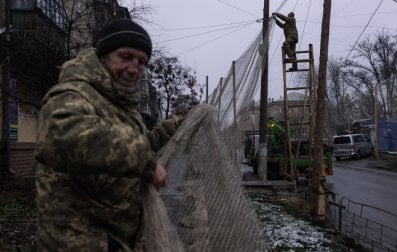
Ukraine: Russian forces this week continued to make steady but significant territorial gains in Ukraine, pushing into the hard-fought eastern city of Pokrovsk and advancing in the southern Zaporizhzhia region.
Russia has spent more than a year trying to capture Pokrovsk, a logistics hub and transport gateway that would allow it to advance towards other Ukrainian-held cities in the Donetsk region.
Ukraine acknowledged on Tuesday that about 300 Russian soldiers had entered the city as thick fog gave cover from drones. Footage showed Russian soldiers entering the city on motorbikes and trucks along roads scattered with debris. A Ukrainian MP, Oleksiy Goncharenko, wrote on Telegram: “We are losing Pokrovsk. The Russians have broken into the city.”
In Zaporizhzhia, Ukrainian forces withdrew from five villages after intense fighting and Russian artillery bombardments.
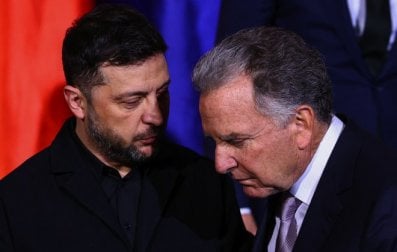
Ukrainian President Volodymyr Zelensky said defending Pokrovsk and Zaporizhzhia had been “difficult, in part because of weather conditions that favour the attacks”.
Separately, German investigators have gathered evidence they say shows an elite Ukrainian military unit was responsible for underwater explosions in September 2022 that sabotaged the Nord Stream gas pipeline between Russia and Germany.
Germany has issued arrest warrants for at least six people, but the case has caused tensions among Ukraine’s European allies.
In Poland, which opposed the pipeline, a court ruled in October that a Ukrainian diver, Volodymyr Zhuravlev, should not be extradited. The court said the attack was not sabotage but a legitimate act conducted during wartime. The Polish prime minister, Donald Tusk, said on X: “The problem with Nord Stream 2 is not that it was blown up. The problem is that it was built.” Hungary, which has close ties to Moscow, accused Tusk of trying to “defend terrorists”.
In Italy, a court approved the extradition of a former Ukrainian military officer, Serhiy Kuznetsov, who was detained in August. He is appealing the ruling but has begun a hunger strike, claiming Italian authorities mistreated him to try to force a confession.
Ukraine has denied involvement and says Russia conducted the attack.
The neighbourhood
Australian Prime Minister Anthony Albanese and Indonesian President Prabowo Subianto on Wednesday announced plans for a landmark security treaty that will require the countries to consult each other if threatened.
The treaty commits the two countries’ leaders and ministers to consult regularly on security matters and to pursue opportunities for joint defence activities.
Albanese, hosting Prabowo in Sydney, said it was a “watershed moment” signalling a new era in ties between the two neighbours. He said he planned to travel to Indonesia in January to sign the treaty.
“This treaty will commit Australia and Indonesia … if either or both countries’ security is threatened, to consult and consider what measures may be taken either individually or jointly to deal with those threats,” Albanese said.
Prabowo said the treaty highlighted that “good neighbours will help each other in times of difficulties”.
“It is our destiny to be direct neighbours,” he said. “So, let us face our destiny with the best of intentions.”
The treaty comes 30 years after a landmark security pact signed by then prime minister Paul Keating and Indonesian president Suharto in 1995. That pact was abrogated by Jakarta during the Timor crisis in 1999, though the two countries signed a new security deal in 2006.
Susannah Patton, from the Lowy Institute, told ABC News the latest treaty was a “very significant” step for a non-aligned country such as Indonesia.
Democracy in retreat
India: Police in India believe a massive car explosion near the Red Fort in Delhi that killed at least 10 people on Monday was carried out by a Pakistan-based militant group.
India’s home ministry confirmed on Tuesday the explosion was being investigated by its anti-terrorism force. The prime minister, Narendra Modi, signalled he believed it was a terrorist attack. “The conspirators behind this will not be spared,” he said.
Witnesses described gruesome scenes following the explosion, which occurred on a busy road near India’s 17th century Red Fort, a popular tourist destination. Mohamed Hafiz, a local resident, told BBC News: “There was blood everywhere … The scene was too disturbing – I could even see body parts.”
The explosion could add to simmering tensions between India and Pakistan following their brief conflict in May in the wake of a deadly attack in Indian-administered Kashmir that Delhi blamed on Pakistan.
On Tuesday, The Times of India reported the car that exploded near the Red Fort was believed to have been driven by a doctor with links to Jaish-e-Mohammad, a Pakistan-based militant group that operates in Kashmir. A group of doctors were arrested on Monday after authorities uncovered a cache of explosives during a raid outside Delhi.
Spotlight: BBC in crisis
United Kingdom: In June, Michael Prescott, a respected British journalist, resigned as an adviser to the BBC board over “profound and unresolved” concerns about the broadcaster’s news standards. In a 19-page memo for the board, he said the BBC had repeatedly ignored complaints, and “in many cases simply refused to acknowledge there was an issue at all”. He noted concerns about the BBC’s coverage of the United States election, racial diversity, the Gaza war and transgender issues.
“I have never been a member of any political party and do not hold any hard and fast views on matters such as American politics or disputes in the Middle East,” he wrote. “Rather, what motivated me to prepare this note is despair at inaction by the BBC executive when issues come to light.”
The memo was leaked to London’s The Daily Telegraph, and was seized upon by the BBC’s rivals and critics. Much of the outrage focused on a documentary aired as part of BBC’s investigative show Panorama a week before the US election last year. The documentary spliced together two unrelated comments from a speech by Donald Trump to falsely suggest he urged his supporters to “walk down to the Capitol … and we fight. We fight like hell.”
Karoline Leavitt, the White House press secretary, denounced the BBC as a “leftist propaganda machine”.
Last Sunday, the BBC’s director-general, Tim Davie, and its head of news, Deborah Turness, resigned. “Overall the BBC is delivering well, but there have been some mistakes made…” Davie said.
On Thursday, the BBC apologised to the US president over the edited video, 24 hours ahead of the deadline Trump had set for a US$1 billion lawsuit unless the broadcaster issued a retraction, an apology and paid compensation. The BBC published a clarification on its website, but has refused to pay the proposed damages. “While the BBC sincerely regrets the manner in which the video clip was edited, we strongly disagree that there is a basis for a defamation claim,” the broadcaster’s lawyers wrote in a letter to Trump’s legal team.
Earlier that day, however, the broadcaster faced a second accusation over similar footage aired on its Newsnight program, again surfaced by The Daily Telegraph. A spokesman for Trump’s lawyers told the paper it was “now clear that BBC engaged in a pattern of defamation against President Trump”. The BBC says the matter is being looked into.
As a public broadcaster, whose funding comes from a licence fee paid by households with televisions, the BBC has frequently been – as the Financial Times put it this week – “a political punchbag for all sides of the fevered culture wars”. Indeed, the Prescott memo and subsequent resignations were variously greeted as proof of the BBC’s irredeemable groupthink and bias, or as confirmation that it was the target of a political plot.
Amid this clamour, others, such as BBC chair Samir Shah, insisted the saga highlighted the need for “high quality, independent journalism in today’s polarised society”.
“There is an increasing need for the public to be informed in a way that is impartial, truthful and is based on evidence they can trust,” he wrote in a statement early this week. “That is the sacred job of the BBC.”
This article was first published in the print edition of The Saturday Paper on November 14, 2025 as "Australia and Indonesia sign landmark security treaty".
For almost a decade, The Saturday Paper has published Australia’s leading writers and thinkers. We have pursued stories that are ignored elsewhere, covering them with sensitivity and depth. We have done this on refugee policy, on government integrity, on robo-debt, on aged care, on climate change, on the pandemic.
All our journalism is fiercely independent. It relies on the support of readers. By subscribing to The Saturday Paper, you are ensuring that we can continue to produce essential, issue-defining coverage, to dig out stories that take time, to doggedly hold to account politicians and the political class.
There are very few titles that have the freedom and the space to produce journalism like this. In a country with a concentration of media ownership unlike anything else in the world, it is vitally important. Your subscription helps make it possible.
Subscriber exclusive
Send this article to a friend for free.
Share this subscriber exclusive article with a friend or family member using share credits.