Cricket
Following the death of her father in 1964, the author found solace in her love of cricket and especially in her adulation of fellow left-hander and batting allrounder Bob Cowper. By Catherine McGregor.
A childhood idol and a significant summer of cricket
The line is William Faulkner’s and I think of it often: “It is all now you see. Yesterday won’t be over until tomorrow and tomorrow began ten thousand years ago.”
Like me, Faulkner was haunted by the demons of alcoholism. Unlike me, he never got sober. Unlike me, he achieved his potential as a writer. He was prolific, a genius. I wrote a book about rugby in 1985 and a cricket book in 2012.
Crippling self-doubt is soluble in alcohol. So are marriages, careers and ultimately life itself. Had I not stopped drinking in 1990, I would have died a long time ago. My regret at books unwritten and talent squandered, at potential never realised, is ameliorated by the fact I am alive.
On the cusp of 70, I am now in what Carl Jung referred to as the “afternoon of life”. I should have died last century, such was my hopeless state of mind and body. Jung suggested we must make peace with failure, regret and remorse and expand our sense of the sacred and eternal.
Faulkner was mandatory reading in the language and literature program at the Royal Military College, Duntroon, where I studied the military operations of the American Civil War and the campaigns of Napoleon.
I joined the Australian Army on January 14, 1974. As a young infantry officer, I led soldiers who had fought in the Vietnam War. My peers and I felt chagrined that we had not served in that war. History rehabilitated us in our own estimation. It took me until 2002 to deploy overseas. I twice commanded Australian soldiers on operations, but that is a story for another day.
Since the death of my father, three days before Christmas in 1964, two dreams sustained me. I wanted to be a soldier just like Dad, who was a veteran of the Second AIF in New Guinea. I also wanted to play Test cricket for Australia. I achieved the former and failed dismally in the latter.
Into the yawning chasm left by the loss of my father came Bob “Wallaby” Cowper, my childhood idol. Jung could probably unravel what he represented to me, as a shy, fatherless boy in Queensland, already questioning his gender.
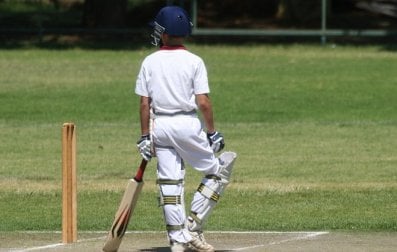
Primarily, what I loved about Cowper was that he was left-handed. So was I, and in the Catholic education system of the era, left-handedness evidently connoted deeper satanic inclinations.
Trying on Mum’s clothes paled into insignificance besides my insistence on holding my pencil in my left hand. The persistent attempts of the nuns to convert me to right-handedness caused me severe mental harm. My darling mum actually intervened on my behalf to insist that I be permitted to write with my left hand.
I was already walking and talking in my sleep in the year after Dad died. The harshness of the constant corporal punishment administered to my left hand was evidently compounding this, however psychiatric interventions for eight-year-old kids in Toowoomba were unheard of in 1965.
To those born this century, this story may seem implausible, but it happened. Indeed, it was commonplace. I was smacked with a feather duster every time I picked up a pencil with my left hand. Duntroon was a wellness retreat after the Christian Brothers.
According to Jung, we relinquish many of the aspirations of life’s morning as we mature spiritually. In other words, our youthful ambitions, to secure career acclaim and wealth, while understandable, lead only to neurosis if we cling to them into our old age. The spirit and sense of the sacred expand in proportion to the shrinkage of the ego with its insatiable demand for material success, acclaim and the esteem of others. These must recede as we enter life’s afternoon.
Ageing may be a golden chapter of self-discovery. Not the illusory life peddled by the superannuation industry – of campervans approaching outback sunsets or yoga and choir classes crammed with other beaming Boomers – but a sense that regardless of loss or failure or ambitions unrealised, the gift of life itself suffices.
Cowper died this year. May 10 to be precise. A little part of me died with him. If you want to face mortality and feel old, then note the passing of your very first childhood idol. More than walking around the house looking for reading glasses that are already nestled on my head or forgetting the name of that bloke that I see every morning at the coffee shop, the death of a childhood hero increases the pealing of that bell John Donne assures us tolls for each of us.
When Cowper died, I shed a tear. Floods of them. It really is all now you see. Suddenly, the mid ’60s felt more recent than those strange, pandemic years of 2020 and 2021. He was gone.
I always wanted to profile him. He never answered the requests. We never met despite having many cricketing friends in common and my having been in a privileged commentary role around the game for a number of years.
I had always assumed that our paths would cross, probably at the MCG, where he scored 307 against the touring Englishmen under M. J. K. Smith in February 1966.
By then, I had become addicted to the ABC “sound of summer” through our crackling car radio or my brother’s ubiquitous transistor radio, which constantly played that seditious Beatles music so loathed by my dad as symptomatic of the decay of Western civilisation. Mercifully, cricket on the radio unfailingly restored family harmony.
That 1965-66 Ashes series riveted me. I can remember it vividly. Not only did I listen to the broadcasts, but I usually watched the final session on our black-and-white Motorola television. Through cricket I drew solace both from Dad’s recent death but also the ostracism for my writing hand. The left-handed exploits of Bob Cowper should have been drawn to the attention of the Vatican.
Again, Jung would perhaps suggest some form of projection onto a surrogate father figure. Who knows? I was obsessed with the exploits of R. M. Cowper. When he was dropped after an abject Australian capitulation in the third Test in Sydney, I was heartbroken. Sure, he scored a duck in the second innings, but his 60 in the first was decent though slow. Ian Chappell told me: “To understand that 300 you must understand how angry being dropped after Sydney made Wal.”
I had a small photo of Cowper pinned above my bed. That summer Scanlens marketed bubblegum containing photos of famous cricketers. I squandered my pocket money trying to accumulate the full collection of 40. Ultimately, Mrs Ross, the proprietor of the little corner store near my home, allowed me to peek inside the wrappers before purchase to determine whether I already possessed the portrait contained therein.
Hitherto, I was going broke threepence at a time buying them blind and acquiring multiple images of the same players. Geoffrey Boycott was the final card in my collection. Not worth waiting for then nor knowing now. Cowper, posing in batting stance, smiling, was card 15. He was handsome, assured, everything I aspired to be.
Cowper returned to the Australian team for the fifth and final Test and batted his way to immortality. His 307 stood as the highest score by an Australian at home until 2003. He came to the crease on the evening of Saturday, February 12, 1966, with Australia 2-36 and in a precarious position. He was bowled by Barry Knight on February 16 for 307. Many years later Knight regaled me with the story of that dismissal. It impacted me more than Whitlam’s. He and Cowper had become friends. Cowper loathed Sir Donald Bradman, as did his mate, Ian Chappell.
By day five of the match, the wicket was effectively dead, as was the rubber. Knight said the ball that claimed Cowper’s scalp was absolutely innocuous. “It literally rolled along the deck under his bat. The bloody bails fell forward it was so slow. Every time he encountered me over beers after that, he abused me. ‘You were supposed to let me overtake fucking Bradman!’ I was trying!”
Faulkner’s epic lines originally described the moments before Pickett’s doomed charge at Gettysburg. “For every Southern boy fourteen years old, not once but whenever he wants it, there is the instant when it’s still not yet two o’clock on that July afternoon in 1863 … and it’s all in the balance, it hasn’t happened yet, it hasn’t even begun yet, it not only hasn’t begun yet but there is still time for it not to begin…”
Australia changed in the middle of Cowper’s innings. It hadn’t happened and then it did. When he returned to the crease on the Monday, Australia adopted decimal currency. My cricket bubblegum cost five cents rather than threepence. Australia had just months earlier contributed its first ground combat unit – 1RAR – to the Vietnam War. The Battle of Long Tan and the Tet Offensive lay in the future.
Likewise the historic referendum of 1967, carried overwhelmingly and offering some hope for true constitutional recognition of First Peoples. And Britain’s withdrawal from East of Suez, announced in 1968. It’s all now you see. It doesn’t have to begin. What might the next 60 years have yielded this vibrant emerging nation, whose cricketers were thumping the Mother Country? Surely a Republic was merely a matter of time, a formality? A Treaty with our First Peoples? Surely?
In the afternoon of my life, the shadows are lengthening. Is it twilight or just gloom? Who would have dreamt that my military career would be bracketed by two losing wars alongside the United States, and that we seem to be eager to volunteer to do it all over again. That a foreign monarch still appears on our currency and in the foyer of every government building. True recognition of the nature and toll of our colonisation of this ancient land on both the original owners and the colonisers continues to elude us.
People age. Inexorably. They die. Even Bob Cowper. Nations can perhaps become stuck in adolescence. Or have we even matured that far? Are we really just kids frozen in that summer of 1966, trying to work out how much the bubblegum costs with this newfangled decimal money?
This article was first published in the print edition of The Saturday Paper on November 15, 2025 as "A timeless innings".
For almost a decade, The Saturday Paper has published Australia’s leading writers and thinkers. We have pursued stories that are ignored elsewhere, covering them with sensitivity and depth. We have done this on refugee policy, on government integrity, on robo-debt, on aged care, on climate change, on the pandemic.
All our journalism is fiercely independent. It relies on the support of readers. By subscribing to The Saturday Paper, you are ensuring that we can continue to produce essential, issue-defining coverage, to dig out stories that take time, to doggedly hold to account politicians and the political class.
There are very few titles that have the freedom and the space to produce journalism like this. In a country with a concentration of media ownership unlike anything else in the world, it is vitally important. Your subscription helps make it possible.
Subscriber exclusive
Send this article to a friend for free.
Share this subscriber exclusive article with a friend or family member using share credits.