Gardening
Returning from travels, the gardener finds the wild profusion of growth that summer entails, and her place in the work of taming and protecting. By Margaret Simons.
Mutiny in the bounty
The things we humans do to ourselves.
There is nothing in nature that mandates the things we do at this time of year – the pressure to complete all our work, to prepare our houses, to cook feasts. Nothing says that, having climbed those mountains, we should then be prepared to relax, to be joyful, or even – that awful word, usually a euphemism for foolish and fat – jolly.
Nor is there anything to say that, after a few days of excess and mandatory cheer, we should enter the reflective, self-critical state of composing resolutions for the new year.
Christmas is a construct. New Year is an arbitrary mark on the calendar. Previous cultures have determined the new year to be as early as November, or as late as March. The one fixed thing, the thing you cannot deny, is the solstice – the time when the sun reaches its most northerly or southerly excursion. That is fixed, although it does not fall on Christmas Day, but a little before. Nevertheless, that is the reason the world’s great religions all have festivals around this time.
In the northern hemisphere, it is the time to feast to keep out the cold, to eat up the dried fruit and the suet and the preserved plum puddings, to slaughter the fatted beast. It is the low point of the year and an expression of faith that resurrection – spring – will surely come.
Here in the southern hemisphere, it is the opposite. This is the time of stupendous growth, of stuff – weeds, vegetables, flowers – running out of control. The time when plans come to their fulfilment, or else must be abandoned. The time when things feel both bountiful and vaguely threatening.
I have recently arrived home after six weeks overseas, and it hit me in the face. Coming back from the airport in the taxi, I saw that the new apartment blocks around the corner, which were just a hole in the ground when I left, had become a 15-storey framework.
Hundreds of living spaces for hundreds of people – my future neighbours – delineated if not yet divided by plasterboard, brick and glass. I felt like I had missed a chapter in the story of my place, my people. My head swam with jet lag.
We turned the corner into my street, and I alarmed the driver by shouting out, “My god! The kale!”
Because my house-sitter, having read this column, had taken it to heart and, far from allowing the cabbage white caterpillars their feast, had sprayed them. The kale had grown lush and tall. One plant leant over the footpath, making it difficult to get my suitcases through the front door. The other fenestrated the fence in curly green waves.
In fact, there was no bare soil showing in the front garden. Almost everything had grown beyond my expectations. The tomato plants I shoved in the week before I left were sprawling everywhere but with neat clusters of green globes signalling that I might well achieve that marker of success: homegrown tomatoes on the Christmas table.
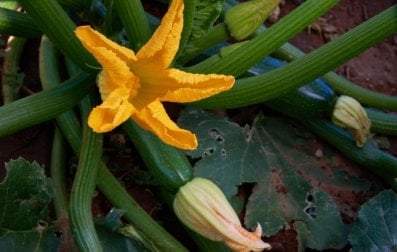
Cucumber plants were climbing every trellis except the one I intended for them. Beans were romping through the branches of the crabapple tree and the leeks had stopped sulking and gained girth and height.
When I got to the backyard, it was the same – except the weeds had also burgeoned. The path from back door to back gate was overgrown and the oxalis had sprouted between the bricks.
The bay tree, meant to be a contained specimen suitable for culinary purposes only, was nearly level with the second-floor windows.
Jet lag defeated my initial attempts to restore order. I kept dropping the trowel and the secateurs and going to bed. The sun was up when my body said it should be night. My night was full of awakenings. My dreams were fearful. The garden grew up through the floorboards, and the cucumber vines came in through the windows. Oxalis smothered me in my bed.
I was being punished. How could I have gone away? How could I have missed the beats, the demands of the season, in this, my place, my responsibility – the sweet burden of home?
Over the past two days, I got stuck in. I slashed the kale, dunked it in the sink and ate it. First I made salad, wilting it with salt then dressing it with honey and oil. Then I braised it with garlic and lemon juice and tahini. I ate the front path clear, and advanced on the carpet of kale that was taking up a quarter of my front yard.
Then I got out the Roundup and the little make-up paint brush that somebody left behind and dotted poison on the oxalis in the footpath. I ripped up old underwear and a cotton scarf, coaxed the tomato plants into upright positions and bound them to their stakes. I encouraged the cucumbers to occupy their own trellis, but I mostly accepted their choices.
What to plant in the spaces now created? Amid all the plenty, some things are missing. The lettuce has long since bolted to seed. Likewise the coriander. The basil somehow escaped being watered and died.
Normally I grow my lettuce from seed and make sure I have a constant supply, sowing more as one lot matures. But now I want instant results.
So I drive to Bunnings and, as I always do in that temple of home and self-improvement, buy more than I have room for. A punnet of mixed lettuce. A mature capsicum. Eggplant seedlings because – why not? Surely they will fit somewhere. A dill plant for which I have no home in mind, but who can resist that feathery foliage? There should be more dill in the world.
Pagan religions teach that there is no light, no plenty, without its opposite. Darkness and deprivation.
Now the evil side of summer approaches. I will not plant out these seedlings today because tomorrow is predicted to top 40 degrees, with high winds. Putting these tender plants into the garden would be certain death. I might as well put them in the oven.
Who knows what that heat and wind will bring? By the time you read this, we may all be talking about fires. We may be talking about the way we have altered the eternal round of the seasons. We may be not celebrating but in a collective lament.
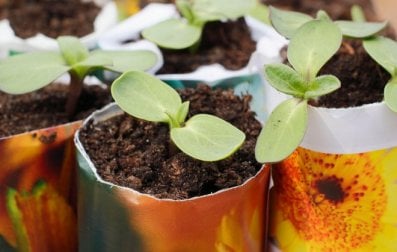
For now, though, the tray of seedlings sits on my kitchen table by the window. I will nurture them through the heat and when the cool change arrives they will go into the soil. At the end of the day, I will stand with my back to the house, hose in hand, bringing relief to the garden.
It is less than a week since I got home. Of course I am not ready for Christmas. I have barely unpacked.
But I am dirty and tired, rather than only tired. I have tomato leaves in my hair and soil in the calluses of my fingers. The green bin is overflowing and there is kale salad in the fridge.
I am not jolly. I am not even reliably cheerful. But I am back where I belong, part of my own story once more. In my own little patch of dirt.
This article was first published in the print edition of The Saturday Paper on December 21, 2024 as "Mutiny in the bounty".
For almost a decade, The Saturday Paper has published Australia’s leading writers and thinkers. We have pursued stories that are ignored elsewhere, covering them with sensitivity and depth. We have done this on refugee policy, on government integrity, on robo-debt, on aged care, on climate change, on the pandemic.
All our journalism is fiercely independent. It relies on the support of readers. By subscribing to The Saturday Paper, you are ensuring that we can continue to produce essential, issue-defining coverage, to dig out stories that take time, to doggedly hold to account politicians and the political class.
There are very few titles that have the freedom and the space to produce journalism like this. In a country with a concentration of media ownership unlike anything else in the world, it is vitally important. Your subscription helps make it possible.
Subscriber exclusive
Send this article to a friend for free.
Share this subscriber exclusive article with a friend or family member using share credits.