News
Despite passing an ambitious suite of legislation in the final sitting week of parliament, Anthony Albanese is seen by focus groups as greedy, timid and too close to corporate Australia. By Jason Koutsoukis.
Exclusive: Albanese’s satisfaction ratings as bad as Morrison’s
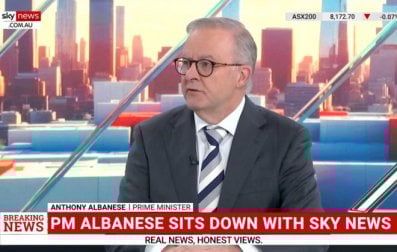
Focus group research by RedBridge indicates that voter perceptions of Prime Minister Anthony Albanese are as bad as they were for his predecessor Scott Morrison, strengthening the growing belief that Liberal leader Peter Dutton is the frontrunner to form government after the next election.
The RedBridge qualitative research aligns with recent private polling commissioned by the Liberal–National Coalition, which internal party sources say dispels the narrative that Peter Dutton is unelectable.
“They’re probably at the worst position electorally now than they’ve ever been since the election in May 2022. There is a perception out there in parts of the electorate that Albanese’s government has not been completely focused on their needs, right or wrong,” says RedBridge Group director of strategy and analytics Kos Samaras, who has overseen more than 450 political focus groups this calendar year. “His satisfaction ratings are on a par with Morrison now.”
The polling caps a bruising year for the prime minister, with voters penalising his government for not doing enough to ease the cost-of-living crisis and turning their ire on him personally.
Criticism sharpened around his purchase of a $4.3 million home on the New South Wales Central Coast. According to focus groups, voters were also unhappy at his cosiness with corporate leaders such as former Qantas chief executive Alan Joyce and his perceived fondness for “freebies”. Among progressive voters there was deepening disappointment at his apparent timidity and lack of courage.
“He has spent the greater part of 2024 explaining to Australians why he has made some personal choices like buying a mansion, taking flight upgrades, but he seems to have not really worked that hard on making sure that whatever perception Australians have of him, that it’s of a positive nature,” Samaras says.
While the government succeeded in getting the bulk of its legislative agenda through parliament in the final sitting week of the year, including more than 30 pieces of legislation on the last day, Samaras believes that voters remain dissatisfied because whatever the government has achieved has not been enough to address what they see as the institutionalised and ingrained inequalities they face.
Paul Strangio, emeritus professor of politics at Monash University, makes a similar point.
“The deluge of legislation in the final week of the parliamentary year did nothing to fundamentally alter the picture that in 2024 – following the failed endeavour of 2023 to land a totemic change through the Indigenous Voice referendum – Albanese and his team fell back to a practice of eking out well-intentioned but modest measures,” Strangio says.
The author of a September essay for Inside Story that highlighted the entrenched public perception of Albanese as well-intentioned but insipid, weak and more a hostage to events than a shaper of them, Strangio argues that three months later his assessment of Albanese’s performance remains largely unchanged.
“Now in sight of the 2025 election, it means that the government will end its term with no signature landmark reform,” Strangio says. “The impression is of a government engaged in a maintenance project rather than embarked on an ardour-filled mission – an issue bedevilling social democratic parties worldwide.”
Nor has the prime minister’s performance in the final months of the year suggested he is getting any better at creating a narrative that connects the government’s current actions with where Labor is intent on taking the nation.
“Growth in office has been a hallmark of many of Australia’s best-performed prime ministers, but Albanese is yet to demonstrate that capacity,” Strangio says.
“He was a keen observer of Howard’s prime ministership, but perhaps the lesson he ought to have drawn from watching from the opposition benches is that when Howard was in trouble during his first term, he drew upon his deep-seated convictions to strike out on a bold direction – taxation reform – to invigorate his government.”
Whether or not Albanese has a commensurate reservoir of convictions is a question that lingers uncomfortably, according to Strangio, after nearly a full term of his prime ministership.
What is even more disturbing and demoralising for the government is feedback from focus groups and sliding poll numbers that show voters struggling to nominate any measures the government has implemented.
“Three things occur: one, the lack of salience of the government’s nips-and-tucks approach, especially in an environment in which there is electoral impatience with the status quo; two, Albanese’s deficiencies as a ‘communicator-in-chief’; and three, the confounding problem of reaching voters in a fragmented and polarised media landscape,” Strangio says.
“In sum, it’s fundamentally been more of the same from the prime minister and his government this year, despite the evidence that the formula is leaving the government in a political position of little better than muddling through.”
Liberal Party insiders believe that momentum started to shift to Peter Dutton in September last year, halfway through the current three-year parliamentary term and about a month out from the October 14 vote on the Voice.
“As the ‘Yes’ campaign was hitting rock bottom, one of its few big allies was corporate Australia, led by none other than Alan Joyce, not just the nation’s most unpopular CEO but arguably its most disliked public figure, full stop, who was at the time embroiled in a litany of controversies,” says one Liberal adviser.
“Yet, instead of distancing himself from this liability, or even taking a swing at him, Albanese doubled-down on a relationship that amplified the belief that he was not interested in the issues that mattered to ordinary Australians struggling to pay the mortgage.”
When Albanese appeared with Joyce on August 14 last year for the unveiling of three Qantas aircraft painted with the “Yes23” logo in support of the Indigenous Voice to Parliament, and praised Qantas as representing “the spirit of Australia”, Coalition insiders thought it was the beginning of something.
At the time Albanese was facing criticism over the government’s decision to block Qatar Airways from launching 28 new flights a week between Qatar and Australia, as well as reports that Joyce had granted a Qantas Chairman’s Lounge membership to Albanese’s son.
“Over the next four weeks, Albanese and his ministers found themselves on the defensive, unable – or unwilling – to take on Qantas amid mounting controversies,” the Liberal adviser says.
“These included the Qatar Airways decision, Alan Joyce’s exorbitant pay, an ACCC lawsuit against the airline, and the High Court’s damning ruling that Qantas had illegally sacked nearly 2000 baggage handlers who were all their own people, union members.
“Adding to the backlash was an Aviation Green Paper widely dismissed as a token effort with no real intent to improve competition in the sector. Throughout it all, the prime minister stubbornly refused to distance himself from Joyce, doubling-down instead of cutting ties. That was a misstep, I think, and it marked a turning point for Dutton, who has been steadily gaining momentum ever since.”
The latest Freshwater Strategy Poll, commissioned by The Australian Financial Review and published on Monday, showed the Coalition leading Labor on a two-party preferred basis by 51 per cent to 49 per cent. The poll also found the majority of voters now expect Peter Dutton to form government after the election.
Liberal Party operatives are heartened by this and other poll averages, and believe Dutton stands a realistic chance of winning more lower house seats than Labor – although still likely to be looking at minority government.
“This notion that Dutton is unpopular is simply not true, and that’s being reflected in the public polling that’s out there, as well as the private polling,” says one Liberal operative familiar with the Coalition’s internal research. “But at the same time, for Dutton to be able to form a majority government, he would need a swing that looks like a landslide and he’s not going to get a landslide on the current numbers. But he could get to a point where he is the one best able to form a government.”
Coalition insiders acknowledge that while Labor probably has a sharper campaign team at the moment, issues such as Dutton’s proposal to build seven nuclear power stations are not hurting as much as Labor might have hoped.
“The polling is showing that the timeline for nuclear is so far away that people are tuning out a little bit, and Dutton’s advantage is that he’s promising to bring prices down in the short term with more coal and gas,” the Liberal adviser says.
“There is evidence that people don’t trust renewables … They’re not anti-renewables, per se, but they don’t necessarily trust what they’re hearing about the renewable solutions.
“Cost of living is still the No. 1 issue, like, two to one over the next issue, which is housing, and that is largely about affordability and rising rents, and the third issue is management of the economy. So, cost of living is just a massive, super issue, and on all three counts, the Coalition has the advantage.”
So can Dutton actually win?
“There is a growing narrative, emanating from right-of-centre commentators, of progressives repeating the mistake of history by construing Dutton as unelectable and by underestimating the electoral appeal of his muscular, populist-hued conservatism. At that risk, I remain sceptical of his ability to win office,” Paul Strangio says.
“Though no soothsayer, my hunch is that the most likely outcome of the 2025 election is a minority Labor government. Electoral mathematics dictates this as much as anything else. The path to government for the Coalition is very steep in the absence of the Liberals reclaiming the teal seats, and Dutton’s political and electoral strategy has been undeniably focused on outer-suburban and regional-rural areas.
“He is embarked on an electoral realignment, albeit one that has been running since Howard’s era. I continue to also believe that women and young voters loom as substantial hurdles to his prime ministerial ambitions.”
A more interesting question, Strangio argues, is what kind of government will Dutton have set himself up for, if he does manage to win?
“How would the Coalition’s paucity of credible policy development, the populist technique of crude reductionism – simple answers to complex problems, e.g. the nuclear energy fig leaf – and Dutton’s divide-and-conquer strongman leadership style translate into office? I doubt it would be a basis for sustainable or productive government and so the cycle of instability and discontent would continue.”
Samaras, for his part, believes that while it will be hard for Albanese to turn perceptions around between now and the election, which must be held by the end of May, it’s far too early to make a prediction on who will end up being able to form a government.
“The possibility of a change of government is present in our research right now … It isn’t huge, but it’s present,” says Samaras. “Will that presence grow? Maybe. We’ll just have to wait and see. We just don’t know yet.”
This article was first published in the print edition of The Saturday Paper on December 21, 2024 as "Exclusive: Albanese’s satisfaction ratings as bad as Morrison’s".
For almost a decade, The Saturday Paper has published Australia’s leading writers and thinkers. We have pursued stories that are ignored elsewhere, covering them with sensitivity and depth. We have done this on refugee policy, on government integrity, on robo-debt, on aged care, on climate change, on the pandemic.
All our journalism is fiercely independent. It relies on the support of readers. By subscribing to The Saturday Paper, you are ensuring that we can continue to produce essential, issue-defining coverage, to dig out stories that take time, to doggedly hold to account politicians and the political class.
There are very few titles that have the freedom and the space to produce journalism like this. In a country with a concentration of media ownership unlike anything else in the world, it is vitally important. Your subscription helps make it possible.
Subscriber exclusive
Send this article to a friend for free.
Share this subscriber exclusive article with a friend or family member using share credits.