Architecture
The Saturday Paper’s architecture critic looks back at the highlights of 2024. By Naomi Stead.
Best architecture: diversity, quality and inventiveness on display
I had a “golden ticket” tour of the nation’s best buildings this year, as a juror on the Australian Institute of Architects’ national awards. We pinballed around the country from Hobart to Brisbane to Port Hedland and everywhere in between, to visit the shortlist of 62 in person. The experience affirmed my confidence in the diversity, quality and inventiveness of Australian architectural culture.
Even among the winners I had some personal favourites. One was North Head Viewing Platforms by CHROFI and Bangawarra with National Parks and Wildlife Service – a superb example of sensitive site-specific design, informed by respectful collaboration with traditional owners and understanding of Country, resulting in two cliff-edge viewing platforms with an exquisite level of formal resolution. In the new house category, the Naples Street House by Edition Office was close to perfect – irresistible even in a very strong field. Likewise, all the residential alteration contenders were blisteringly good.
I also have a soft spot for the primary schools. Both Clifton Hill Primary School, a whimsical yet high-performance mass timber and brick number by Jackson Clements Burrows Architects, and The Cottage School, a rich and intimate learning space for a small independent school in Tasmania by Taylor + Hinds Architects received national awards.
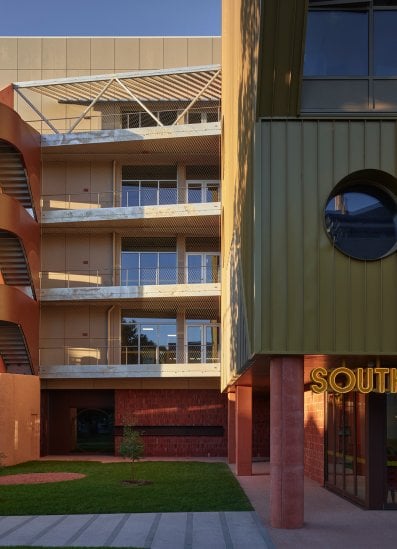
Other idiosyncratic favourites: the jubilant profusion of Geelong Arts Centre (Stage 3) by ARM Architecture; the rough and rugged adaptation of a Richmond chocolate factory into a workplace in Sanders Place by NMBW Architecture Studio, Openwork and Finding Infinity; the provision of climate responsive and culturally sensitive housing for Indigenous students in Darwin in Incidental Architecture’s Nungalinya. In the end, as the cliché goes, they were all winners.
Elsewhere, in the national scramble to address housing supply and affordability, two design-led solutions have come to increasing prominence. The “pattern book” approach means that exemplary apartment designs are commissioned and made available by government, with streamlined approvals processes. Government Architect NSW’s groundbreaking Pattern Book Design Competition is the stand-out here, with winning designs for medium density apartment buildings to be built as display prototypes and available from next year.
Meanwhile, so-called modern methods of construction or MMC – essentially factory-making buildings – are increasingly favoured by both state and federal politicians. Queensland and New South Wales each have pilot projects for social housing built using these techniques. The only surprise is that it didn’t happen decades ago.
An alternative approach, laid out in a recent NSW Productivity and Equality Commission report, has recommended the reduction of minimum apartment standards – including access to daylight – aiming to “relax design requirements that limit choice and supply”. This has provoked strong resistance among architects, including current Australian Institute of Architects’ gold medallist Philip Thalis, who argues that “it’s hardly as if badly designed apartments would be any cheaper”.
It’s been a big year for the Powerhouse Museum, where architecture has continued to be a football kicked around in larger political games. After the first competition-winning design for Powerhouse Ultimo was summarily dumped, in line with an election promise, the same team – Durbach Block Jaggers Architects, Architectus and landscape architects Tyrrell Studio – regrouped and designed a new scheme that is now under construction.
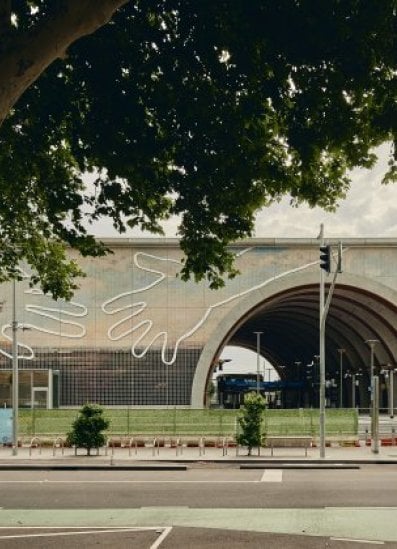
In the meantime, Powerhouse Parramatta is taking shape, with a meta-scaled steel exoskeleton design by Moreau Kusunoki with Genton that will be finished next year. The institution was also a winner at this year’s national awards, taking out the highest award for public buildings with Powerhouse Castle Hill.
In November the institute released its Architecture Industry Decarbonisation Plan 2025-2030, purporting to provide a road map towards net zero emissions in a very carbon-heavy sector. Five per cent of buildings now meet net zero standards, a figure that needs to rise to 100 per cent by 2030. This underscores the significance of ambitious programs such as A New Normal, which continues to steam ahead with a number of carbon-positive “transition projects” across Australia.
Architects also continue to reckon with what it means to indigenise the built environment – now also a cornerstone of formal accreditation processes in the nation’s architecture schools.
Finally, the redevelopment of Sydney’s Sirius building is complete and the luxury private apartments now on sale. Formerly public housing, the building was slated for demolition and then saved after an extensive heritage campaign. While the preservation of the brutalist building is a win, it’s hard to think of a better example of architecture’s complicity in the late capitalist financialisation of the built environment.
This article was first published in the print edition of The Saturday Paper on December 21, 2024 as "The year in reviews".
For almost a decade, The Saturday Paper has published Australia’s leading writers and thinkers. We have pursued stories that are ignored elsewhere, covering them with sensitivity and depth. We have done this on refugee policy, on government integrity, on robo-debt, on aged care, on climate change, on the pandemic.
All our journalism is fiercely independent. It relies on the support of readers. By subscribing to The Saturday Paper, you are ensuring that we can continue to produce essential, issue-defining coverage, to dig out stories that take time, to doggedly hold to account politicians and the political class.
There are very few titles that have the freedom and the space to produce journalism like this. In a country with a concentration of media ownership unlike anything else in the world, it is vitally important. Your subscription helps make it possible.
Subscriber exclusive
Send this article to a friend for free.
Share this subscriber exclusive article with a friend or family member using share credits.