Gardening
Routine is a solace to many, but the winter garden is a reminder that change will come, and the gall wasp’s days are numbered. By Margaret Simons.
The shortest day
Today is the shortest day of the year, assuming you are reading this on Saturday, as intended.
This is the solstice, the bottom of the yearly cycle, and therefore also the turning point. If you are depressed, now is the time to consider whether it can change. If you are cosy, if like me you have shelter and warmth, and your health, and you live in peace and comfort – well, that can change too.
Mutability is a saving grace, a cause for hope. And a bitch.
You never put your foot in the same river twice, because it flows on. You never dig the same soil, because it contains fresh, pulverised remains of things that once lived.
You never live the same day twice even if, like me, your routine is your sanctuary.
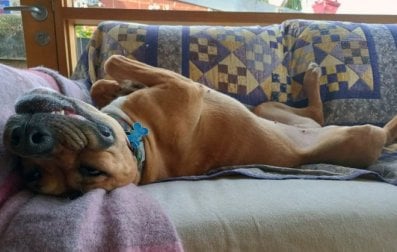
Get up before dawn. Take the dog to the park. Switch the light on her collar so you can see where she is. Watch that light bound away. Know when she is taking a shit because the light is still but for the evocative tremble that accompanies the evacuation of the bowels.
Throw the ball. Lose the ball. Find it half an hour later when the sun is at last above the horizon.
Go home. Coffee, muesli, the media and news of fresh disasters and old disasters that continue.
Procrastinate, then up the stairs to lose yourself in work. Cups of tea. End of day. Another walk, and a crescent moon today, waning.
The new moon comes on Wednesday. Most of us will make it until then, we assume.
Were I not a gardener, I might be tempted to forget that everything changes, given my fridge is always full and my climate always controlled.
As it is, I have been thinking how entirely natural – inevitable, really – that our ancestors used to worship the sun, because the plant world does.
My pot plants are nice and warm but starved of sunshine. They have all turned to the remaining light, holding their leaves towards the sun like supplicants to a stingy god. I don’t like the lopsided look, and I am cruel. I turn them around to face the room, for my pleasure, and watch them struggle to once more find the light.
This morning – the Saturday on which I hope to have your attention – first light was at 6.44am, and the sun came up half an hour later. Perhaps before you read this, I will have been out with the dog, or perhaps since I wrote this, fate has overtaken the illusion of security and I am dead. Sunset will be just before 5pm, and last light will come 27 minutes later.
Last weekend I was planning to prune the citrus trees. The mandarin has grown too tall and become both a superhighway for the possums, and a key part of their diet. They ate almost all of this year’s crop – little suns, orange against the green – before I got the stepladder out. I want to prune to bring next year’s fruit within reach.
I also have a makrut lime tree that is far too big. The fruit of this tree is not for eating. Rather, you use the leaves in curry pastes or sliced thinly into stir-fries or braised in coconut milk. Anywhere you might use lemongrass, in other words.
I use perhaps two dozen leaves a year, and yet the tree has grown to overshadow the backyard and deprive other crops of precious light. I cut off some branches and leave them out for the neighbours, but it is still surplus to my requirements.
I was going to cut it back hard – to a stump – and get out the shovel to dig around the roots and then trim them. Then I was going to put it into a pot, where it could be kept to a size more suited to its limited role in my life.
I had been planning this for weeks.
But last weekend it was cold, and I had an extra coffee with my feet up in woollen socks. Beset by doubt, or laziness, I googled “when to prune citrus”.
It was too soon, Google told me. Midwinter is not the best time. Cut the trunks too severely at this time of year and they might rot. Rather, wait until just before spring, when the sap is rising and the plant is active. And then cut no more than 20 per cent of the canopy, or you will get no fruit. (I plan to ignore that bit, since it is not the makrut fruit I am after. If it yields leaves, at least two dozen, I will be content.)
For the other citrus, before spring is really here – before August is over – remember to cut out the gall wasp in the swellings that distort last year’s new growth. Gall wasps have their routine, and if you want healthy citrus trees, you need to understand it. Inside the swellings live larvae that emerge in early spring. If you can see pinprick holes on the swellings, it is too late. They have gone and you have missed them.
You must get there early and murder them in their beds. Cut off the galls or shave them down with a pocket knife, exposing the grub to the air. Miss your chance and let them come out, and within one week they mate. A few days after that, and they will have laid more than 100 white eggs under the bark of the citrus tree. The galls grow once again through summer, gumming up the flow of sap. A few seasons of that and the branches begin to die and the fruit doesn’t form.
It is a good reason to stay alive, if you think about it. To make sure you are there to murder the gall wasp.
So, thanks to Google, I did not prune the citrus trees last weekend. I made myself another cup of tea and stayed in the warmth of my living room, and went online to look for a pot suitable to contain an overgrown makrut lime.
Late in the day, I brought the money plant I have propagated inside for my daughter, due to predictions of frost. Money plants (Pilea peperomioides) have coin-shaped leaves. The Chinese are said to believe they bring prosperity.
I had a big one, which I divided in autumn. Now there are four, their leaves not yet large enough to put one in mind of money.
My daughter has renovated her bathroom and installed a skylight. She is her mother’s daughter. She wants plants on every surface, and on a pole she has installed for the purpose, to reach up past the heated towel rail and the soap and shampoo and the detritus of getting ready to meet the world. She wants the plants to reach towards the sky.
My son-in-law picked up the money plant as the sun was going down. On his way home, following the river of red taillights on the freeway, he had to stamp on the brakes, and the pot spewed its contents.
My daughter scooped it all up and replanted. The money plant is in full sun, she tells me, with plenty of water, guarded from the cold.
Perhaps it will grow. If not, I have more. When the days lengthen, the coins will form, changing shape, reaching for the sun. Can they bring any more prosperity? How rich we are already.
This article was first published in the print edition of The Saturday Paper on June 21, 2025 as "The shortest day".
For almost a decade, The Saturday Paper has published Australia’s leading writers and thinkers. We have pursued stories that are ignored elsewhere, covering them with sensitivity and depth. We have done this on refugee policy, on government integrity, on robo-debt, on aged care, on climate change, on the pandemic.
All our journalism is fiercely independent. It relies on the support of readers. By subscribing to The Saturday Paper, you are ensuring that we can continue to produce essential, issue-defining coverage, to dig out stories that take time, to doggedly hold to account politicians and the political class.
There are very few titles that have the freedom and the space to produce journalism like this. In a country with a concentration of media ownership unlike anything else in the world, it is vitally important. Your subscription helps make it possible.
Subscriber exclusive
Send this article to a friend for free.
Share this subscriber exclusive article with a friend or family member using share credits.