Books
Steve MinOn
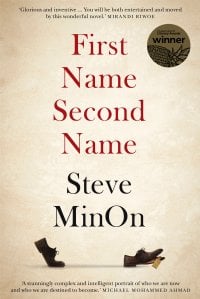
First Name Second Name
Steve MinOn’s virtuosic debut novel, First Name Second Name, is a multigenerational, multi-ethnic Queensland family saga and coming-out tale that grapples with questions of race, class and identity. All this is interleaved with the slapstick horror of the quest of a Chinese-style animated corpse, a jiāngshī, to get from Brisbane to his home town of Innisfail before all his bits fall off.
The corpse belongs to protagonist Stephen Bolin. Gay and biracial, he is tormented in life by the fear that his family would be unable to deal with his sexuality. In death, he is tormented by his northward propulsion and occasional need to literally suck the life out of an innocent rando to keep going. Much of the comedy comes from the fact that the people he encounters along the way rarely seem to notice that he is dead despite his toe tag or mouldering, rotting flesh. It could just be the dark, for he only travels by night. Or it might be a metaphor
for how in life Stephen had always struggled to be seen for himself.
That was true even, or perhaps especially, with men who had a thing for Asians – it dismayed him to feel less attractive than fetishised. One of those men, a handsome blond, introduced Stephen – who knew little more about Chinese culture than the average Queenslander – to the concept of the jiāngshī. The blond was a big fan of the schlocky Hong Kong jiāngshī comedies of the ’70s and ’80s. So am I, incidentally: if you’re Chinese zombie-curious, I suggest you check out classics of the genre such as Encounters of the Spooky Kind on YouTube.
The story of Zombie Stephen’s progress north is interwoven with that of his family’s historical journey south, beginning with his cantankerous great-grandfather, the Cantonese immigrant and gold prospector Pan Bo Lin. Pan Bo Lin married a Scottish lassie who threw him out when she discovered he’d been secretly supporting a second family in China. She raised their kids on her own. They grow up with the name Bolin, forged from Pan Bo Lin’s given names, and on the family goes – working, surviving and intermarrying its way down the generations.
Unexpectedly moving and often very funny, this is a novel of overlapping journeys across space and time. Stephen’s sisters and mother, bit players as the novel opens, come into their own towards the end, in a parallel if more worldly reconciliation with history and identity.
UQP, 272pp, $32.99
This article was first published in the print edition of The Saturday Paper on March 15, 2025 as "First Name Second Name ".
For almost a decade, The Saturday Paper has published Australia’s leading writers and thinkers. We have pursued stories that are ignored elsewhere, covering them with sensitivity and depth. We have done this on refugee policy, on government integrity, on robo-debt, on aged care, on climate change, on the pandemic.
All our journalism is fiercely independent. It relies on the support of readers. By subscribing to The Saturday Paper, you are ensuring that we can continue to produce essential, issue-defining coverage, to dig out stories that take time, to doggedly hold to account politicians and the political class.
There are very few titles that have the freedom and the space to produce journalism like this. In a country with a concentration of media ownership unlike anything else in the world, it is vitally important. Your subscription helps make it possible.
Purchase this book
First Name Second Name
BUY NOW
When you purchase a book through this link, Schwartz Media earns a commission. This commission does not influence our criticism, which is entirely independent.
Subscriber exclusive
Send this article to a friend for free.
Share this subscriber exclusive article with a friend or family member using share credits.