Gardening
The shortest day of the year approaches as an invitation for the gardener to consolidate – to do less, better. By Margaret Simons.
A time of year for gathering in and letting go
Night is longer than the day. The sun rises after 7am, stays low in the sky and sinks below the roofline of the inner suburbs, behind the burgeoning new apartment blocks and the soon-to-be-demolished public housing, just as nine-to-five office workers are coming home.
We have only 10 or so hours of daylight, then the dark, punctuated by city neon and orange streetlight.
The public housing towers catch the last rays of the setting sun and glow for a few minutes, then go grey. The windows light up, both in the towers and up the street.
Each window, until the blinds are drawn, becomes a frame to a view of someone’s life. I see the students sitting at their computers, the families gathered in the kitchens. Passers-by see me, presumably, with my feet up and a cup of tea.
Last night, as I gave my front garden an early evening drink, I could see across the road into the bedroom of a man who stood in front of his mirror, leaning forward, intent. He was wearing a grey cardigan over a red T-shirt, and a blue knitted beanie. His hand went to his chin. What had he seen? A hair? A worrying mole? A loose tooth?
He paused in self-contemplation, then sharply slapped his own cheek, shook his head, opened the door and disappeared into the dimness of the hallway. It was a fraction of an episode in a life – the set-up, climax and denouement hidden from my view. Only because it is autumn, because of the coming of the dark, did I see this much. Now, whenever I see this neighbour, I will think of the way he slapped his cheek, and wonder why, and make up stories about it. Meanwhile, he will not notice me at all, because I am old and grey and he is young.
The shortest day of the year approaches. The temperature is dropping, the leaves are falling, and I have been emptying and giving away pots, because my plans are changing along with my life. I want to do less and do it better.
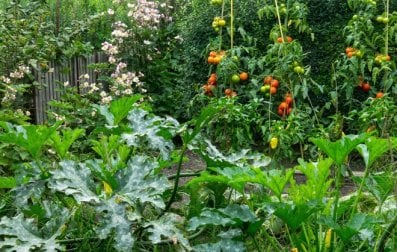
This is the time of year for gathering in, letting go and ripping out. The gathering, in my garden, is about the green tomatoes that will never ripen, and the half-formed pumpkins on the vine that grew by itself from the compost. The letting go is of the plans that did not work out, the ambitions unfulfilled, the life not lived.
Ripping out is straightforward. Last weekend I grabbed my green bin, which lives in the backyard between fortnightly collections. I wheeled it out of the back gate, down the bluestone lane and through the entrance to the McDonald’s car park, then on to the footpath by the metre-wide strip of dirt that divides my house from the street. This north-facing patch is where I grow most of my food crops.
The first quarter of this year has been a disrupted time. My father died. I went to England for three weeks. There were mini crises at home and abroad. The result is a garden so neglected that I have, at times, questioned whether I deserved to call myself a gardener. This feels like a small crisis of identity.
In the front yard I had bean plants and tomatoes. I am ashamed to admit the crops from both went partly to waste. The remaining plants were a mess, choking up the place. I seized the exhausted plants by the stems and ripped them up, disentangling them from the stakes and the old pantihose I used as ties. The plants went into the green bin, the pantihose into the red.
It is years since I wore pantihose. When I turned 40, I decided I would no longer make myself uncomfortable with the effort of meeting some idea of how I should look. I threw out all my shoes with heels higher than an inch. I got rid of bras with underwire. I moved the pantihose from my clothing drawers into the gardening box.
With the ripping out of this crop, the old pantihose are all gone. Next season, I will have to find something else for tying up the tomatoes. Perhaps bras?
Now the earth is bare. I hope some rocket has self-seeded near the letterbox – it is too soon to tell whether the tiny two-leafed plants sprouting there are salad greens or weeds.
Otherwise, the empty space is an affront to my notion of self.
My other main space for growing food is a small triangle of wood decking suspended over the tiny brick-paved backyard. Here is room for a barbecue specifically designed for small spaces, and enough light for a few vegetables in pots.
A shelf abuts my neighbour’s wall, and on this I have a row of rectangular pots where I grow herbs.
The thyme plant is now at least a decade old. Likewise the oregano, which has gone nuts and spread beyond the confines of a single pot. Both plants are gnarled and woody. The leaves are pungent, but you have to wash and pick before you can chop. They look nothing like the tender green herbs in the pages of aspirational cooking and gardening books.
In another pot is a tarragon plant that sprouts anew each spring. In the other three there is nothing but weeds. I planted nasturtiums and chives and parsley way back in spring.
When I wasn’t watching, they failed.
But I am a gardener. I have to be a gardener. And in the evenings of this week I have reasserted that identity. Ever since I first began to garden, I have always had a pot of salad greens growing outside my back door. I still do, but the cut-and-come-again lettuce is nearly exhausted and has grown bitter.
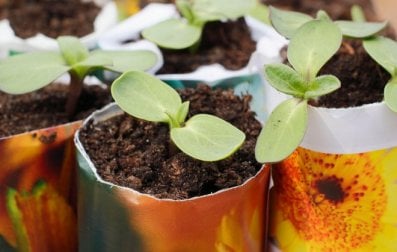
I dig out old plastic pots, fill them with mix and sow two kinds of lettuce – both of which should grow through winter – plus purple-leafed kale, which grows like a weed once you have got it going.
I reach for the celery seed and then see the use-by date on the packet. The seed expired in 2022. I upend it all into the mix. I may get nothing. I may have bonanza. In two or three weeks, I will know.
Meanwhile, in the yard below my little deck, the bay tree needs pruning, the daphne and the camellia have buds. Everywhere else – failed plants and pots full of weeds. I trundle the green bin around to the back again and upend pots of weeds and exhausted potting mix into it. It is so heavy I will have to ask for my son’s help to wheel it back over the bluestone cobbles and put it out the front for collection. I am too old for this kind of thing.
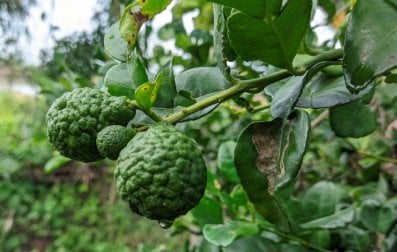
The mandarin tree and the makrut lime are laden with fruit, though, like little orange suns and bumpy tennis balls respectively.
I think I should make marmalade.
This article was first published in the print edition of The Saturday Paper on May 4, 2024 as "A gradual gathering-in".
For almost a decade, The Saturday Paper has published Australia’s leading writers and thinkers. We have pursued stories that are ignored elsewhere, covering them with sensitivity and depth. We have done this on refugee policy, on government integrity, on robo-debt, on aged care, on climate change, on the pandemic.
All our journalism is fiercely independent. It relies on the support of readers. By subscribing to The Saturday Paper, you are ensuring that we can continue to produce essential, issue-defining coverage, to dig out stories that take time, to doggedly hold to account politicians and the political class.
There are very few titles that have the freedom and the space to produce journalism like this. In a country with a concentration of media ownership unlike anything else in the world, it is vitally important. Your subscription helps make it possible.
Subscriber exclusive
Send this article to a friend for free.
Share this subscriber exclusive article with a friend or family member using share credits.