Gardening
The garden is not beholden to the Apostle Paul’s creed, in that the gardener does not always reap what is sown – sometimes the harvest is greater. By Margaret Simons.
Of kale and karma
There is a saying – I am not sure where it comes from – that the footsteps of the gardener are the best fertiliser. The idea is that spending time in the garden means you will notice needs and problems and respond in time to nurture success and avoid disaster.
A yellow leaf here, a gall wasp there, a recurrence of oxalis or the corrugated clusters of grey aphids on the sprouting broccoli. Notice these things and you are in there with the blood and bone. The secateurs. A trowel. In the case of the aphids, a squish of the fingers or, if the outbreak is beyond such mechanics, a spray bottle of detergent, water and cheap vegetable oil, shaken together and applied liberally. Trust me, it works.
A related idea, drawn from the Bible but common to several religions, is that good deeds bring their own rewards – and bad ones result in no rewards at all, or actual punishment. In the Epistle to the Galatians, the Apostle Paul wrote: “Be not deceived; God is not mocked: for whatsoever a man soweth, that shall he also reap.”
You might as well call this karma, a concept from Buddhism and Hinduism. It presupposes a just universe, achieved either because of a fair, caring and powerful god or alternatively a “way” – the underlying nature of things.
I am here to say that when it comes to gardening, this is all bollocks.
The garden is not a just universe. Sometimes you reap what you sow. More often, you reap some (but not all) of what you sowed, some of what your neighbour sowed and allowed to go to seed, and some of what the birds, the possums and the insects brought to you unbidden.
Gall wasps do not invade only the citrus trees of the bad. Aphids have no moral dimension to their sap-sucking action. Root rot is usually the result of overwatering. Of caring too much. It is a cruel world that rewards an excess of care with brown leaves, black spots and decay.
I have been thinking of the fundamentally flawed nature of these aphorisms because I have been struggling with one of the two wicking boxes I bought for my tiny back verandah a few months ago. Regular readers will recall my rapture over the kale seedlings.
The wicking boxes are small – 120 centimetres long and 40 centimetres wide – constructed to order to fit my tiny space. I intend them to be premium food-growing spaces. They sit immediately outside the back door, get sufficient sunlight and, thanks to their wicking construction, should not dry out in summer.
One of the boxes is doing fine. I planted blueberry bushes and strawberries, netted the whole thing against the possums, and my first berries are ripening.
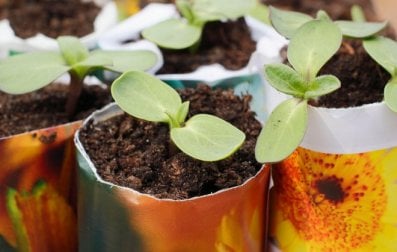
But the other… It started well, with the planting out of two rows of lettuce and that amazing, fractal kale. Then things started to go wrong. Or rather, not to go at all.
The spare kale and lettuce seedlings I planted in other, older pots were thriving. The ones in the wicking box sat and sulked. This despite the fact the potting mix I had used was advertised as high quality and containing enough fertiliser to sustain a season of growth.
Then, one by one, they started to die – the lettuce wilted and the older leaves turned yellow, then brown. The kale just sat there, looking increasingly gnarly and unhappy.
I have been a gardener for a long time now, and though I would never claim to be an expert, I know the basics, and sometimes a bit more. I understand that old leaves turning yellow might be nitrogen deficiency, or iron deficiency. I had also been told that one should not over-fertilise a wicking box, since it is effectively a closed system. So I responded with one intervention at a time, and close observation of results.
First, I tried liquid seaweed fertiliser. Then dustings of blood and bone. Then iron supplements. Things continued to die.
Was the bed not wicking adequately? I have a probe thingy for measuring soil moisture. It confirmed perfect conditions in the root zone. I tested the pH of the soil, using the little kit you can get from gardening shops or Bunnings. You make a tiny mud pie with a sample of soil and “indicator liquid”. Dust this with a powder and compare the result with a provided colour chart that ranges from purple for extremely alkaline to red for acid. My pH was exactly where it should be – right in the middle. Neutral.
The next theory was root rot or a fungal infection. Time for drastic action.
Hydrogen peroxide is quite a thing. It makes bottle blondes. In high concentrations, it is used to fuel rockets. It is a natural compound with the same chemical composition as water but with one additional atom of oxygen.
In diluted form, it can be great first aid in the garden. It oxygenates the soil in dramatic fashion and kills things – the fungus that causes root rot, many other bugs, mildews and fungi. Then it breaks down quickly into water and oxygen. I have rescued plants – mainly overwatered or compacted pot plants – from the brink of death using this method. But it is not to be used lightly. Good bugs die as well as bad ones.
So I went to the chemist, bought two bottles, diluted them and drenched the soil, then drained and refilled the reservoir of the wicking bed.
The next morning, I fancied I could see a lift in the lettuce, a more optimistic tilt in the kale. One week later, though, a few more seedlings had died.
Given the size of the patch I was tending, I can hardly claim to have spent many footsteps in this exercise, but that little box of soil had had my devoted, tender, focused attention over three weeks. Where was my reward?
In a different context that week, a friend remarked, “There is no justice.” He said justice was an abstract. A creation of human minds and expectations. There was no just “way”, no just God.
I didn’t consciously link this remark to my wicking box until last weekend.
I had been forced to conclude there was something indiscernibly wrong with the potting mix. This was a heavy realisation. The disadvantage of balcony growing is that everything has to go up and down a spiral staircase.
I transplanted the surviving seedlings into a temporary home, then dug out the whole box – more than 100 litres of soil – and carried it in buckets down the stairs to the green bin.
The replacement potting mix had to make the journey in the opposite direction, lumped up the staircase tread by tread.
My knees are no longer up to this kind of thing. This is what I was doing when sensible people were watching the AFL grand final.
The Bible is a contradictory book. If we turn from New Testament to Old Testament, we find the Book of Job. He was “blameless and upright, fearing God and shunning evil”. Nevertheless, all his possessions were taken from him in a bet between God and Satan. He ends up on the dung heap, scraping his sores with a broken piece of pottery.
Job questions the almighty about why he is being made to suffer, and gets no satisfactory answers. He concludes, and accepts (as I cannot) that God allows suffering for good reasons that may not be immediately apparent to us.
Of course, my troubles with my little box of soil are too miniature to merit words such as “suffering”. Yet, we gardeners see the world in grains of sand.
When the siren sounded at the MCG, I was prone on my own dung heap, dirt under my fingernails and in my hair, drenched in sweat, blowing like a whale and with that incipient twinge in the buttocks that signals a flare-up of sciatica.
I had, however, refilled the box, flushed the reservoir and replanted my kale and lettuce.
At first, I thought my plants were done for – that in their weakened state the transplant shock had been too much. But three days later (am I imagining it?) they look happier. If I squint hard, leaning over my charges – while guarding my back – I think I can see tiny new leaves on the lettuce.
Karma, at last?
This article was first published in the print edition of The Saturday Paper on October 5, 2024 as "Wicked ways".
For almost a decade, The Saturday Paper has published Australia’s leading writers and thinkers. We have pursued stories that are ignored elsewhere, covering them with sensitivity and depth. We have done this on refugee policy, on government integrity, on robo-debt, on aged care, on climate change, on the pandemic.
All our journalism is fiercely independent. It relies on the support of readers. By subscribing to The Saturday Paper, you are ensuring that we can continue to produce essential, issue-defining coverage, to dig out stories that take time, to doggedly hold to account politicians and the political class.
There are very few titles that have the freedom and the space to produce journalism like this. In a country with a concentration of media ownership unlike anything else in the world, it is vitally important. Your subscription helps make it possible.
Subscriber exclusive
Send this article to a friend for free.
Share this subscriber exclusive article with a friend or family member using share credits.