News
In an interview with The Saturday Paper, Tanya Plibersek says she is still negotiating with the cross bench and believes she can pass Labor’s environment reform. By Karen Barlow.
The Plibersek interview: ‘We’re caught up in macho posturing’
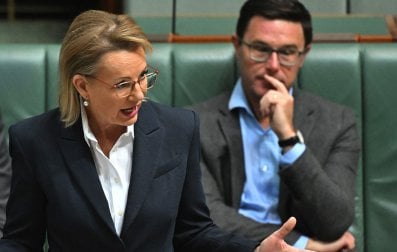
Tanya Plibersek has accused both the Greens and the Coalition of being “held to ransom” by “macho” extremists within their parties as she seeks Senate support to pass Labor’s environmental law reform this week.
The push on the Albanese government’s “nature positive” agenda comes as a parallel housing fight is run with the opposition and the Greens. In housing, the government is reintroducing its stymied bill for the Help to Buy shared equity scheme, dangling a fairly empty double-dissolution election threat.
In an interview with The Saturday Paper, the environment minister is accusing both the Greens and the opposition of playing politics over nature and ruled out a “climate trigger” in bargaining with the Greens.
“You’ve got the tail wagging the dog. In both cases, you’ve got the smaller, more extreme kind of people calling the shots and I think that’s a real shame. It’s a real block on progress,” Plibersek tells The Saturday Paper.
“But these are sensible reforms that environment groups can live with, that business can live with. It would be a step forward, and instead we’re just getting caught up in this quite macho sort of posturing from the more extreme elements in both parties.”
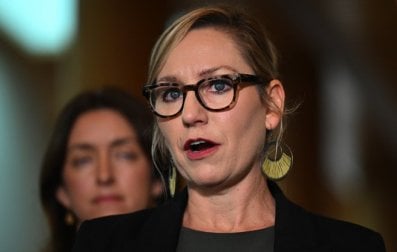
The minister name-checks the extremists as Nationals politicians Barnaby Joyce and Matt Canavan in the Coalition and Greens MP Max Chandler-Mather and the “people around him”.
The negotiations on what is the second tranche of the three-way split of environmental law reform are taking place as Plibersek hosts what is billed as the first Global Nature Positive Summit.
It is an event in Sydney geared around building a nature-positive version of net zero by 2050, largely by encouraging the private sector to join efforts to halt species decline and repair nature.
What the minister can’t present to the summit is the world’s first definition of “nature positive” – as it is in the stalled second tranche of Labor’s reform.
The full “nature positive” plan was offered in December 2022 by a fresh Labor government as a “balance of environmental and business concerns”, but so far only the first tranche that creates a yet to start “nature repair” market has passed.
“I think there’s a real opportunity here for the Coalition to strike a sensible deal,” Plibersek now says.
“They really do have to try and win back some of those supporters in urban and teal seats who would be very up for responsible environmental protection and the Greens could show that they’re not captive to the sort of extremism of the Chandler-Mather group.”
The minister has not been directly negotiating with the people she describes as “extremists”. For the Coalition, those negotiations are happening with environment spokesman Jonathon Duniam and for the Greens, it is Sarah Hanson-Young, who the minister says she has worked with “very productively” in the past.
Both have distinctive, divergent conditions before they will support the legislation, some that have not been made public but have pincered the Albanese government.
The Coalition wants business, mining and native logging operations to have “greater certainty” and speed up government approvals for projects.
The Greens want an end to new coal and gas projects and are also firm on wanting a climate trigger as part of a project’s environmental assessment.
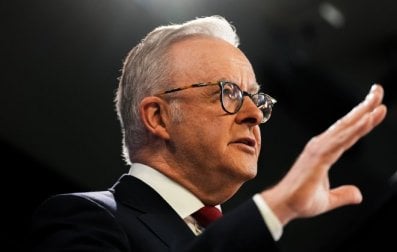
In a recent visit to Western Australia, Prime Minister Anthony Albanese offered the Coalition the concession that the proposed new environment protection authority would be a compliance-only watchdog rather than an enforcement agency, but it has not led to a deal yet.
On the climate trigger, Albanese has said it is something that “won’t be inserted” into the laws.
Hanson-Young says she is working productively with Labor but is frustrated by their priorities.
“I’m both a pragmatist and an optimist and I have a good relationship with the minister,” she tells The Saturday Paper. “Earlier this term, we delivered some positive outcomes together, legislating the water trigger against fracking and fixing the Murray–Darling Basin Plan.
“So, there’s a track record of negotiation and delivery and there’s still the opportunity for us to deliver an outcome that is genuinely positive for nature. However, the prime minister has made it clear he won’t work with the Greens because he wants to satisfy big business.
“This is incredibly disappointing and short-sighted,” Hanson-Young says.
It is also understood that there is some discord between nature advocacy groups and more climate-focused environmental groups over the demand for a climate trigger that would see projects knocked back for emitting too much atmospheric pollution.
However, all environment groups want climate addressed in the new laws in some way and they don’t see it in what is being offered.
The recent bundled announcement of three coalmine expansions in New South Wales – at Whitehaven Coal’s Narrabri underground mine, MACH Energy’s Mount Pleasant Optimisation Project and Ashton Coal’s Ravensworth underground mine – also looms large.
“The summit is already a flop. Australia hosting it while approving the expansion of fossil fuels and logging native forests is the exact opposite to being ‘nature positive’, and the international community can see that,” Hanson-Young says.
Plibersek insists the extensions, which will keep the mines operating into the 2030s and 2040s, are consistent with net zero emissions targets.
“Well, they have to – they have to be assessed against the safeguard mechanism,” she says. “The safeguard mechanism has strong penalties for exceeding any carbon pollution thresholds that are allowed within that trajectory to net zero.
“We’ve got a legislated trajectory to net zero, to 43 per cent emissions reduction by 2030. All of it has to fit within that trajectory, and that is a matter for the climate minister.”
Environment groups advise caution over the use of the safeguard mechanism, Labor’s main tool to rein in emissions from 215 of Australia’s worst polluters.
One issue is that the mechanism is not triggered until after environmental approvals are made. Similarly, it does not cover all projects, developments and extensions, which is why environment groups are pushing for explicit climate considerations for assessments.
The minister says all parties are getting ahead of themselves.
Intractable opposition to the reforms is what led to the government splitting the reforms in April.
“We’re building the house before the family move in,” Plibersek says. “There’s no reason to say no to stage two, because it doesn’t include things that we’ll be doing in stage three.
“The third tranche of changes will be released as the exposure draft of the new laws before they’re introduced into the parliament.”
The third part of the reforms – an overhaul of the outdated Environment Protection and Biodiversity Conservation (EPBC) Act – has been stalled after the earlier addition of the Greens-negotiated water trigger for approvals for big gas fracking operations.
Under the EPBC laws, the minister has the power to knock back projects or developments such as mines, land clearing and forestry that might have an impact on “animals, plants, habitats or places” of national significance.
What Labor is trying to pass before the election is the creation of two new statutory bodies. One would be a national environment protection agency whose chief would have assessment and enforcement powers similar to the Australian Federal Police commissioner. There would also be a new body called Environment Information Australia to collect and release data as it reports on progress.
The minister says she is still negotiating with stakeholders over some of the legally binding national environmental standards that a new EPA would enforce.
“We’re absolutely still determined to get the legislation through if we can. I’d say that a deal with the cross bench or the Coalition is still very much in play. We’re talking to both,” Plibersek says.
The Greens and the progressive senate cross bench want more teeth and independence for the EPA, while the Coalition is concerned about the creation of a “new green bureaucracy”. The Coalition wants further work to reduce the timeframes for environmental assessments and for Labor to follow through with what it regards as a “clear 2022 election promise” that its EPA would only be a data and compliance body.
Plibersek wants the laws passed “as they are” but states she is a “realist” and “some things will have to change here”.
She baulks at the “nonsense” idea of a green bureaucracy.
“We have doubled on-time approvals already since coming to government,” she says.
“One of the reasons that approvals were so slow under the previous government was they hid the number of people employed by putting them on six-month contracts.
“Peter Dutton should be held to account if he’s talking about sacking people.”
Hanson-Young sees the waters as muddied. “A toothless EPA law that green-lights coal, gas and native forest logging is neither perfect nor good,” she says.
“The prime minister himself said Labor’s laws would speed up approval for the mining sector. That’s not protecting the environment; it’s simply protecting the profits of big mining corporations.
“Without a serious fix to the laws, we will see fast-tracked destruction of our forests, bushland and precious beaches and reefs.”
The opposition has other conditions, some of which are not public and some that deal with the third tranche of reform.
Shadow environment spokesman Duniam generally wants “greater certainty to businesses”. The Coalition also wants the Greens-negotiated “water trigger” reversed and is seeking a government commitment that native forest logging will not be banned.
The Saturday Paper sought an interview with Duniam, but he was not available.
“You can do a deal with the Coalition, or you can do a deal with the Greens – they are incredibly divergent pathways,” Duniam told Sky News last month.
“Where is the government’s conviction on this? Which one are they going to back? Is it just about getting a bill through no matter what, or is it about doing the right thing by our country?”
Plibersek has made clear there will not be a climate trigger in the legislation.
“We say that it doesn’t make sense to have carbon pollution dealt with in two different ways. It’s basically bad policy,” she tells The Saturday Paper.
“Our EPA bills are about protecting nature. They’re not about emissions. Emissions are dealt with by the safeguard mechanism.”
Ahead of the Global Nature Positive Summit in Sydney this week, Plibersek is still keen to talk about the as-yet-unpassed definition of “nature positive” in Labor’s bill.
“We really think that nature positive is the next net zero, and that not just Australian government but Australian businesses are leading the way in a lot of respects on nature positive,” the minister tells The Saturday Paper.
“There’ll be a lot of opportunities to discuss how we’re halting biodiversity loss and reversing the trend. We have signed up as a country at Montreal to a whole lot of quite ambitious targets, and there’s many of them where we don’t need law reform to progress them. So, we’ll be talking about progress.”
This article was first published in the print edition of The Saturday Paper on October 5, 2024 as "The Plibersek interview: ‘We’re caught up in macho posturing’".
For almost a decade, The Saturday Paper has published Australia’s leading writers and thinkers. We have pursued stories that are ignored elsewhere, covering them with sensitivity and depth. We have done this on refugee policy, on government integrity, on robo-debt, on aged care, on climate change, on the pandemic.
All our journalism is fiercely independent. It relies on the support of readers. By subscribing to The Saturday Paper, you are ensuring that we can continue to produce essential, issue-defining coverage, to dig out stories that take time, to doggedly hold to account politicians and the political class.
There are very few titles that have the freedom and the space to produce journalism like this. In a country with a concentration of media ownership unlike anything else in the world, it is vitally important. Your subscription helps make it possible.
Subscriber exclusive
Send this article to a friend for free.
Share this subscriber exclusive article with a friend or family member using share credits.