News
As the government pushes an electoral reform bill criticised for favouring the major parties, the latest figures show they jointly reaped almost $150 million in donations last year. By Mike Seccombe.
Whose dollars are affecting policy?
In June last year the president of the Australian Medical Association, Steve Robson, wrote to National Party leader David Littleproud denouncing his opposition to new laws that proposed to ban disposable and non-therapeutic vapes.
The Nationals were instead advocating a new excise that would have given government a cut from the burgeoning sale of vapes.
“Arguing for more funding for rural Australia is a worthy cause but raising that money from a new generation of kids hooked on nicotine, and more people going on to take up smoking, is a horrendous proposition,” Robson wrote.
The letter referred in general terms to the Nationals’ history of taking donations from Big Tobacco. Had Robson known then what we know now, he could have been much more precise in quantifying that influence.
A few months earlier, Philip Morris – whose website boasts “10 years of smoke-free progress” in developing vapes as a cigarette alternative – had donated $100,000 to the Nationals.
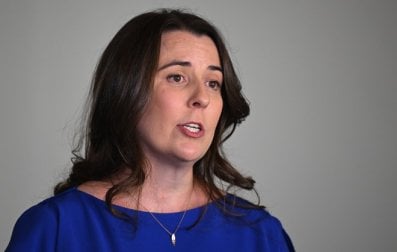
It was, says Kate Griffiths, deputy director of the democracy program at the Grattan Institute, the single largest donation to the party. It was made on March 27, less than a week after the Albanese government’s Therapeutic Goods and Other Legislation Amendment (Vaping Reforms) bill 2024 was introduced into parliament.
The Philip Morris donation, says Griffiths, was “not huge in the scheme of things”.
She’s not wrong. In total, Australia’s political parties collectively raised $166 million in 2023/24, with 85 per cent going to the major party duopoly.
The Coalition raised $74 million, Labor $68 million and the Greens were “a distant third”, with $17 million. Independents collectively declared just $2 million, according to Grattan’s analysis of the annual returns released on February 3 by the Australian Electoral Commission.
The tobacco company’s hundred grand was small beer compared with the million-dollar donation by packaging industry billionaire Anthony Pratt to the Labor Party or the half-million given by Australia’s richest person, Gina Rinehart, to the Liberals.
It was smaller still in the big picture, says Bill Browne, director of the democracy and accountability program at The Australia Institute. About one third of Australia’s political parties’ revenues, he says, come from public funding – taxpayers – one third from undisclosed donations and the remaining third from disclosed donations and “other receipts”. Of that last category, about two thirds is other receipts – money that flows from associated entities.
He says some 45 per cent of all party income is hidden. That’s a lot of dark money. Even where the donations are disclosed, they are not disclosed until way too late, say both Griffiths and Browne. Under the current regime, Kate Griffiths says, “the data is at least seven months old, and in some cases much more, up to 19 months”.
The Philip Morris gift to the Nationals was revealed in the annual returns almost a year after it was given.
More timely information would give a much clearer understanding of the nexus between donations and policy. The Nationals–Philip Morris relationship is perhaps the most obvious example of donor influence on a party policy, but there are other strong circumstantial cases too.
Consider, for example, the bipartisan resistance to calls for a ban on gambling advertising, despite overwhelming evidence of the harm caused by the betting industry and strong public support for an ad ban.
“I think there was about one-and-a-half million in gambling donations in that 2023/24 data,” says Griffiths.
Or consider the Pharmacy Guild of Australia, which trenchantly opposed the Albanese government’s plans in mid 2023 to change the rules on the dispensing of medicines. The AEC data showed the guild donated more than $400,000 to the major parties last financial year, of which more than 60 per cent went to Labor.
One might ask why its largesse was apportioned that way, given the guild’s anger with the Labor government. Why donate to the party, when, as the guild was claiming at the time (falsely, as it turned out) Labor’s changes would see 665 community pharmacies go out of business with the loss of 20,000 jobs.
The answer to that question, says Melbourne Law School professor Joo-Cheong Tham, who is a director of the Centre for Public Integrity and long-time advocate of donations reform, requires an understanding of the distinction between what he calls “ideological money” and “interested money”.
“Interested money is about making sure that regardless of whichever party holds power that you know the company has access and influence.”
If they don’t give, they don’t influence, so interested money flows to both sides. It’s an each-way bet.
That said, interested money tends to wax and wane with the electoral fortunes of parties. More flows to whichever side is in power, or is considered by the donors to be likely to come to power.
Over the long term, the data shows that the conservative parties have mostly led the fundraising race, but not always. Labor had a brief but commanding lead ahead of the election of the Rudd government in 2007, and a small lead ahead of the Albanese government’s election in 2022.
Analysis by The Australia Institute shows almost all of the 50 biggest donors gave to both sides of politics.
There are, of course, anomalies. Philip Morris gave only to the Nationals for the simple reason that all other parties now eschew tobacco money. More curious is Pratt’s million-dollar donation to Labor, which made him the party’s biggest individual donor.
It certainly was not, to use Tham’s term, “ideological money”, as evidenced by the fact that the cardboard king also kicked in US$10 million – about A$15 million – to MAGA Inc, a fundraising vehicle for Donald Trump.
Pratt’s motivation remains a mystery. There is very little contentious public policy relevant to the packaging industry.
Gina Rinehart’s generous giving to the conservatives more neatly fits in the category of ideological giving. The arch-conservative is close to Peter Dutton, and a vigorous advocate of Trump-style policies of swingeing cuts to public spending and opposition to measures to combat climate change, among other right-wing causes. Of course, her giving is “interested” as well, given her mining interests.
Then there is a third billionaire, who has previously been the biggest political donor of them all – Clive Palmer.
Over the past two election cycles, Palmer has spent some $200 million to the benefit of political parties he has founded – and subsequently deregistered. All this money resulted in the election of just one senator. Palmer has previously asserted that his main purpose is to keep Labor out. Arguably, he succeeded in 2019.
Palmer was completely absent from the 2023/24 data, but this was not unexpected.
“He shows up big in election years, when he blows everyone else out of the water. And he’s completely absent at other times,” says Griffiths.
It’s possible Palmer will again seek to influence the upcoming election. “This,” says Griffiths, “is a really big, live question.”
He has not yet set up a party but, she notes, he’s begun advertising again. “Will he spend the same sort of money on general political advertising, to influence the political process through other means? Is he donating to one of the existing parties?
“We don’t know.”
As things stand, there is nothing to stop Palmer, or for that matter the likes of Rinehart and Pratt, both Trump acolytes, from spending their way to vast political influence, like Elon Musk in America.
The Albanese government has proposed donation caps, which could stop the mega-rich from doing it. It also has promised real-time disclosure of donations and a $1000 threshold for disclosure of donor identities, down from the current $16,900.
At time of writing, the government has not got the numbers to get its bill through parliament. The Coalition contends that the $1000 disclosure level for donations is too low. Other measures in its proposed package of changes are seen by the cross bench, and most experts, as self-serving and aimed as much at starving minor parties and independents as at the mega-donors.
So, says Griffiths, even those relatively uncontroversial, easily implemented changes to the donation threshold and real-time reporting, which Labor promised before the last election, “look likely to be lost because they’re tied up with more complex reforms”.
In an interview with The Saturday Paper this week, the legislation’s architect, the special minister of state, Senator Don Farrell, says, “I’m an optimist, and I haven’t failed to get through a single bill of mine.”
Even if they do manage to stitch a deal in the brief remaining time before this year’s election, the changes would not come into force before the election after this.
Australians will head to the polls some time before May 17 – once again with no information on who has given how much to buy influence. We won’t know until next February, by which time it will be too late.
This article was first published in the print edition of The Saturday Paper on February 8, 2025 as "Interested parties".
For almost a decade, The Saturday Paper has published Australia’s leading writers and thinkers. We have pursued stories that are ignored elsewhere, covering them with sensitivity and depth. We have done this on refugee policy, on government integrity, on robo-debt, on aged care, on climate change, on the pandemic.
All our journalism is fiercely independent. It relies on the support of readers. By subscribing to The Saturday Paper, you are ensuring that we can continue to produce essential, issue-defining coverage, to dig out stories that take time, to doggedly hold to account politicians and the political class.
There are very few titles that have the freedom and the space to produce journalism like this. In a country with a concentration of media ownership unlike anything else in the world, it is vitally important. Your subscription helps make it possible.
Subscriber exclusive
Send this article to a friend for free.
Share this subscriber exclusive article with a friend or family member using share credits.