News
The PM’s reunification of the super-ministry reverses a move that critics say made it more accountable, and is a boon for the leadership ambitions of Tony Burke. By Jason Koutsoukis.
Your subscription makes these exclusive articles possible
Subscriptions make these exclusives possible SUBSCRIBE NOW
Tony Burke and the expansion of Home Affairs’ power
After Labor’s shocking election defeat in 2019, Tony Burke was one of Anthony Albanese’s earliest and most consequential backers for the Labor leadership – supporting him over factional stablemate Chris Bowen. That act of loyalty helped secure Burke’s place in the prime minister’s inner circle. Now, with ambition that is neither hidden nor denied, Burke’s influence is growing.
The most compelling evidence of his rising stature is his securing of the Home Affairs portfolio, which comes with a reversal by Albanese of his first-term decisions to reallocate the oversight of ASIO and the Australian Federal Police to the Attorney-General’s Department.
At the time that move – made on the advice of the former attorney-general Mark Dreyfus – reinforced the perception that Labor was intent on tearing down the centralised security behemoth created by Malcolm Turnbull in 2017. That Home Affairs super-ministry brought all of Australia’s domestic intelligence, policing and border agencies under one roof, under the purview of then department secretary Mike Pezzullo. Albanese sacked Pezzullo in November 2023 over text messages he exchanged with a Liberal Party insider while the Coalition was in government, after an inquiry found Pezzullo had sought to influence political processes.
Labor had long opposed the model, and now, in government, appeared determined to dismantle it piece by piece. The prime minister insisted the rationale was clear. Three days after announcing the only ministerial reshuffle of his first term, he said the move was welcomed by “every national security expert, past and present ASIO directors-general”. He also said it put in place “appropriate structures for good governance”. He pointed to three major reviews conducted during the first term – by Dennis Richardson, Martin Parkinson and Christine Nixon – all of which, he said, had been “incredibly critical” of the structure and performance of the department under the previous government.
Ten months later, Dreyfus – Labor’s chief legal mind and a cabinet veteran – has been dumped from the ministry and ASIO, and the Australian Federal Police and AUSTRAC have all been returned to Home Affairs, as have functions including protective security policy and cybercrime. The department is now even more powerful than the super-portfolio first created in 2017 – and it’s all under the control of Tony Burke.
“It’s disappointing to see a Labor government revert to this,” one Canberra insider with deep experience across national security agencies said. “The attorney-general is always conscious of the politics, sure – but also what you can and can’t do legally. That’s the frame of mind. Someone like Burke isn’t going to do anything illegal – but legality isn’t the first lens he’s applying either.”
Tony Burke declined to comment.
Already leader of the House and minister for the arts, Burke now controls one of the most powerful domestic portfolios in the country. That makes him central not just to the government’s legislative agenda but also to its security posture and internal machinery of control. Burke’s new portfolio reflects the Left faction prime minister’s growing reliance on an ally – one with deep roots in the New South Wales Right – who has made no secret of his own leadership aspirations. In 2013, following the Labor Party’s federal election defeat, Burke expressed interest in leadership, in time: “I’m not in any rush. I know I’m not ready for leadership, but at some point it’s something that I’d aspire to,” he said.
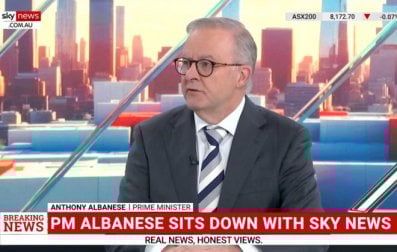
The prime minister has offered no real explanation for the Home Affairs expansion – only a vague reference to “information sharing” failures during the so-called Dural caravan bomb plot.
The incident – a terrorism hoax that briefly gripped the country in late January and early February – exposed lapses in inter-agency coordination when it emerged that the AFP had failed to brief either Albanese or then attorney-general Dreyfus about its discovery of an explosives-laden caravan in outer suburban Sydney.
NSW Police Force had briefed Premier Chris Minns before news of the caravan broke on January 29 – giving the state leader a clear picture of what was believed to be a credible terrorist threat. But when Albanese fronted the media the next day, he appeared blindsided. The prime minister hadn’t been informed by the AFP, while his state counterpart had. Weeks out from a federal election, it was a damaging look: the country’s leader out of the loop on what seemed, at the time, to be a major national security crisis.
The episode raised uncomfortable questions about coordination and oversight – not because the threat proved real but because the perception of dysfunction stuck. By mid May, as Albanese unveiled his new cabinet, he was using the caravan incident to justify an about-face on Home Affairs.
“We’re very confident that we’ve got it right, that we want to make sure that people can have access to all of the information at the appropriate time,” Albanese explained on May 12, after he had unveiled his post-election cabinet. “There were issues that arose out of information sharing during the – let’s call it the caravan incident for shorthand – and we wanted to make sure that we got it right and learned from that experience.”
A structure once criticised on the grounds of democratic overreach was now being rebuilt in full – with barely a nod to the contradiction. The department that was deemed unaccountable under its first minister, Peter Dutton, is, in Albanese’s second term, simply the right structure.
For all the official talk of “information sharing” failures, not everyone inside the system buys Albanese’s explanation. The Canberra insider describes the rationale as “simply bizarre”. “The AFP is a statutory authority. ASIO is a statutory authority,” the source said. “They report to ministers. They do not report to secretaries of departments, full stop.”
In other words, they believe the so-called communication breakdown that followed the Dural caravan hoax was a failure between agencies, not a failure of portfolio design. “That kind of breakdown would have occurred whether ASIO and the AFP reported to the same minister or not.”
In this insider’s view, the more likely explanation lies in politics – specifically, the elevation of Tony Burke and the removal of Mark Dreyfus.
“I reckon it’s almost certainly because of Burke’s seniority as home affairs minister, and then bringing in a quite junior attorney-general in Michelle Rowland.”
The source pointed out that ASIO’s operational activities still require warrant approval from the attorney-general, meaning the spy agency now effectively reports to two ministers. “The head of ASIO goes to the attorney-general for covert operations, but reports on policy and budget to Home Affairs. It’s a split structure, and an awkward one.”
Labor, they noted, had long argued that ASIO should be accountable to the attorney-general – the “first law officer of the land” – not a political portfolio such as home affairs.
The source was even more blunt about the dumping of Dreyfus, the enhancing of Burke’s ministerial responsibilities and the elevation of Rowland to a stripped-back department.
“It does seem more than a coincidence, doesn’t it? You had a strong attorney-general in Dreyfus who opposed this, and now he’s out. And you’ve got someone with far less legal experience in Minister Rowland. That’s the whole reason for these machinery-of-government changes, in my view. It’s very poor governance,” the source said.
Nevertheless, the reaction from Australia’s national security establishment to the home affairs changes has been broadly welcomed.
“It’s now eight years since the creation of the home affairs ministry in 2017 saw domestic security-related agencies grouped together,” John Blaxland, professor of international security and intelligence studies at the Australian National University, tells The Saturday Paper. “The unravelling of that aggregation that followed the election of the Albanese government the first time round was overdone. Evidently the government has since been convinced of the benefit that accrues from separating out oversight and accountability from operational line management,” says Blaxland.
In his view, it appeared that the span of responsibility for the Attorney-General’s Department was getting unwieldy.
“The accrual of numerous oversight and accountability mechanisms under the attorney-general’s remit increasingly meant that the attorney-general faced a less-than-ideal challenge: managing operational tasking and oversight, while also being responsible for audit and accountability functions – and all under the one roof,” says Blaxland.
Oversight agencies such as the Independent National Security Legislation Monitor, the Administrative Review Tribunal, and the Inspector-General of Intelligence and Security, all rightly remain within the Attorney-General’s Department, he says. That means the operational policing and security agencies held to account by these entities will now face – in theory at least – a stronger incentive to exercise their considerable powers with greater probity and restraint, while at the same time being able to more closely coordinate, deconflict and prioritise operational taskings and resource allocation.
The decision to reunite ASIO and the AFP under the Department of Home Affairs also won praise in an article published days after the decision in The Strategist, the commentary and analysis site of the Australian Strategic Policy Institute. James Corera and John Coyne described the move as a “long-term strategic recalibration in response to a rapidly intensifying threat landscape”.
Corera and Coyne pointed to the “caravan incident” as a vivid example of the system’s failings – a moment that exposed “systemic weaknesses in cross-jurisdictional coordination”.
The authors contended that the converging threats of terrorism, cyber interference, foreign espionage and transnational crime demanded institutional integration. The risk lies in the “cracks between institutions and jurisdictions”, they wrote.
In that context, placing ASIO and the AFP under one minister – alongside cyber, immigration and citizenship – could be seen as a structural correction aimed at closing those gaps.
Properly designed and led, Home Affairs could serve as a “bridge between national security operations and strategic policymaking”, Corera and Coyne argued. That could help to shift the national security system away from reactive, crisis-driven leadership. Reconstituting the original Pezzullo model, they concluded, reflected not a reversion to the past, but a necessary step towards a forward-leaning model of coordination, capable of handling threats that no longer respect traditional agency silos.
Care needs to be taken, however, to ensure that the attorney-general remains firmly in the loop and consulted on matters of legal principle, says Ian Kemish, adjunct professor in the School of Historical and Philosophical Inquiry at the University of Queensland, and a former senior Australian public servant and diplomat.
“I don’t think it’s a killer argument against consolidation, but I think that there needs to be a bit of care taken here in ensuring that the dotted line arrangements, the consultative arrangements that should exist from one agency to another, bring people together,” Kemish tells The Saturday Paper.
What must be avoided, he says, “is a situation where you find an important minister, an important agency that has something to say, suddenly being out of loop and cut away from decision-making.”
So the super-ministry Labor once dismantled has returned – stronger, broader, and in Tony Burke’s hands. If this reshuffle teaches anything, it’s that power in Albanese’s second-term government is not evenly spread. It pools – and right now, more than ever, it pools around Tony Burke.
This article was first published in the print edition of The Saturday Paper on June 7, 2025 as "Tony Burke and the expansion of Home Affairs’ power".
For almost a decade, The Saturday Paper has published Australia’s leading writers and thinkers. We have pursued stories that are ignored elsewhere, covering them with sensitivity and depth. We have done this on refugee policy, on government integrity, on robo-debt, on aged care, on climate change, on the pandemic.
All our journalism is fiercely independent. It relies on the support of readers. By subscribing to The Saturday Paper, you are ensuring that we can continue to produce essential, issue-defining coverage, to dig out stories that take time, to doggedly hold to account politicians and the political class.
There are very few titles that have the freedom and the space to produce journalism like this. In a country with a concentration of media ownership unlike anything else in the world, it is vitally important. Your subscription helps make it possible.
Subscriber exclusive
Send this article to a friend for free.
Share this subscriber exclusive article with a friend or family member using share credits.