News
The killing of a 24-year-old Aboriginal man being arrested in an Alice Springs shop is the ninth First Nations death in custody in Australia this year. By Andrew Boe.
Seeking justice for Kumanjayi White
Last week, in a supermarket aisle in Alice Springs, a young man was killed by two police officers in “plain clothes”.
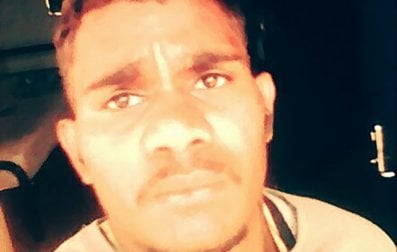
Kumanjayi White was 24 and declared dead an hour or so after the arrest. He is reported to have been caught attempting to place food items under his jumper and having an altercation with a security guard in the shop. Other reports suggest he had a disability and was living in assisted accommodation, apparently under the guardianship system.
A pathologist has not yet been able to determine the clinical cause of his death, despite having performed an autopsy.
Press releases by the police are not too subtly referring to Kumanjayi’s prior criminal activity, perhaps in an attempt to justify the outcome by dehumanising him. No matter how else he will be described in coming weeks, he was clearly a very vulnerable young man and from early reports of the incident, it appears that little care was shown to him by the arresting officers.
The assistant commissioner of police has revealed that the events were captured on CCTV footage and perhaps by video cameras worn by the officers. Lawyers for Kumanjayi’s family have called for the family to be shown what happened.
Distressing statistics have rightly been cited, including that this is the ninth First Nations death in custody in Australia this year. It brings the total to almost 600 since the 1991 Royal Commission into Aboriginal Deaths in Custody.
Those commentators promoting police interests, while not uniform in their dispatches, will probably soon attempt the usual strategy of trying to justify this lethal action.
The family are of course distraught. A ripple of disconnect is already forming across the country. Another loss, of another young man, in the ongoing battle between the First Nations community and the police force.
This death is especially cruel for this family and the Yuendumu community. They have been awaiting the delivery of findings in a long-running inquest into the death of another young Yuendumu man who was killed in police custody in 2019, Kumanjayi Walker. He was 19.
The coroner has agreed to postpone until July 7 the handing down of her findings in the Walker inquest, which were scheduled to be delivered on June 10 in Yuendumu, where both young men are from, to show respect for “sorry business” or, as the Warlpiri call it, “malamala”.
Times of mourning and respect for the family will take weeks and then more times of malamala will precede the funeral, which may be months away, as well as taking place at future commemorations in years to come. In places such as Yuendumu and Alice Springs, malamala is not just for the family, it is for the whole community and neighbouring communities, and others affected across the nation.
For Kumanjayi White’s family, this is another son, another grandson, another brother, cousin or nephew. Some members of the family also had familial links to Kumanjayi Walker. Both young men were killed at the hands of members of the Northern Territory Police Force, whose motto is “to serve and protect”.
One was killed by a police-issue Glock, fired at point-blank range into his side and back within the space of a few seconds. The other was killed by two police officers using their bare hands to hold him down.
The Walker inquest has taken more than three years, disrupted by legal challenges taken by the killer, former constable Zachary Rolfe, who was acquitted of murder by a Darwin jury in 2022. The jury in that trial contained no Indigenous members.
It is likely the next inquest will also be protracted, if the approach taken in the Walker inquest is a guide as to the NT Police Force’s approach. Notwithstanding a willingness to make some concessions and apologies, there was a general reluctance to admit failings on a systemic level or assume responsibility for any individuals involved in excessive force and negative attitudes towards Indigenous people.
In the Northern Territory, almost uniquely across the Commonwealth, there is a statutory provision (Section 148B of the Police Administration Act 1978 (NT)) that provides a special immunity from civil and criminal liability for any death caused by a police officer while they are acting lawfully in the execution of their duty.
As explained by the trial judge in his directions to the jury in the Rolfe criminal trial: “It would be contrary to the public interest if police officers were deterred from making these often crucial decisions by the threat of criminal prosecution. For this reason they are provided with a measure of legal protection when acting in the course of their duties as police officers.”
One of the officers involved in last week’s killing has been revealed as a police prosecutor who was not on duty at the time. There may be some dispute, if charges are brought, whether this immunity will be available to him, but in any event, it is easy to see why the family, and the broader First Nations community, would hold little hope of civil or criminal liability attaching to either of the two police officers.
We will likely be left with Groundhog Day-like outcomes: an emphasis on the past criminality of the dead young man, a police investigation led by a unit within the police force leading to possible prosecution, a lengthy coronial inquest, and promises of impartiality and procedural fairness in any trial if someone were to be charged.
It is not yet known whether the NT Police Force will eschew any responsibility for the actions of these officers. They may well cite training manuals and standard operating procedures for why their members can use lethal force to arrest an unarmed person in a supermarket in the middle of the day.
Perhaps the more important observation to be made is that the whole nature of policing in the Territory must be reimagined, given that almost 90 per cent of the prison population is First Nations and close to 90 per cent of the NT Police Force is non-First Nations. The relationship is literally that “black and white”.
These statistics should persuade those shaping the culture within police ranks that the significant focus of recruitment and training must be on the capacity to relate to the community into which officers are being sent “to serve and protect”. This must continue into how officers are monitored. The most important attribute for the police force’s members must be their capacity to communicate with First Nations people and to do so with a clear understanding of the history of policing.
Some within the NT police executive team know this. Their attempts to promote reforms with this recognition have faced resistance from members of the executive government and police union officials.
There has been a revolving door of police commissioners since Kumanjayi Walker’s death in 2019, each having made earnest promises about addressing shortcomings in cultural sensitivities and racist behaviour within the force’s ranks. Little has changed.
Those opposing reforms, led staunchly by the NT Police Association, adhere to the view that military training is a prized attribute for potential members, with its discipline and experience and expertise in handling military-grade weapons such as semiautomatic assault weapons.
The NT Police Force has recruited former soldiers for more than a century – in fact, ever since colonisation. The memory of the Coniston massacre, where police sergeant William Murray, a former soldier, led a posse to kill scores of Warlpiri, Anmatyerre and Kaytetye groups in purported retaliation for the murder of a white dingo trapper, is still very vivid. Official reports suggest at least 31 people were killed, but historians estimate the number could be as high as 200.
Like Murray, Rolfe was a soldier before coming to the Territory to join the NT Police Force. One of the officers involved in last week’s killing has also been identified by a Northern Territory media outlet as ex-military.
Only recently, through a royal commission, have we started to appreciate that military experience, which includes being trained to kill, has sometimes caused PTSD-related traumas, as well as moral injuries that have not been repaired on discharge.
Imagine if instead of this laissez-faire militarisation of the NT Police Force, its ranks included those qualified in the social sciences and with experience as social workers, counsellors and psychologists, or in nursing and care of young people.
It is obvious that nonviolent tactics are more likely to bring about safer arrest outcomes. Those without a military mindset are arguably more likely to be open to being educated about the history of the communities into which they are sent to police. It is also likely that members qualified in social science disciplines and therapeutic engagement with Indigenous people would be better equipped to communicate with their arrest targets to bring about nonviolent outcomes.
If the NT Police Force had a more diverse membership, including more women and non-white members, surely there would be fewer tragic outcomes.
Yuendumu is a “dry” community of about 800 to 1000 residents, many of whom are Warlpiri. The original settlement was established in 1946 by the Native Affairs Branch on a site close to where the Coniston massacre occurred in 1928.
It is about 300 kilometres north-west of Alice Springs. There is richness in the community’s cultural integrity, but it is not possible to overstate the harshness in physical living conditions, including the lack of drinkable tap water, severe overcrowding in housing and temperatures often exceeding 40 degrees.
There are significant limitations in the social services available in Yuendumu. This is perhaps unsurprising, given its origins as a place where Warlpiri and other mobs were forced to come and live. The town has virtually no economic rationale. It is neither a market town, a mining centre, nor a hub for communications.
It remains dependent on the rest of Australia for almost every cent its community spends and every article consumed. The 2007 Intervention ensured the end to any self-determination and much employment.
There is an obvious correlation between youth and property crime, and inequities within a community in education, housing, vocational opportunities and access to amenities and services.
It appears that the ingredient missing in policing of the Northern Territory is not just more thoughtful recruitment and adequate, culturally informed training, but also empathy. There is plenty of pity and blame but not enough empathy.
There remains an opportunity here for the NT and federal governments to recalibrate their responses. Not just to raise their voices – though expressions of solidarity will not go amiss – but to respond with an intelligent recognition of what we know and a commitment to take steps that are more likely to achieve just outcomes.
They also need to not “unknow”, and resist political posturing in what is undoubtedly a complex political paradigm.
The problems with police reviewing the actions of their own are obvious and have been identified in multiple inquests and commissions, hence the call for an independent investigation into this latest death.
It needs to be appreciated that independence is not achieved by the NT Police Force merely utilising an internal crime unit that is independent from the alleged perpetrators. The investigation must be independent from the interests of the entire NT Police Force, as there will be a need for examination of NT police training, its process of recruitment and monitoring of the service history of its members.
A culturally informed federal intervention into deaths in custody is sorely needed, not only to address the need for an independent investigation into this death but to reimagine and reframe the whole framework of policing of First Nations people.
The whole fabric of NT life will be improved once all of those who live there, and those who determine how they live, see the deaths of these two young men as “our” losses – not just as more pitiful statistics, an expression of what is happening to “them”.
While the author takes full responsibility for this piece, he gratefully acknowledges the assistance of Julia Pincus, one of the lawyers instructing him in the Kumanjayi Walker inquest.
This article was first published in the print edition of The Saturday Paper on June 7, 2025 as "A death in the supermarket".
For almost a decade, The Saturday Paper has published Australia’s leading writers and thinkers. We have pursued stories that are ignored elsewhere, covering them with sensitivity and depth. We have done this on refugee policy, on government integrity, on robo-debt, on aged care, on climate change, on the pandemic.
All our journalism is fiercely independent. It relies on the support of readers. By subscribing to The Saturday Paper, you are ensuring that we can continue to produce essential, issue-defining coverage, to dig out stories that take time, to doggedly hold to account politicians and the political class.
There are very few titles that have the freedom and the space to produce journalism like this. In a country with a concentration of media ownership unlike anything else in the world, it is vitally important. Your subscription helps make it possible.
Subscriber exclusive
Send this article to a friend for free.
Share this subscriber exclusive article with a friend or family member using share credits.