News
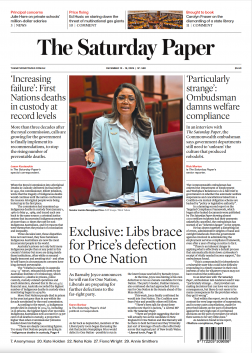
As NSW records its highest yearly number of Indigenous deaths in custody, a Victorian judge recalls one man who died in prison 18 years after he was eligible for release. By Mark E. Dean, KC.
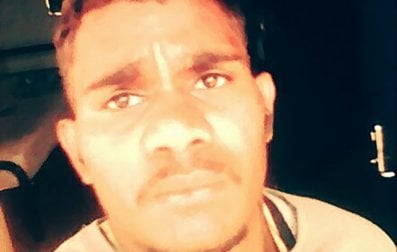
The life of Kevin Bugmy
On March 15, 1990, I appeared in the High Court of Australia as junior counsel to Dyson Hore-Lacy, SC, in the matter of Kevin Bugmy v The Queen.
Kevin Bugmy was a member of the Stolen Generations. He was brought up by a Christian family in Melbourne during his teenage years. His given and family names were changed and he was confused about his true identity until he was 17. In 1984 he was convicted of murder committed when he was 20 and given a then mandatory life sentence.
In 1987 the Victorian Penalties and Sentences Act was amended to provide for prisoners serving life sentences to apply to have a minimum term or non-parole period fixed. In 1988 Justice Robert Brooking, the trial judge, fixed a non-parole period of 18-and-a-half years. An appeal to the Court of Criminal Appeal by Kevin Bugmy against the length of the sentence was dismissed by a majority of the judges. Justice Bill Crockett dissented.
Relying on Justice Crockett’s dissent, Kevin took his case to the High Court. Dyson and I were briefed to appear in the matter and I began to research Kevin’s case and his life.
As I delved into Kevin’s life, recounted in the psychiatric reports that had been tendered before Justice Brooking, a shocking story of a child taken from his family emerged. I have no doubt that this dislocation was the principal cause of Kevin’s descent into drug and alcohol abuse and his offending. Justice Brooking paid due regard to these factors in fixing the minimum term but arrived at a sentence that was the longest then fixed for similar offending.
Retired judge Frank Vincent recalls when working for the Aboriginal Legal Service he visited the then nine-year-old Kevin at Turana Youth Training Centre. Kevin was being held in a mesh cage, as he was regarded to be uncontrollable.
In fixing the non-parole period, Justice Brooking observed: “The applicant has had, for practical purposes, no family life whatsoever. He was admitted to the care of the Social Welfare Department at the age of 3 ... Apart from about four years ... with foster parents, the applicant has spent his time in one institution or another.”
At the time Pentridge Prison was still operating and Kevin was imprisoned there. I made the then familiar trip along Sydney Road to visit him. We met in the decrepit bluestone in a dark office overseen by two prison officers. He was a quiet, confused and lonely young man. I left the prison that day deeply troubled by his life and the role the criminal justice system played in it.
The Melbourne High Court list was transferred to Hobart as there were no cases to be heard there and the hearing went well after some assistance from Justices Mary Gaudron and John Toohey.
On May 24, 1990, Kevin’s appeal was upheld by the High Court by majority and remitted to the Victorian Court of Criminal Appeal for sentence. The non-parole period was reduced to 16 years.
On April 13, 2019, Kevin Bugmy died of heart failure in Cessnock prison in New South Wales, where he had been transferred in the hope of reconnecting with his dispersed Barkindji family. He was 57 and had spent more than 36 years in custody. He was never paroled pursuant to the minimum term fixed in 1990 after his High Court appeal.
A coronial inquest into Kevin’s death was held in NSW in February 2022 and the findings of the coroner were delivered on July 6, 2022.
The deputy state coroner, Harriet Grahame, investigating the death concluded in her findings: “His story is one that brings great shame on white Australia.”
Kevin had been eligible for parole since October 5, 2000. Between that date and October 11, 2018, Kevin was refused parole on 12 occasions for reasons that included it not being in the public interest for him to be released and the apparently unacceptable risk of him reoffending because he had no appropriate support in the community.
For 36 years, the main contact Kevin had with life outside prison was with his sister, Doreen Webster. She is also a member of the Stolen Generations and grew up in the notorious Cootamundra girls’ home after being taken from her family when she was seven. As an adult, she first saw Kevin again when he was in prison, after assisting with his transfer.
I spoke to Doreen during the Voice campaign and she told me of receiving a letter from her brother. Kevin had found her through friends. She told me how shocked she was to hear from a brother she had not seen since she was seven. All six of the children were placed in state care for years and as Doreen said to me, “we had no say”.
Doreen waited for the day Kevin would be released on parole. She made up a room at her home and told him it was ready for him. Despite Kevin being moved between prisons in NSW on more than 50 occasions, she visited him regularly.
The deputy state coroner made a number of recommendations following the inquest and, in particular, stated that the circumstances of Kevin’s death “calls on us all to listen to Aboriginal voices”.
Nothing changed for Kevin from the time he entered the criminal justice system in 1983. He served a life sentence and died alone in prison. His voice was never heard. In the 19 years Kevin spent in the NSW prison system, he did not see a single Aboriginal health or support worker.
It is plain that the criminal justice system has systemically failed Aboriginal people and a principal cause of that failure is the absence of appropriate cultural support for offenders in custody and serving sentences in the community.
While the states are generally responsible for the criminal law, it is the Commonwealth that is responsible for the social policy failures that have contributed to the rates of Aboriginal incarceration and deaths in custody.
These rates continue to increase and, as the deputy state coroner observed in her findings, that fact calls on us all “to acknowledge the terrible damage caused by colonization”.
The inquest into Kevin Bugmy’s death also highlighted the absence of culturally safe programs for Aboriginal offenders in prison to address substance abuse and receive mental health treatment, and underscored the corresponding link to the shocking rates of deaths in custody.
In NSW, Aboriginal deaths in custody have increased alarmingly, leading State Coroner Teresa O’Sullivan to take the rare step of making a public statement last week, in which she said of the 12 deaths this year: “These [deaths] are not mere statistics. Each of these deaths represents a person whose life mattered and whose loss is felt deeply by families, loved ones and across the state.”
In Victoria, the Koori Court exercises jurisdiction at the County Court and Magistrates Court level but only for offenders who plead guilty to a specific range of offences. Community Elders assist with the process, and culturally safe programs exist for offenders serving sentences in custody and in the community. These services are limited, however, and the court has little oversight of offenders on parole.
The Victorian Statewide Treaty bill, which passed the Legislative Assembly on October 16, provides for the establishment of Nginma Ngainga Wara, a body with wide powers to report to the First Peoples’ Assembly and, in turn, to the government. A principal function of the body is to make recommendations in relation to law reform to improve outcomes for First Peoples.
An obvious focus for Nginma Ngainga Wara will be to identify deficiencies in the criminal justice system, improving sentencing outcomes and the rehabilitation prospects of Aboriginal offenders.
At the same time as the Treaty legislation passed the Victorian Legislative Assembly, the Northern Territory parliament debated a motion to urge the Commonwealth to “urgently establish a national independent body” to investigate, monitor and report on Indigenous deaths in custody in Australia. The motion was not supported by the Country Liberal Party government and was defeated, but it underlines the most pressing issue facing the criminal justice system in our nation today.
Kevin is buried near his sister’s home and a headstone marks that place.
This article was first published in the print edition of The Saturday Paper on October 25, 2025 as "The life of Kevin Bugmy".
For almost a decade, The Saturday Paper has published Australia’s leading writers and thinkers. We have pursued stories that are ignored elsewhere, covering them with sensitivity and depth. We have done this on refugee policy, on government integrity, on robo-debt, on aged care, on climate change, on the pandemic.
All our journalism is fiercely independent. It relies on the support of readers. By subscribing to The Saturday Paper, you are ensuring that we can continue to produce essential, issue-defining coverage, to dig out stories that take time, to doggedly hold to account politicians and the political class.
There are very few titles that have the freedom and the space to produce journalism like this. In a country with a concentration of media ownership unlike anything else in the world, it is vitally important. Your subscription helps make it possible.
Subscriber exclusive
Send this article to a friend for free.
Share this subscriber exclusive article with a friend or family member using share credits.