Games
Hollow Knight: Silksong – the sequel to 2017’s popular Hollow Knight, from an Adelaide indie studio – lives up to the hype. By Jackson Ryan.
The seismic impact of Australian game Hollow Knight: Silksong
Okay, sure, let’s start with the asteroid. You can call it Hollow Knight: Silksong and, to be clear, it’s not an asteroid, it’s a video game. In order to understand its seismic impact on the global video game industry this past month or so, it’s worth imagining it as a city-killer space rock careening into computers and home consoles.
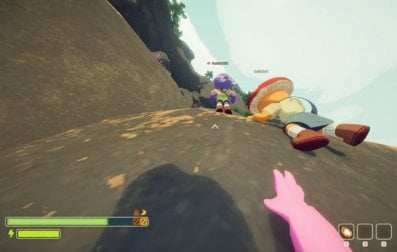
Hollow Knight: Silksong is the sequel to 2017’s Hollow Knight, an absorbing and intricately designed 2D video game by Team Cherry, a three-man development studio in Adelaide. Hollow Knight is set in a grimy, ruinous insect kingdom and has become something of an archetype for modern “Metroidvania” games, a genre of platforming known for labyrinthine corridors and hidden nooks that can only be accessed as players progress by defeating powerful enemies and acquiring new abilities.
Hollow Knight was not an asteroid. It arrived quietly, slowly gathering momentum over time, fans picking it up via word-of-mouth. It took six months to sell half a million copies, but by 2025, it had sold 15 million. Were it a film or song and not a video game, it would likely be considered as much a part of Australia’s identity as The Castle or Cold Chisel.
Hollow Knight was crowdfunded on Kickstarter, with just over 2100 backers offering up $57,000 in funding back in 2014. As part of that campaign, Team Cherry promised to deliver a downloadable add-on that enabled players to control Hornet, one of the title’s mysterious but magnetic enemies. As Team Cherry began working to update the game, they realised they’d need to build an entirely new world that was shaped for a speedier, more agile protagonist. Their ambitions saw the add-on morph into a fully fledged title.
Team Cherry announced their sequel in early 2019 to rapturous excitement. They posted a few updates, revealing the DNA it shared with its predecessor, including bringing back composer Christopher Larkin to score the game. They also showed its evolution, unveiling details about Pharloom, the haunted kingdom Hollow Knight: Silksong takes place in.
Ten months later, Team Cherry fell silent. For more than 2000 days there was little information about Silksong’s fate. During the silence, the game began to generate an anticipation that few independent games – few video games at all – have been able to create. Faithful observers became near-religious in their fervour for the game, digging through the web for any skerrick of information about it.
Some believed the game would never be released, thinking Team Cherry may have given up on it. Others posted memes of Hollow Knight’s nameless protagonist, clad in clown make-up, a uniform that diehards adopted as a form of self-flagellation. They were the clowns for believing Silksong was ever real. The zealots and enthusiasts, bound in patient prayer, came to be known as the “Skongers”.
On August 21 they went into meltdown as Team Cherry surprise-announced their long-in-development title would be released two weeks later, on September 4. Other development studios planning to release in the same week scrambled to delay their games, fearing they’d be caught in Hollow Knight: Silksong’s impact zone, attention for their games incinerated.
They were right. When Silksong landed on digital video game stores, it was an apocalyptic event. Such was the expectation and excitement that the stores crashed. Fans eager to play saw payments frozen, loading screens refreshing in infinite loops. All of this – the silence, the build-up, the impact, the aftermath – continued to build a mythos around Hollow Knight: Silksong. Could it ever live up to the legend that had engulfed it?
After 50 hours fighting my way to the top of Pharloom, my heart immediately leaps to “yes”. My head trips over on the way to such an assessment.
Silksong is masterful in revealing how a human body can conjure a sigh, the different species of disappointment that video games can evoke. There’s shoulder slumping, exhaling-through-the-nose acquiescence. The calm placement of a controller on the couch, that crippling resignation. The push-my-fingers-into-my-eyes, curl-the-toes frustration after a tough enemy has prevailed over you for the 40th time.
This is a Difficult Video Game, the type that starts arguments on the internet. It’s filled with sections of unforgiving platforming where missteps send you back to distant checkpoints and where even the most common enemies punish complacency with fatal consequences.
Hollow Knight: Silksong’s hardened edges have elicited the typical – now staid – reaction that every Difficult Video Game seems to garner. One church of belief says if the game seems too hard, you’re just not good enough. “Git gud” is the memed-to-death shorthand: improve or stop complaining. But many players deride Silksong’s antagonistic design as cruelty, suggesting it disrespects a player’s time. This makes the game “no fun”. Online forums and social media are filled with players saying they’re giving up on it.
The latter is a position I find easy to sympathise with. I’ve slumped my shoulders more times than I can count while traversing the game’s poisonous swamp and its darkest corridors; I’ve sighed a thousand species of sigh. There are times when you simply must turn Silksong off, because you know continuing will do lasting psychic damage.
Overcoming constant failure makes way for supreme satisfaction – and trains of expletive-riddled feedback for the enemy just defeated. There are many encounters that wormed their way into my brain long after the stink of defeat washed off: a pair of golden automatons, their tandem attacks a deadly tango, a flamboyant thespian bug that dazzles with fireworks and tornadoes, and a major boss at the end of the game’s first act that provides an almighty roadblock.
To defeat these enemies means losing over and over again. Breakthroughs only come with time. Hollow Knight: Silksong forces you to find a flow state, to lock in. There is no shortcut to victory. You must learn enemy patterns, build muscle memory for faster twitch-responses to deadly attacks, and train your peripheral vision to avoid collisions and traps. It never once strays from this ideal. I love this but recognise that it’s a barrier to broader, lasting appeal.
Team Cherry appear to confront this tension between adulation and agony head-on. By doubling down on their ethos and creating a sequel that is more difficult and more antagonistic than its predecessor, they have met the myth they helped to create – not with drastic change but with confidence in the design philosophy they’ve been honing for more than a decade.
That’s a rare accomplishment, afforded to the team by the creeping success of Hollow Knight eight years ago. If that game announced Team Cherry’s arrival, the Silksong-asteroid solidifies them as auteurs. Its impact – on design, genre and debate – will be felt for years to come.
Hollow Knight: Silksong is available on Steam, Game Pass, PS5, Xbox Series S|X, and Nintendo Switch.
This article was first published in the print edition of The Saturday Paper on October 25, 2025 as "Siren song".
For almost a decade, The Saturday Paper has published Australia’s leading writers and thinkers. We have pursued stories that are ignored elsewhere, covering them with sensitivity and depth. We have done this on refugee policy, on government integrity, on robo-debt, on aged care, on climate change, on the pandemic.
All our journalism is fiercely independent. It relies on the support of readers. By subscribing to The Saturday Paper, you are ensuring that we can continue to produce essential, issue-defining coverage, to dig out stories that take time, to doggedly hold to account politicians and the political class.
There are very few titles that have the freedom and the space to produce journalism like this. In a country with a concentration of media ownership unlike anything else in the world, it is vitally important. Your subscription helps make it possible.
Subscriber exclusive
Send this article to a friend for free.
Share this subscriber exclusive article with a friend or family member using share credits.