News
A clutch of Liberals who built relationships during Donald Trump’s first presidency are now the most influential Australians in Washington. By Jason Koutsoukis.
The Liberal lobbyists making their fortunes in Trump’s America
Of all the lobbyists in Washington, DC, the most influential Australian is Joe Hockey. More so than former prime minister Scott Morrison. More so than former minister Arthur Sinodinos.
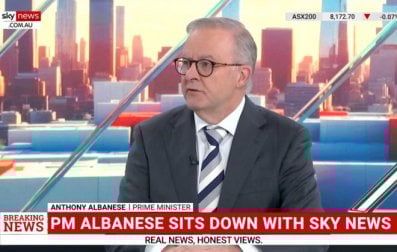
The former treasurer and ambassador is positive about Anthony Albanese’s visit to the White House, scheduled for Tuesday. He thinks the prime minister is well prepared to meet with America’s capricious president.
“You’re not going to win over Donald Trump by giving him a new set of golf clubs,” Hockey tells The Saturday Paper.
“President Trump doesn’t like sycophants. It’s a fine line between being respectful and being a sycophant for some people dealing with President Trump. He will respect you if you are smart enough to offer him initiatives that win him support domestically.”
Since leaving his ambassadorship, Hockey has built Bondi Partners – a clearing house for Australian and American interests, a firm that sits halfway between consultancy and mission. Its offices are a short drive from Capitol Hill and within easy reach of the Republican operatives who control the White House and both houses of congress.
The company’s public pitch is discreet – “strategic advice across allied markets” – but its US lobbying filings reveal a more concrete business. Bondi Partners represent Australian firms such as defence contractor Austal and infant-food manufacturer Bubs, as well as other international clients navigating the United States federal bureaucracy.
The company’s value lies in its familiarity with the rhythms of the Trump-era capital – who takes calls, which aides matter and which headlines move the president’s mood.
It is a form of intelligence traditional diplomacy rarely supplies. Hockey describes his role as translating Australian policy into terms that resonate with Washington’s new order.
“There is a lot of goodwill towards Australia in Washington, there is no doubt about that,” Hockey says. “But Donald Trump has a long memory and he doesn’t hesitate to categorise people as either supporters or hostiles.”
The company’s Washington team includes veterans of Capitol Hill and the first Trump administration: global chairman Richard Spencer, who served as navy secretary; Mick Mulvaney, Trump’s former chief of staff; Mike Rogers, a one-time commander of US Cyber Command and director of the National Security Agency; Emma Doyle, a deputy chief of staff in the Trump White House; and Joe Manchin, the retired Democratic senator who now sits as an independent.
Its head of government relations, Sam LaHood, is the son of former Republican congressman Ray LaHood, a respected Illinois moderate who later served as Barack Obama’s transportation secretary – a rare Republican in a Democratic cabinet. Sam now works the same bipartisan terrain for Bondi Partners, while his brother, Darin LaHood, serves in congress as a Republican representative.
Among Bondi’s Australian team are former Liberal foreign and defence minister Marise Payne; former Western Australian Labor premier Mark McGowan; former Howard government minister Peter McGauran; Jim McDowell, who retired in April as deputy secretary for naval shipbuilding and sustainment at the Department of Defence; and former political journalist Phillip Hudson.
Hockey is one of several Australians The Saturday Paper spoke to for this article. All were positive about the prospects for Albanese’s meeting next week, although offered various forms of advice for dealing with the president.
“My instinct always is that as long as you’re not rude to someone, you start off where you have common interests,” Hockey says. “In our case, things like critical minerals and rare earths where we have been doing a lot of work for five years.”
Trump’s return to the Oval Office in January has redrawn Washington’s power map.
While the formal machinery of diplomacy still runs through the State Department and the Australian embassy on Massachusetts Avenue, much of the access to the administration now flows through private channels – boutique firms, former ambassadors and strategic advisers who trade on familiarity rather than process. Almost all are Liberals.
This network includes Hockey, former Liberal senator and ambassador Arthur Sinodinos, and former Liberal prime minister Scott Morrison, now vice-president of advisory firm American Global Strategies, founded by a former Trump national security adviser who sits on Trump’s Intelligence Advisory Board.
Others include Nick Warner, a former Australian Secret Intelligence Service chief and Defence Department secretary, who is now a senior adviser alongside Morrison at American Global Strategies; former South Australian Liberal premier Steven Marshall, president of the American Australian Association; and former Australian Defence Force chief Sir Angus Houston, a senior counsellor to The Cohen Group, founded by Republican senator William Cohen, who served as Democratic president Bill Clinton’s defence secretary.
Former Labor defence minister Joel Fitzgibbon, a registered lobbyist in Australia, co-chairs the AUKUS Forum with Sinodinos, a network linking Australian firms and researchers to the trilateral defence pact. Another former Liberal defence minister, Christopher Pyne, now chairs his own consultancy, Pyne and Partners, and is likewise a regular visitor to Washington.
There is also Greg Norman, the golfer whose friendships with a string of US presidents – Trump among them – have often been quietly enlisted by Australian governments.
“I think the Australian network in Washington is useful to the Australian government – if the Australian government wants to deploy it,” Sinodinos tells The Saturday Paper. “There are lots of Australians in Washington, in all sorts of areas of influence and whatever, but it really comes down to whether the embassy and the government want to use it. But that network is real – Australians are well thought of in the US – and there’s plenty of scope to use it.”
Michael Fullilove, executive director of the Lowy Institute and a visiting fellow at the Brookings Institution, says Albanese must use the meeting with Trump to protect what he views as important equities such as AUKUS and our trading arrangements.
“We should also try to encourage President Trump to maintain a US presence in Asia, but given the personality of this president, the most important thing for the PM to achieve is to establish a positive personal relationship at the summit,” Fullilove tells The Saturday Paper.
“Oval Office meetings with President Trump go in different ways. Some leaders are Zelensky’d or Ramaphosa’d; it’s much nicer to be Starmer’d or Meloni’d. Albanese’s primary goal should be to establish a businesslike, positive relationship at the summit,” he adds. “There’s no point in trying to change Trump’s mind on issues on which he has lifelong beliefs. Albanese should go into the meeting as Canada’s Mark Carney did, with a game plan and a good story to tell. Mr Trump likes Australia and anglophone countries, which will help. Albanese should be authentic, friendly and forthright.”
Philippe Reines, a senior Democratic operative and long-time aide to Hillary Clinton, best known for playing Donald Trump in her 2016 debate rehearsals, offers a playbook for how Albanese can manage the president’s volatility: how to flatter without fawning, deflect without provoking, and survive an encounter that can quickly turn theatrical.
Open with a line that implies admiration, Reines tells The Saturday Paper, such as “I like what you’ve done with the place”. If the meeting needs a lift, drop a light, human detail: ask about “the new patio” or the ballroom, a comment that signals attentiveness and diffuses tension without pandering.
Reines counsels restraint, however – use these lines sparingly, as tactical options rather than a routine charm offensive.
“These aren’t merely flattering remarks, and the plan wouldn’t be to blurt all three out at the same time. You make the comment about the Oval on arrival. The others you hold in abeyance in case the meeting isn’t going in the right direction,” he says.
“They are icebreakers but held back for a future chill. Simply saying ‘patio’ changes the dynamic, for the better. And there are all sorts of ways to slide it in so that you’re not simply blurting out ‘patio’ or ‘ballroom’ at random points like you have Tourette’s syndrome. ‘I would love to follow up on this point, maybe we could even do so on the patio.’ Next thing you know you might be given a tour, also showing off the new wall of photos he’s installed.”
He also warns about the unpredictable dynamics of a crowded meeting room. If the media or Trump surrogates intrude, Albanese should refuse to be dragged into side disputes, deflecting back to Trump with a steady line.
“Common problem visitors are having is the wide range of topics that come up when press is present for any part of a meeting. At best, you just have to sit there like a potted plant while he goes through the litany of topics never far from his cords vocalising,” Reines says. “At worst, you are pulled into the topic. One option is to go ‘up and out’ – so if he is talking about how terrible his predecessors were on Israel, you don’t need to join in. You can simply say, ‘I can’t imagine anyone doing a better job than you just did, with one of the most intractable problems of modern times that has befuddled American presidents and world leaders for more than half a century. With all the redecorating you’ve done, make sure to save some space for next year’s Nobel.’ ”
Another thing to watch for, according to Reines, is tension with Vice President J. D. Vance.
“He was a smart machine capable of grinding up people before Trump picked him. Now he’s feeling his oats and has no boundaries. The dirty secret of the Zelensky brawl is that the Ukrainian president threw the first punch, needlessly. But what was more telling is what came next: the president allowed his vice-president to keep the mic, to steal the show, for several minutes.
“The takeaway is don’t provide casus belli, but if you find yourself in a shooting war, redirect the conversation to the president. Don’t accept anyone else, not Vance or [Secretary of State Marco] Rubio or anyone, as a surrogate.
“This is a meeting between world leaders. The dynamic of the conversation should reflect that reality. That does not mean do so standoffishly, as a person who won’t talk to the help. It’s merely responding to what they said by redirecting it to the president. Despite common belief, he does not often fight with people to their face.
“So, if you can, absorb the force of a punch from the others and convert it to even keel and directed at the president.”
Reines’s final piece of advice for Albanese is to never forget that every encounter with Donald Trump requires a bad guy: “If going in you can’t name the bad guy, then it might end up being you. So be ready to sacrifice someone to save your own skin.”
https://www.youtube.com/watch?v=wkWWIJy_YYo
Paul Myler offers a slightly different view, a case for substance. A former deputy chief of mission at Australia’s Washington embassy, who spent five years inside the Beltway before returning home last year to found strategic consultancy StratQ, he says the key for Albanese is to arrive not as a supplicant but as a problem-solver.
“The approach should be, literally, walk into the Oval Office, compliment him on what he’s done to the place – love the gilding – and then say, ‘We’ve been watching developments, and we think we can help you solve some of the problems you have.’ Don’t go in saying, ‘Please, sir, can you help us?’ It has to be, ‘I’m here to help you with some of the problems you have. We’re in this together.’ ”
Those problems, he says, begin with defence industry bottlenecks.
“Submarine production and maintenance are clear pain points for him. We can help by providing sustainment through Western Australia, meaning US submarines spend 20 to 30 per cent more time on station because they’re rotating out of Perth rather than Honolulu or San Diego.”
Critical minerals are another lever: “The Chinese have been flexing in that space, dumping lithium to crash prices and squeeze competitors. The answer is building an ex-China, reliable, resilient supply chain – with Australia as a core partner – backed by stockpiles and long-term contracts.”
Myler also adds energy to the mix: “In the AI age, the three inputs are talent, energy and chips. The US has talent and chips. Australia can help solve for energy. We’ve got companies like Woodside investing in the US, and at home we’re going full steam ahead on renewables and gas to ensure we have the cheapest, most reliable power possible. That’s a shared agenda.”
The conversation, Myler argues, should be framed around cooperation, not concession – the kind of “winners’ talk” that Trump instinctively respects.
“He loves Australia. The mateship brand that Joe Hockey built during Trump One – he completely internalised that. And the thing Trump loves most is winners. The first line of the brief for the meeting will say Albanese decimated his opposition at the last election and drove the leader from parliament. Trump will clock that immediately: ‘This guy’s a winner. I like winners.’ ”
If Hockey sits at the top of the informal network – the paid influence ecosystem connecting Canberra and Capitol Hill – then Kevin Rudd stands as its formal mirror: the government’s official ambassador in Washington since March 2023, charged with keeping the alliance steady amid the volatility of a Trump presidency.
Since taking up the ambassadorship, Rudd has turned the embassy into a strategic nerve centre, blending diplomacy with public messaging. A former prime minister and foreign minister, he arrived with an address book that already contained much of Washington’s foreign-policy establishment.
His ties to think tanks such as the Asia Society, which he headed for a decade in New York, and his authorship of two books on China, give him access not only to policymakers but to opinion-makers as well.
In the months leading up to Albanese’s visit, Rudd’s calendar has been crowded with panels, round tables and briefings on AUKUS and Indo-Pacific security. On social media, he documents a steady procession of meetings, accompanied by careful captions about “shared values” and “strategic cooperation”. Gone are the posts of earlier years describing Trump as a “traitor to the West”.
Rudd’s industrious networking has ensured he can open doors to the Pentagon and State Department, and his authority on China carries weight with hawkish Republicans in congress.
The one door Rudd has yet to open, however, is to the West Wing.
“Rudd cannot get in to see one single person of significance in the White House,” says one source familiar with who’s in and who’s out in Trump’s Washington.
“We have gone from Tier 1 to Tier 4. It took us 12 months to get a meeting between Albanese and Trump. There is no US ambassador to Australia and we’re not taking the Trump administration seriously when it comes to spending a lot more on defence. So what this meeting is actually about is recovering and rebuilding.”
This is a point that Myler, who served as Rudd’s deputy in Washington for 18 months, emphatically rejects.
“That is absolute nonsense,” says Myler, noting that Australia’s foreign affairs minister, Penny Wong, was seated in the second row during Trump’s inauguration, while she and Rudd were among 120 guests invited to St John’s Episcopal Church – the so-called “Church of the Presidents” – where incoming leaders traditionally pause for a private prayer service before taking office.
“I think there were maybe three or four ambassadors in that room,” says Myler. “And it’s one measure of how effective he is as ambassador.”
Rudd’s influence or otherwise will be of little significance next Tuesday. When the president meets another leader, all briefing papers and preparations fall away: he does whatever he feels like in the moment.
This article was first published in the print edition of The Saturday Paper on October 18, 2025 as "The Liberal lobbyists making their fortunes in Trump’s America".
For almost a decade, The Saturday Paper has published Australia’s leading writers and thinkers. We have pursued stories that are ignored elsewhere, covering them with sensitivity and depth. We have done this on refugee policy, on government integrity, on robo-debt, on aged care, on climate change, on the pandemic.
All our journalism is fiercely independent. It relies on the support of readers. By subscribing to The Saturday Paper, you are ensuring that we can continue to produce essential, issue-defining coverage, to dig out stories that take time, to doggedly hold to account politicians and the political class.
There are very few titles that have the freedom and the space to produce journalism like this. In a country with a concentration of media ownership unlike anything else in the world, it is vitally important. Your subscription helps make it possible.
Subscriber exclusive
Send this article to a friend for free.
Share this subscriber exclusive article with a friend or family member using share credits.