News
The home affairs minister says divisive voices are the loudest they have ever been in Australia – but a ‘ballast’ of cohesion remains and economic policies will calm the electorate. By Karen Barlow.
The Burke interview: ‘A tinderbox for the angriest voice’
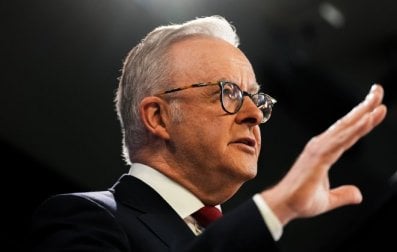
Tony Burke embraces a tough commission. He’s had more than a few during 21 years in federal parliament.
What’s topping his current assignment is advancing a Labor mission of social inclusion and cohesion while populist opponents on the right seek to embrace the type of anti-immigration sentiments that have made Nigel Farage a serious political contender in the United Kingdom.
“The angry voices are the loudest I can remember them being, [but] I think the central view of Australians hasn’t shifted,” the home affairs minister tells The Saturday Paper.
“I think the ballast of Australian opinion remains really, really proud of who we are, and seeing multicultural Australia and modern Australia are the same thing. But the loudest, the angriest voices have become emboldened.”
The war in Gaza, and separately the Russian invasion of Ukraine, has stoked social and political tensions in Australia. Unrelenting cost-of-living pressures, an acute housing shortage, growing social isolation and a divisive online landscape have added to the societal fraying.
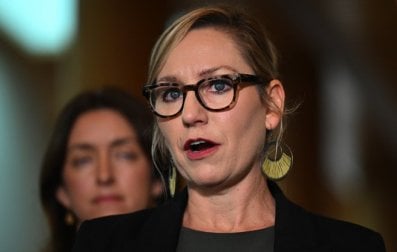
There have been anti-immigration marches organised by neo-Nazis. Synagogues have been burnt and mosques and the offices of MPs vandalised. The pro-terror words “Glory to Hamas” were sprayed on a Melbourne billboard last week, while independent senator Lidia Thorpe is being investigated by the Australian Federal Police for saying at a rally she’d “burn down Parliament House” in support of Palestinians.
It has not just been the Israel–Hamas conflict that is adding to tension, Burke says.
“Some of the … bigotry that the Chinese community would experience, for example, has been building over a longer period of time,” he says.
“The sharpest spike would have been in anti-Semitism, but there’s also been an increase in Islamophobia, which the surveys would say was starting off a higher base. But the sharpest spike we’ve seen in these last two years would have been anti-Semitism.”
Burke, who is also minister for immigration and citizenship, minister for cyber security and minister for the arts, as well as leader of the House, gave an address to the National Press Club in Canberra this week expanding on his year and three months attempting to reform the home affairs portfolio.
After months of opposition attacks over the 2023 High Court ruling and repercussions over the release of the “NZYQ” indefinite detention cohort, Burke was tapped by the prime minister in July last year to replace ministers Clare O’Neil and Andrew Giles.
As the leader of the politically sensitive portfolio, he all but shut down the negative immigration stories. The Coalition moved on to other matters in parliamentary Question Time.
To this point, Burke faced no questions on Thursday at the National Press Club about the tightly held $408 million deal to deport many of the 354 NZYQ detainees to the tiny Pacific island of Nauru.
The minister talked of getting more legislative “tools” to help Australians “be safe, to feel safe, to be welcomed and feel at home”.
He admitted any “securitising” of the language around immigration and multicultural affairs by mixing them with the national security parts of the home affairs portfolio may not be “good for social cohesion”.
The minister took aim at his political opponents, noting it is “impossible to have a civil and decent argument about immigration in a fact-free way”.
“I think it’s fair to say … the days of dog whistle politics are well and truly over. When people want to play cards designed to divide people, everybody hears them,” he told the press club.
“It’s no longer a dog whistle. It’s now a set of bagpipes that you can hear from the other side of the hill. People are onto it and when individual communities are singled out, they hear exactly what’s being said.”
Burke tells The Saturday Paper he prioritises public safety and social cohesion, directing his department early on to strongly consider the impact on the local community when processing visa applications and considering whether to cancel them.
Most rejections go unacknowledged, but the minister’s decision late last year to deny a visa to American right-wing activist Candace Owens re-emerged this week with the High Court unanimously backing the move.
Owens was booked to visit Australia last November for a commercial speaking tour, before Burke blocked her visa on character grounds, stating her views downplaying the Holocaust, and other inflammatory rhetoric, risked “increased hostility and violent or radical action”.
The legal battle was pitched as a fight over freedom of speech, particularly the “freedom of political communication”, but the court ruled on Wednesday that the minister’s actions did not infringe on this freedom and the visa ban was upheld.
“We’ve had a series of those that haven’t all been public,” the minister says, stating the number is “not in the hundreds”.
“The only one that I released publicly was Kanye. All the others that are in the public sphere are there because the person who didn’t get a visa was sufficiently outraged that they went to the media. But they are not the sum total of the ones that we’ve done.
“My view is that we owe different rights of freedom of speech to our citizens and people who live here than we do to someone who wants to visit to make money out of their opinions. So, the impact of that, I think, is bigger than just stopping certain public speaking tours. I think the impact of setting a standard of what’s acceptable and unacceptable in Australia is powerful as well.”
Burke also points to moves against hate speech, particularly what he describes as the “deep evil of anti-Semitism”, by establishing the Special Envoys to Combat Islamophobia and Anti-Semitism, Aftab Malik and Jillian Segal.
“One of the things that I think is often being missed with that is you go back to the whole debate about 18C – it needs to be remembered that 18C, under the Racial Discrimination Act, never protected people against bigotry based on their faith,” Burke says.
“There is an extent to which anti-Semitism was always covered, because anti-Semitism can involve an overlap of ethnic background or race together with faith. Islamophobia was certainly never covered.
“The mere establishing of those envoys – it’s the first time a federal government sent a really clear message that religious bigotry is not welcome here.
“The establishment of the envoys and what we’ve done with visas has been a really clear statement that you don’t get licence for bigotry under the shroud of freedom of speech.”
The debate about Australia’s level of immigration is again heating up, significantly influenced by the way it has been exploited politically in the United States and the UK.
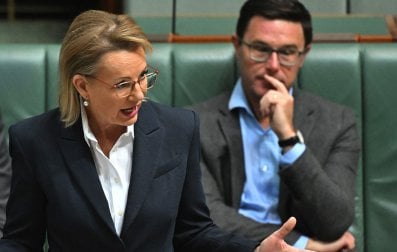
Conservative figures Andrew Hastie and Jacinta Nampijinpa Price dearly want to have this debate, so much so they are no longer on the Coalition’s front bench under Sussan Ley.
Hastie, who stepped down as Burke’s shadow in home affairs, had posted on social media that he believed Australians were “starting to feel like strangers in our own home” due to “unsustainable” immigration levels. He also told reporters he was worried about the right flank of the electorate, pointing to the “quite significant” increase in the vote for One Nation.
Earlier, Price got caught up in an ABC interview talking about the anti-immigration March for Australia rallies, making an erroneous claim about the voting patterns of the Indian diaspora.
This week, Liberal frontbencher James Paterson argued that immigration is “too high” and the Liberals “must not shy away from important debates about our culture, identity and sovereignty”.
Burke says if the Liberals want to cut immigration numbers, they must outline what area or industries they are going to cut.
“They ended up for and against almost every visa class, but the discussion about the numbers, which I’m happy to have, is only a sensible discussion if you’re willing to say where,” he tells The Saturday Paper.
“If it’s just an emotional argument about being angry with migration, then multicultural communities will simply know, if there’s nothing specific, they’ll know that this is just a sledge against them.”
Burke says the reopening of borders after the pandemic caused an increase in net overseas migration numbers, particularly with the overseas student cohort all arriving at once, but the minister says that high number is coming down.
“We’ve had a 40 per cent fall from the peak of those net overseas migration numbers,” he says.
High demand for housing stock, financial housing stress, rising homelessness and less than adequate residential infrastructure is fuelling concerns about migration.
The Albanese government is spending $43 billion on its housing agenda, including a Home Guarantee Scheme, to make it easier for first-home buyers to pull together a deposit, and a Housing Australia Future Fund, to finance social and affordable housing.
However, the government has faced accusations that it is all moving too slowly for the huge housing demand.
Burke says the opposition with the Greens held up housing legislation in parliament, which frustrated projects that are aimed at increasing housing supply. He says the government is working multiple levers on a fix.
“Young people are the sharpest end of us needing to act on housing supply. They are the sharpest end of that issue,” he says.
“If wages had continued to flatline, we would be in a much worse situation than where we are now. The fact that wages are moving, that we’ve been getting inflation down, that interest rates have started to fall, and that we are acting on housing supply – none of it has happened as fast as we would have liked, but the direction of all of those issues is in the right direction, and that matters, because it effectively means there is less of a tinderbox for the angriest voice to play with.”
Sussan Ley herself has sought to turn down the temperature on immigration rhetoric, although she has also tried to focus on crime levels in Melbourne. In the wake of the March for Australia rallies she denounced extremism and called for unity.
“This is a moment that demands leadership,” the opposition leader stated.
Noting that she is a migrant to Australia, having been born in Nigeria, Ley told the Quirky podcast this week that the prime minister has unfinished business on social cohesion.
“The country has experienced a fraying of social cohesion. I’m not going to overstate that because I see examples where people come together all around me, but this is not the Australia I came to and it’s not the bipartisan approach that we’ve always had ...” she said.
“So, I look forward to that and I want to play my part as leader of the opposition.”
Burke, who was filmed at Sydney Airport welcoming a special arrival of a refugee from Gaza whom he says he’d engaged with over the phone, is seeking to turn around how immigration is seen.
“I sort of see the job in my portfolio of making sure that people are safe, that they feel safe, that they’re welcomed, and they feel at home. And if you’re delivering that, then your social cohesion will follow,” the minister tells The Saturday Paper.
“For people who are feeling isolated when they hear the angriest voices, they need to know that the majority of Australia is actually with them – not with the person shouting into a TV camera or abusing them personally on public transport – and making sure that we are giving those messages of welcome and inclusion cannot be underestimated.
“All these little things. There’s a lot of that that happens, and that all adds up right through to every citizenship ceremony. Saying you want the numbers to fall, but you won’t say where, is just igniting some parts of Australia against others.”
This article was first published in the print edition of The Saturday Paper on October 18, 2025 as "The Burke interview: ‘A tinderbox for the angriest voice’".
For almost a decade, The Saturday Paper has published Australia’s leading writers and thinkers. We have pursued stories that are ignored elsewhere, covering them with sensitivity and depth. We have done this on refugee policy, on government integrity, on robo-debt, on aged care, on climate change, on the pandemic.
All our journalism is fiercely independent. It relies on the support of readers. By subscribing to The Saturday Paper, you are ensuring that we can continue to produce essential, issue-defining coverage, to dig out stories that take time, to doggedly hold to account politicians and the political class.
There are very few titles that have the freedom and the space to produce journalism like this. In a country with a concentration of media ownership unlike anything else in the world, it is vitally important. Your subscription helps make it possible.
Subscriber exclusive
Send this article to a friend for free.
Share this subscriber exclusive article with a friend or family member using share credits.