Profile
His outsider upbringing means Tony Ayres, the brains behind television series such as The Slap, Nowhere Boys and an upcoming drama based on Erin Patterson, is drawn to complex characters. By Anthony Mullins.
Screenwriter and director Tony Ayres
Despite being one of the busiest and most prolific television showrunners in Australia today, Tony Ayres exudes a dreamy calm over our Zoom call this morning, belying the sheer effort required to do his job every day.
“Showrunning”, a term only recently adopted from the United States, involves a creator overseeing every aspect of a television drama, from original concept to pitching, to budgeting, producing, writing, directing, casting, editing and promotion. The creative, cognitive and physical load is breathtaking for even the most experienced screen professional.
Ayres was a pioneer in the role in Australia when he put his hand up to “showrun” The Slap (2011), one of the first TV dramas from Matchbox Pictures, the powerhouse production company he formed with his partner, Michael McMahon, and fellow producers Penny Chapman, Helen Panckhurst and Helen Bowden. The series went on to be nominated for an International Emmy award for best miniseries, but Ayres is typically humble when discussing his central role in the show. “I don’t think I did half of what an American showrunner does,” he says with a chuckle. “Helen Bowden and Michael did the other half.”
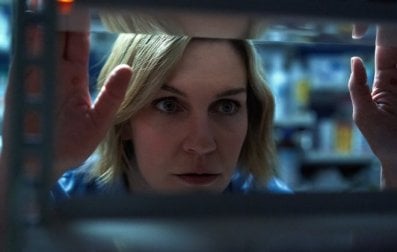
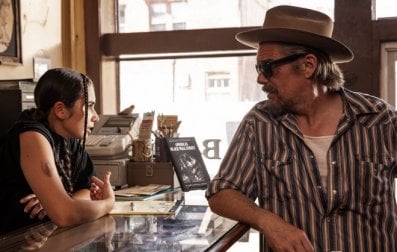
It’s a generous concession and an unusual one in an industry where auteurs are sometimes guilty of egotistical brand-boosting. But Ayres – a universally respected creative leader in the local screen industry, responsible for creating award-winning TV shows as diverse as Stateless (starring Cate Blanchett), Clickbait, Fires, Nowhere Boys and, most recently, The Survivors – has never been one for doing things the usual way. Perhaps because his background is anything but typical.
Ayres was born in Macau, a former Portuguese colony that’s now part of China, to a glamorous nightclub hostess. He never knew his father. When Ayres was three years old his mother married an Australian sailor who relocated the family, which included his big sister, Linda, to Perth. With his stepfather frequently away at sea, the marriage didn’t last and his mother turned to other men to help support her family. Unfortunately, one of those men, 30 years younger than his mother, fell in love with Ayres’s sister. After frequent bouts of mental illness his mother died by suicide when he was 11 years old and Ayres and his sister were reunited with their stepfather. When his stepfather died from a heart attack a few years later, the siblings lived with Ayres’s history teacher.
Ayres believes the turbulence of his childhood sparked his passion for storytelling. “When I was a kid, I used to sort of make stories up to help me get to sleep. I think it was a way of coping,” he says. “You know, as a child you have no control of the outside world, but you do have control of the narrative. So I used to tell myself stories. That became a habit of mine. Like a way of interpreting and understanding the world.”
Ayres did not chart a straight line to storytelling and filmmaking. He studied printmaking and photography at the Australian National University where he showed enormous promise, with his entire graduating collection being purchased by the National Gallery. “But I have never made a picture since,” says Ayres, smiling mischievously as he explains his disillusionment with the art world by that time. “It sort of felt like I was surrounded by a lot of half-baked ideas that didn’t really add up, didn’t make sense, and was a form of status seeking, you know – like intellectual jostling but to not much end.”
By this stage he was in his late 20s and still did not have a clear sense of where the creative life he was forging was taking him. Wondering if he could merge his instinct for stories with pictures, Ayres enrolled in a graduate diploma in screenwriting at what is now known as the Australian Film Television and Radio School (AFTRS). “It was only when I did that, and I met a teacher called Barbara Masel, that I actually found my place in the world,” he says. “I really respected her, she was a great intellectual and she had great taste. And she said, ‘You can write.’ And coming from a very underclass background, I had no natural sense of entitlement at all, or self-worth. I wasn’t sure whether I had any talent, I didn’t know whether I was any good. But, certainly, when Barbara said, ‘You can write’, somehow, it flipped a switch in me and I, because I respected her, I believed her.”
A fellow student with Ayres in that life-changing year at AFTRS was writer and director Belinda Chayko, who became a key collaborator in his television creations. “The writing department was generally pretty conservative at the time. There wasn’t a lot of debate and discussion about how to tell stories,” recalls Chayko. “Tony was one of the people I immediately gravitated to because he was super smart and was thinking about these things. We would grab a coffee from the canteen and sit there for hours talking and talking. We just kind of clicked, really.”
Eventually, at 40 years old, after a decade of honing his craft writing short dramas and documentaries, Ayres embarked on his first feature film – but not as a writer. Instead, in a typically bold pivot, he chose to direct a script written by a friend, Roger Monk. “I hadn’t studied directing, so I’m completely self-taught as a director. And I was terrified as well. So, I kind of bumbled my way through it but somehow we made it work.”
The resulting 2002 film, Walking on Water, was about a group of friends dealing with the death of one of them from AIDS. It won two Teddy Awards at the Berlin Film Festival, five Australian Film Institute (AFI) awards and set Ayres up to write and direct the story that had shaped his life up until that point. “I always knew that I was going to write, at some stage, the incredible true story about my mother, my sister and I, and the year of the events leading to my mum’s death,” he says. “The sort of extraordinary roller-coaster, real-life story that kind of beggars belief.”
Ayres wrote the script, The Home Song Stories, and recruited legendary Chinese actor Joan Chen to play his mother. “She’s just extraordinary in it and she recently said it’s one of her favourite films that she’s been in,” says Ayres. The film landed well with critics, receiving eight AFI awards and premiering at the Berlin Film Festival. But Ayres was troubled. “It didn’t really succeed at the box office and barely anyone saw it. And I felt really guilty and responsible for the distributor not making their money. I took it very personally because it was personal. I put all of this time and energy and all of myself into this and barely anyone saw it.”
Instead of following up with another feature, Ayres pivoted once more, this time to television, where he and McMahon produced Bogan Pride for a then unknown Rebel Wilson, before helping to found Matchbox Pictures. “The ethos was we wanted to be a company which respected writing and put writing at the centre of TV making or the creative endeavour,” he says.
The move opened a creative floodgate for Ayres as he, along with the Matchbox team, put together an unprecedented string of successful television dramas, often with Ayres acting as creator and/or showrunner. “We had this kind of extraordinary growth period, like [BAFTA and Emmy award-winning] Nowhere Boys was a hugely successful kids’ show, and then we made Wanted for Channel Seven and that was the biggest drama series of the year,” he says. “We did Glitch for the ABC and that got picked up on Netflix and did really well. I did Seven Types of Ambiguity and Barracuda for the ABC, as well. It was just huge.”
Producer Alastair McKinnon, the managing director of Matchbox Pictures, first met Ayres while working at the ABC. He remembers being struck by Ayres’s phenomenal creative capacity. “A lot of writers, or a lot of creators, tend to be good at a particular genre or in a certain lane, and Tony is just not limited by that,” says McKinnon. “He’s done kids’, he’s done sci-fi, then also family dramas and social commentary and things in the thriller space.” McKinnon quickly recognised Ayres’s ability to bring talented people together around challenging projects. “He really does occupy a space as an industry leader, I would say. Just kind of inspiring people, bringing people together, relentlessly optimistic and enthusiastic in a way that’s never annoying. He’s just a creatively inspiring person to be around at all times.”
One person Ayres regularly collaborated with on his television projects was old AFTRS friend Belinda Chayko, who was lured from the world of feature films when Ayres offered her a gig writing a television movie, Saved, starring Claudia Karvan, for SBS. The sheer speed and quality of the work and process was a revelation for Chayko. “Tony was a champion for me in terms of all my early work in television and enabled me to get a foothold, because there’s not an immediate transfer from film to television. You really do have to prove yourself. Tony championed me and so many other people and I’ve had an amazing career on the basis of that. He’s a talent spotter, and he is a nurturer of that talent.”
Chayko and Ayres have worked on his latest project, The Survivors, based on the Jane Harper novel, for Netflix. While on the surface a murder mystery, the series explores grief, loss and male vulnerability in a way that elevates the genre. “Murder mysteries as a form are a vehicle for talking about other things,” says Ayres. “The idea of a mother who can’t give love to the son who she feels abandoned her. And the son who just desperately wants his mother’s love. You know, that’s from The Home Song Stories, that’s like a recurring theme that I’m always drawn to. And there was the idea of someone with dementia who might have committed a murder. I’ve never seen that before, so I thought, Oh, gee, that’s cool.”
Ayres’s slate of ambitious zeitgeisty projects, from The Slap to Fires, Stateless, Clickbait and now The Survivors, suggests a storyteller not only attuned to what his audience is thinking about but also willing to go beyond the surface subject matter. A project Ayres has in development with the ABC will tackle the Erin Patterson mushroom murder trial, a case that has both gripped and baffled the nation.
It’s a creative challenge that Ayres relishes. “Because a jury verdict is binary, it’s guilty or not guilty, everyone then assumes that the truth is binary and we, as dramatists, know it’s not,” he says. “There are all kinds of questions which are still hanging over what happened, and that’s where drama can remind people: this isn’t simple.”
Ayres believes that, given his background, he is naturally drawn to outsider characters. “I always find myself emotionally connecting to people who are not part of the mainstream. The stories of those people have always affected me the most and I see a social value in doing that.” Ayres also believes there has been a change in commercial mainstream tastes as well. “I feel like the centre has moved towards me. It’s gone both ways. I’ve moved more towards the centre and the centre’s also moved towards me.”
Throughout his creative life Ayres has been accompanied by his long-term personal and professional partner, Michael McMahon, a relationship he acknowledges is central to his success. “My life changed when I met Michael, when I was 17,” he says, smiling warmly. “I have strong survival instincts and I knew that for me to survive I had to have someone like Michael. I don’t think I could have had a career without him. He allowed me to focus my energies on being, you know, a creative.” He laughs. “And not a, sort of, drug addict or a criminal.”
This article was first published in the print edition of The Saturday Paper on October 11, 2025 as "Ayres apparent".
For almost a decade, The Saturday Paper has published Australia’s leading writers and thinkers. We have pursued stories that are ignored elsewhere, covering them with sensitivity and depth. We have done this on refugee policy, on government integrity, on robo-debt, on aged care, on climate change, on the pandemic.
All our journalism is fiercely independent. It relies on the support of readers. By subscribing to The Saturday Paper, you are ensuring that we can continue to produce essential, issue-defining coverage, to dig out stories that take time, to doggedly hold to account politicians and the political class.
There are very few titles that have the freedom and the space to produce journalism like this. In a country with a concentration of media ownership unlike anything else in the world, it is vitally important. Your subscription helps make it possible.
Subscriber exclusive
Send this article to a friend for free.
Share this subscriber exclusive article with a friend or family member using share credits.