Books
Laura Elvery
Nightingale
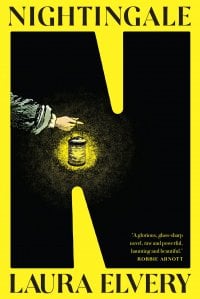
Florence Nightingale, who founded modern nursing on the battlefields of the Crimean War, was a legend in her own lifetime – and also in mine. Growing up, any girl with pretensions to self-sacrifice was compared – sceptically, sarcastically – to Florence Nightingale or Mother Teresa. We never thought about these mythical women as human beings. This is precisely what Laura Elvery’s Nightingale – her first novel after her short-story collections Trick of the Light and Ordinary Matter – attempts to do in its portrayal of the so-called “Lady with the Lamp”.
While that famous moniker suggests a character of feminine grace and kindness, Nightingale was originally given the nickname “The Lady with the Hammer”. The steeliness seems more apt. Nightingale was Superintendent of Female Nursing at the military hospital in Scutari, Istanbul (then Constantinople), where she advanced medical care in ways that seem obvious to us now, especially when it comes to the importance of hygiene. From a privileged family, Nightingale had the education, confidence and commitment to effect change.
Elvery shows us Nightingale at 90, bedbound, almost blind, nearing death in her Mayfair home. She is fiercely proud of her achievements as well as of the independent life she has managed to live: “It was my body, my mind, my rules, always.” However, Nightingale is also haunted by the traumatic spectacles of war: “A man’s head can come clean off his body, like a cork. A man can be frozen inside his greatcoat and must be cut from it like a fish.” Dead soldiers come visiting, teeming through the windows and even the walls, pouring down from the ceiling, emerging from the mirror, calling to mind the gothic ghosts of George Saunders’ Lincoln in the Bardo.
When a man named Silas Bradley arrives at her front door, Nightingale takes for granted that it is another spectre. The reader is hard-pressed what to make of him. He speaks of himself in riddles: “I am twenty-seven but I am also eighty-three … I’ve lived two lives and yet a full life has quite escaped me.” He has a question to put to the dying Nightingale. It involves a nurse called Jean Frawley, who worked under Nightingale in Scutari. He wants to know: “What did Jean do to me?”
The narrative interweaves Nightingale’s, Bradley’s and Frawley’s stories as it moves towards answering this question. The novel becomes less uncanny and more sentimental as it progresses – shapeshifting from historical novel to historical romance – but there is no doubting the stylishness of Elvery’s prose and the compelling nature of her material.
UQP, 240pp, $32.99
This article was first published in the print edition of The Saturday Paper on May 10, 2025 as "Nightingale".
For almost a decade, The Saturday Paper has published Australia’s leading writers and thinkers. We have pursued stories that are ignored elsewhere, covering them with sensitivity and depth. We have done this on refugee policy, on government integrity, on robo-debt, on aged care, on climate change, on the pandemic.
All our journalism is fiercely independent. It relies on the support of readers. By subscribing to The Saturday Paper, you are ensuring that we can continue to produce essential, issue-defining coverage, to dig out stories that take time, to doggedly hold to account politicians and the political class.
There are very few titles that have the freedom and the space to produce journalism like this. In a country with a concentration of media ownership unlike anything else in the world, it is vitally important. Your subscription helps make it possible.
Purchase this book
Nightingale
BUY NOW
When you purchase a book through this link, Schwartz Media earns a commission. This commission does not influence our criticism, which is entirely independent.
Subscriber exclusive
Send this article to a friend for free.
Share this subscriber exclusive article with a friend or family member using share credits.