News
As the United States government aggressively dismantles gender and inclusion initiatives, there are signs of Australian companies stepping back from targets. By Karen Barlow.
How Trump’s war on diversity is spilling over to Australia
Donald Trump’s assault on diversity, equity and inclusion policies in the United States government is making its way into Australian politics and business. While global companies such as mining giant Rio Tinto say they are adhering to their inclusion practices, many others with significant Australian arms, such as global services company Accenture, are scaling back politically charged DEI initiatives to stay in the lucrative US market. There are signs, too, of softening commitments to such programs in Australian boardrooms.
“What’s happening is the social licence is moving backwards,” one director in the financial services industry tells The Saturday Paper. On a range of progressive issues, including climate change commitments, they observed, “people say it’s time to cut back”.
This past week, after years of troubled negotiation, the independent body that sets governance standards for companies listed on the Australian stock exchange quietly shelved a plan to require more detailed diversity reporting.
The ASX Corporate Governance Council was preparing a fifth set of recommendations that would update the prior 2019 edition to require reporting not only on gender – data that has helped increase the numbers of women on boards – but aspects such as sexuality, age, indigeneity and disability. Compliance with these benchmarks is not mandatory, but non-compliant companies are required to explain omissions.
According to The Australian Financial Review, five key members voted not to proceed, including the ASX itself and lobby group the Business Council of Australia. The latter complained in its submission that Australian companies were already facing an “onslaught of regulatory change, including the introduction of mandatory climate-related financial disclosures”.
The recommendations would have included a benchmark for 40 per cent female representation on boards and governing bodies, up from the current 30 per cent requirement. Last year, the annual report from industry research group ACSI said female representation on ASX200 boards had risen above 37 per cent – that compares with only about 21 per cent a decade ago.
Responding to a related question from Greens Senator Barbara Pocock in Senate estimates on Thursday, Joe Longo, the chair of corporate regulator the Australian Securities and Investments Commission, said: “It’s an interesting incident and a disappointing one because I think there were high hopes right up until recently that there would be a fifth edition. It just didn’t work out.”
Speaking of the members on their board, the financial services director says discussions have already shifted from raising quotas to “merit-based” appointments.
“It’s going to be interesting if there’s a change of government,” they said, noting that the corporate watchdog tends to take its cues from the leadership of the day.
For a Liberal leader, Peter Dutton has been unusually outspoken in criticising corporations over progressive stances on issues such as support for the Indigenous Voice to Parliament – in the case of Wesfarmers, Rio Tinto and others – or the stocking of Australia Day merchandise, which Woolworths boycotted last year.
As part of its election pitch, the Coalition has focused heavily on proposed cuts to the public service, and the opposition leader has made very clear his disdain of advisers in the space of culture, diversity and inclusion.
“Such positions, as I say, do nothing to improve the lives of everyday Australians,” Dutton said in a speech to the Menzies Research Centre in late January. “They’re certainly not frontline service delivery roles that can make a difference to people’s lives.”
These are programs in business and public institutions that are cited in Trump’s executive orders as “dangerous, demeaning, and immoral race- and sex-based preferences”. The US president claims they have diminished “individual merit, aptitude, hard work, and determination”. To secure US government contracts, employers now must certify that they do not operate DEI programs. They have already been scaled back at companies with significant Australian presences such as Amazon, PepsiCo, McDonald’s and tech giants Meta and Google.
While consulting firms active in Australia – PwC, EY and KPMG – have reaffirmed commitments to diversity targets, major government technology contractor Accenture has ripped up its global diversity and inclusion goals after what US-based chief executive Julie Sweet describes as an “evaluation of the changing US political landscape”.
An internal Accenture memo, seen by The Saturday Paper, states that the move is “not just in the US” and is “subject, as always, to local laws and tailored to the needs of our local markets”.
Accenture, which has about 6500 staff in Australia, will start “sunsetting” the diversity goals it set in 2017, along with career development programs for “people of specific demographic groups”.
“We are and always have been a meritocracy,” Sweet wrote to staff, before stressing that “different backgrounds, different perspectives and different experiences are essential to driving innovation and serving global companies across multiple industries”.
The Department of Finance says Accenture and other companies giving up equity and inclusion targets or practices will have to maintain compliance with Australian law.
“We don’t have a particular requirement around specific DEI things that someone has to sign up to, but that’s what we would have to look at in its totality,” secretary of the Department of Finance Jenny Wilkinson told the Senate estimates hearing.
“We would have to look at what the domestic arm of Accenture was doing. We would be very concerned if they were not complying with Australian law.”
Finance Minister Katy Gallagher added that the Albanese government would not be “seeking to exempt” any entity from Australian requirements.
Barbara Pocock, who worked as an equal opportunity officer in the 1980s in New South Wales, asked the Department of Finance if it was actively monitoring Accenture as a major contractor.
The answer from the deputy secretary, Richard Windeyer, was: “No, we are not. We are not monitoring the practices.”
The South Australian senator was unimpressed. “What is the meaning of a code of conduct, if you have a major contractor who clearly stated they are giving it up, DEI, in the shadow of Trump? Does that mean nothing?” Pocock asked.
“I’m just not saying it means nothing, senator,” Windeyer replied. “It will continue to be important that they are able to demonstrate that they are able to support diversity.
“It is hard to hypothetically know, frankly, what we will see, what might look different to us when we’re looking to work with or consider working with Accenture versus any other supplier.”
An Accenture spokesperson tells The Saturday Paper that the company will not be backtracking on hard-fought workplace achievements and will comply with Australian law.
One avenue for some companies trying to breach the divide in their US and Australian operations may be to soften their external communications on matters of diversity and inclusion, while holding firm internally.
Sex Discrimination Commissioner Anna Cody says global companies must abide by the laws of the countries they operate in, and Australia’s position is strong. Employers’ obligations are laid out clearly in Respect @ Work legislation, and gender balance is guided by the Workplace Gender Equality Agency requirements.
The commissioner insists she is not seeing strident changes in Australia.
“When I speak to corporates there’s a very clear commitment, particularly with the Respect @ Work program of work, to continue to abide by their legal obligations, which are to eliminate those forms of inequality, and particularly gender inequality, throughout the workplace.”
This is a sentiment echoed by Debby Blakey, chief executive of HESTA. The superannuation giant is among several in the industry that have pushed for higher quotas of women on boards and supported the new reporting recommendations for ASX companies. HESTA has a policy of exerting pressure on recalcitrant companies where it is a major shareholder, and Blakey says it will “continue to engage”. The superannuation industry has considerable heft, with roughly $4 trillion of funds to invest and is keen to meet their clients’ increasing demands to support businesses that uphold environmental and social goals.
“Lack of gender diversity and inclusion is a financial risk, which is why we must stay the course on these critical issues,” Blakey says. “We’re encouraged that in the Australian context we haven’t seen material evidence of companies stepping away from gender diversity commitments.”
Resource giants Woodside Energy and Rio Tinto have recommitted to their diversity and inclusion goals. Woodside doubled its full-year profit and amid the reporting to the ASX stated it is “committed to improving the diversity mix of our workforce to reflect the communities in which we operate”.
Rio Tinto’s persistence follows reports of an internal “backlash” against diversity efforts, according to comments from the chief executive of its Australian operations, Kellie Parker, last year. The programs were implemented to address a damning report from 2021, including a survey pointing to widespread bullying, sexual harassment and racism. Chief executive of the iron ore division Simon Trott told an audience this month that “we’ve got to do a better job explaining how diversity benefits us all”.
In November, the AFR reported that Rio would “soon” release new workplace diversity targets for 2030, but that the company’s chief executive, Jakob Stausholm, “wanted to talk more with colleagues before deciding whether it was appropriate to aim for gender balance”. There’s been no announcement of a new target since.
Susan Lloyd-Hurwitz, who is a non-executive director of Macquarie Group and joined Rio Tinto’s board of directors in 2023, says “both companies firmly understand that harnessing the best talent to create diverse and inclusive teams is about driving business performance – nothing more, nothing less”.
Asked by Senator Pocock in Senate estimates about a “shadow of Trump” in Australia, ASIC’s Joe Longo focused on what he sees as a strong corporate culture.
“This unfolding situation is a concern to anyone who is worried about the higher standards of corporate governance,” the ASIC chair replied. “We’ll have our views about the US, but… our values, our principles, are well embedded in our institutions and in our law.
“Now, some of that are actually values and principles. They’re not to be found in the Corporations Act. We have a particular culture, a way of doing things in Australia and we should be, I think, proud of that.”
As the private sector considers how to align in the DEI debate, the opposition continues to campaign heavily on an efficiency drive. Without providing detail on where jobs would be cut, Dutton has claimed savings from the public service of as much as $6 billion a year.
Across this week’s sessions of Senate estimates, opposition members have been actively grilling agencies and departments over factors such as staffing levels and flexible working arrangements. A particular target was the Workplace Gender Equality Agency, which is preparing for its signature data release on the gender pay gap for employees, including chief executives, at 7800 individual private sector employers.
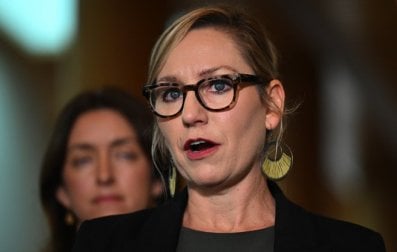
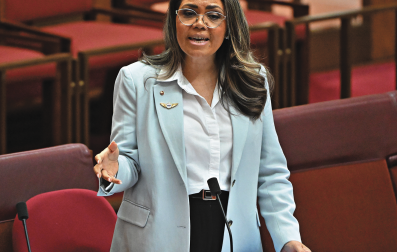
Greens Senator Larissa Waters noted the interest as she questioned the head of WGEA.
“After this morning’s line of questioning from the Coalition – which covered things like the cost of your lease, how many people sit in their chairs at work and usage of stock photos – are you concerned about the longevity of your agency, should the Coalition form government?”
WGEA chief executive Mary Wooldridge responded that the agency had existed and worked constructively with the government of the day for 40 years, and “will continue to do so”.
More explicit commitment is needed to ensure a level playing field, says Barbara Pocock.
“We can’t go back to pale, male and stale public sector or consulting firms,” she tells The Saturday Paper. “We’ve had decades of it. It doesn’t work. It’s not effective, it’s not efficient and we need to stick with the good, inclusive diversity programs that we are world leaders on.”
This article was first published in the print edition of The Saturday Paper on March 1, 2025 as "How Trump’s war on diversity is spilling over to Australia".
For almost a decade, The Saturday Paper has published Australia’s leading writers and thinkers. We have pursued stories that are ignored elsewhere, covering them with sensitivity and depth. We have done this on refugee policy, on government integrity, on robo-debt, on aged care, on climate change, on the pandemic.
All our journalism is fiercely independent. It relies on the support of readers. By subscribing to The Saturday Paper, you are ensuring that we can continue to produce essential, issue-defining coverage, to dig out stories that take time, to doggedly hold to account politicians and the political class.
There are very few titles that have the freedom and the space to produce journalism like this. In a country with a concentration of media ownership unlike anything else in the world, it is vitally important. Your subscription helps make it possible.
Subscriber exclusive
Send this article to a friend for free.
Share this subscriber exclusive article with a friend or family member using share credits.