News
Insiders say the opposition is already taking cues from the new US administration’s hard line on gender and diversity policies. By Karen Barlow.
‘They’re excited by Trump’: Dutton’s inclusion strategy
Amid the “revolution” of Donald Trump’s return to the White House is one cause that has caught the Coalition’s eye: the dismantling of diversity, equity and inclusion efforts.
All United States government DEI programs have been halted by one of Trump’s executive orders. Staff have been told to report colleagues who try to carry on the work, or face disciplinary action. Tech billionaire and now “first buddy” Elon Musk, who steers a new Department of Government Efficiency, has described diversity efforts as “illegal and immoral”.
One Liberal MP expects this tone will have some influence on the Coalition in Australia’s election campaign. “They’re excited by Trump. They will try and use mechanisms from his playbook here. And they do it already, right?”
The MP’s concern is that ultraconservatives will gain more influence on policy regarding gender equality. “I agree that we have a problem that we have to manage. I don’t think the problem is as big as it could be yet, but if we don’t manage it, I think it will be.”
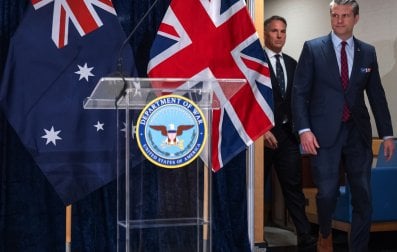
Dutton has championed what he describes as “anti-woke” issues since his first term as a backbencher. As defence minister in Scott Morrison’s government, he pointedly banned special morning teas and Wear it Purple days at the department. His stance was reversed as soon as Richard Marles stepped into the role for Labor.
The opposition leader has already begun fitting a “war on woke” to a cost-of-living framework.
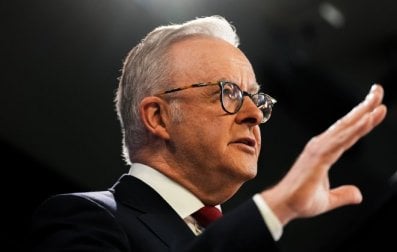
“I think there is going to be a new revolution that comes with the Trump administration in relation to a lot of the woke issues that might be fashionable in universities and at the ABC,” Dutton told a sympathetic Sharri Markson on Sky News this week.
“They just aren’t cutting it around kitchen tables at the moment, where people can’t pay their bills under the Albanese cost-of-living crisis.”
Proponents say efforts to advance women, migrants and other marginalised groups increase profits and productivity. McKinsey & Company research from 2023 found that companies in the top quartile of gender diversity in executive teams were 39 per cent more likely to achieve above-average profitability compared with those in the bottom quartile. A similar effect is noted for ethnic diversity.
At the same time, DEI programs can be interpreted as challenging “traditional” notions of masculinity.
“Australia still has really strong, you know, cultural norms about male breadwinning and males being the head of the house,” Leonora Risse, an economist who specialises in gender equality, told a parliamentary hearing this week. “For some people and some cultures and industry cultures, gender equality initiatives are seen as a threat that takes away that opportunity for men to fulfil the identity that society has carved out for them, but not replacing it with something that’s equally as meaningful or seen as a success.”
In her Sky News interview, Markson was one of the few journalists to raise with Dutton the executive order signed by Trump recognising only “two sexes, male and female”.
He responded that people are “sick of being ostracised and vilified”, but he did not engage on the question of gender. Rather, the opposition leader shifted to Indigenous recognition.
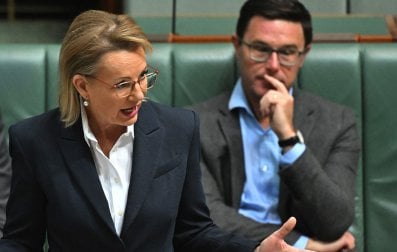
On Thursday, Coalition deputy leader David Littleproud was less guarded, telling Sky News the issue of gender needed to be reconsidered in Australia. “It doesn’t need to get emotional…” he said. “It comes back to respecting that biological basis that we can’t get away from when we’re born.”
Asked for his views shortly after, Dutton said, “We don’t have any plans to change our position in relation to that issue.” In an interview on Sydney’s Radio 2GB, he said the government was “more interested in pronouns and a $500 million Voice campaign” than it was in the cost of living.
Dutton did not respond to requests for an interview from The Saturday Paper.
Now unleashed, the debate on First Nations recognition has expanded to cover the official use of the Aboriginal and Torres Strait Islander flags, the money spent on Welcome to Country ceremonies and, as revealed by The Saturday Paper, potentially the shift to give dual Indigenous names to a couple of defence bases.
Along with questions to major government departments regarding spending on Indigenous acknowledgements through questions on notice and budget estimates hearings, Liberal senator Alex Antic also queried the public expense over “gender identity, gender equality, gender sensitivity training or, like, training or workshops”.
Antic is among a core group of conservative senators including Malcolm Roberts and Ralph Babet who have been targeting gender equity policies within and outside parliament throughout Labor’s term.
Antic, who tops the Liberals’ South Australian Senate ticket for the next election, says the “writing is on the wall for DEI”, declaring that diversity efforts don’t make sense to him even after he had interrogated the bureaucrats as to why they are necessary.
“I think you said that you like to ensure that you have female candidates in job applications,” Antic put to Australia Post’s group chief executive and managing director Paul Graham almost a year ago. “That must surely mean, therefore, that you are pushing aside and discriminating against male candidates?”
Graham disagreed, and went on to describe the postal industry as a traditionally male-dominated business. “We are encouraging and trying to attract more females into that industry,” he said. “We have a real issue with trying to get people into our business, as a number of employers have.”
What Antic views as a waste of money, Graham justifies as fostering a diverse, culturally engaged workforce that provides better quality of service.
Weighing against the push from its more conservative members, however, is the enduring recognition that the party has a problem with female representation within its ranks. Both the Liberal Party and the Nationals have always been resistant to gender quotas. There are only nine Liberal women in the lower house. Overall, in federal parliament, women make up 30 per cent of the Coalition’s federal party room.
Labor women hold 52 per cent of federal seats, while the cross bench in both chambers is more than 50 per cent female.
For its part, the Albanese government released a statement on Thursday celebrating a record number of women on government boards at 54 per cent, with the minister for women, Katy Gallagher, insisting the government was “committed to advancing gender equality and ensuring that women are participating equally at the highest levels”.
Liberal insiders insist their party leadership is not seriously talking about paring back DEI efforts. “The issue is that the people that are sort of on the fringes are the noisier ones and that’s the problem,” the Liberal MP says.
“I’m not seeing it yet, but if, if I were to see it, then more of us would have to step forward and point it out, and that would be challenging. I don’t think that Dutton wants to go there,” the MP says. They note Dutton’s response in October last year, when Nationals frontbencher Jacinta Nampijinpa Price said the Coalition should have a debate over abortion access.
Senior female Coalition frontbenchers including Sussan Ley and Jane Hume were instrumental in asserting that abortion reform was a “fringe” issue and federal Liberals had “no intention” of changing the current stance. Price later sought to downplay what she had said to The Sydney Morning Herald.
It is understood Dutton later emphasised to the party room that abortion was not on the Coalition’s federal agenda.
“He’s leaning more to the right, obviously, but that’s who he is,” one Coalition insider says. “But if he tips too far, the Australian public aren’t going to like it. It is not the US – this is Australia. It’s different.
“The big task for him will be to continue to manage it, because he’s done a good job of managing it today, right?”
With expectations mounting for an election in April, most reputable polls point to minority government. The Coalition needs to add 21 seats to its current 55 to win outright majority. It faces difficult battles in seats such as Bradfield, Wannon, Menzies and Deakin, although the overall trend in polls for the Coalition has been improving since the failed Voice referendum.
Dutton can’t afford not to seek votes in the inner-city teal seats won by professional women who champion equality alongside demands for climate action and integrity.
“Eventually you’re going to have to target, in Australian politics, the marginal seats you require to win government,” Andrew Hughes, a lecturer in political marketing at the Australian National University, tells The Saturday Paper.
“And you can’t do that on a strategy where it’s far-right messaging. You just can’t, because those people don’t want to hear that. They didn’t want to hear in 2022, they don’t want to hear it now and they want to hear more progressive Liberal Party policies.”
Large-scale rejection of Morrison by women voters was a warning for the Coalition, says ANU research fellow Pandanus Petter. And it is still a recent memory, particularly in the wake of the Bruce Lehrmann court cases and the passing of Respect @ Work legislation.
“The parliament’s tried to fix parliamentary culture and institute a code of ethics and things like that,” he tells The Saturday Paper. “Their opponents could politicise aspects of it as well, so they might try to avoid it if they’re trying to get in to government.”
He says the rancorous politics in the US – fuelled by the voluntary voting system, which requires candidates to incite voters to turn out – does not usually play as well in Australia.
The way Hughes sees it, Dutton does not have to be explicit himself. He can let third parties, such as Advance and other conservative groups, filter the message for the Coalition.
“They’ve got an element of deniability now about what they’re up to, ‘Oh I don’t know. They are doing their own things. They’re not part of me. I don’t know what they’re up to. I understand why they’re making the noise though,’ ” he says.
Federal Sex Discrimination Commissioner Anna Cody is urging the Coalition not to think about tearing down hard-fought gains for Australian women. “I think one of the things that I have recognised since being in this position is that there is a level of bipartisanship around gender equality, particularly dealing with domestic and family violence, for example, and I would hold on to that,” Cody told the hearing on gender equality targets.
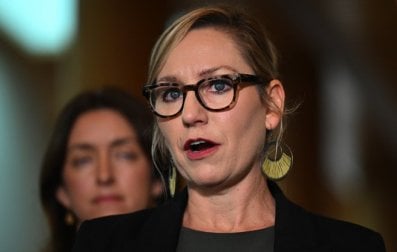
Greens Senator Larissa Waters regards the Coalition as keeping its views on women’s issues covert. She says, look at what the party does, not at what the leaders say.
“They’ve just preselected one woman, but they just preselected six other dudes to contest the seats that their sitting MPs were leaving. So, they clearly still have a women problem,” she tells The Saturday Paper. “I think if they are foolish enough to be overt about this anti-DEI agenda that Trump is obviously being very proud about, then I think they will suffer the electoral consequences of that.
“And not only that, they will do a lot of damage to people.”
Women’s groups don’t want silence. They want to know where parties and individual candidates stand so voters can make informed decisions. The group Fair Agenda is preparing to send out a questionnaire to candidates on issues including abortion access, family violence, gendered violence and the care economy ahead of polling day.
“I actually don’t think that we should accept silence from federal representatives on this issue,” says Fair Agenda executive director Renee Carr. “It is not a win for us if we don’t know what we’re getting when we’re electing people.”
This article was first published in the print edition of The Saturday Paper on January 25, 2025 as "‘They’re excited by Trump’: Dutton’s inclusion strategy".
For almost a decade, The Saturday Paper has published Australia’s leading writers and thinkers. We have pursued stories that are ignored elsewhere, covering them with sensitivity and depth. We have done this on refugee policy, on government integrity, on robo-debt, on aged care, on climate change, on the pandemic.
All our journalism is fiercely independent. It relies on the support of readers. By subscribing to The Saturday Paper, you are ensuring that we can continue to produce essential, issue-defining coverage, to dig out stories that take time, to doggedly hold to account politicians and the political class.
There are very few titles that have the freedom and the space to produce journalism like this. In a country with a concentration of media ownership unlike anything else in the world, it is vitally important. Your subscription helps make it possible.
Subscriber exclusive
Send this article to a friend for free.
Share this subscriber exclusive article with a friend or family member using share credits.