News
The Coalition has announced it will match major spending announcements made by the Albanese government but has been unwilling to outline the savings on which this would depend. By Jason Koutsoukis.
Inside the Coalition’s unfunded election promises
Peter Dutton’s Coalition has all but abandoned the fiscal restraint that once defined the Liberal Party, matching nearly all of Labor’s $23 billion in pre-election spending pledges this year without a clear plan to balance the federal budget.
The Liberals have swiftly backed recent major government spending commitments, including $8.5 billion for Medicare bulk-billing, more than $15 billion for infrastructure, and a $1.7 billion bailout for the Whyalla steelworks – a sharp departure from the budget restraint that was once central to the party’s platform.
Some in the Coalition have expressed dismay at Dutton’s approach to budget responsibility but will not criticise the opposition leader going into a federal election that published polls suggest he could win.
The Coalition has pledged to keep economic growth ahead of spending and return to a 23.9 per cent tax to gross domestic product cap, but its only concrete savings measure so far is cutting 36,000 public service jobs projected to save $24 billion over four years.
Meanwhile, it has made major announcements for its own spending, such as its $331 billion plan for seven nuclear power plants.
Last year, the Coalition outlined about $100 billion in potential budget and off-budget savings, signalling plans to either scrap or scale back major Labor initiatives, including the $10 billion Housing Australia Future Fund, the $5.5 billion shared equity Help to Buy housing scheme, the $20 billion Rewiring the Nation program, the $22 billion Future Made in Australia program and the $15 billion National Reconstruction Fund.
While these cuts would free up funds, the Coalition has yet to fully commit to any specific savings measures apart from the proposed cuts to the Commonwealth public service, with Dutton saying earlier this month that the Coalition would not be in a position to identify which programs would be axed until after the election.
“We need to sit down and look through an ERC [Expenditure Review Committee] process, which would be the normal course of things. We’ll do that in government,” Dutton told the ABC’s Insiders program on February 2. “We know what we’re doing. We’re able to hit the ground running and we’ve worked with the departments, with many of the departmental heads that are there now, and I have no doubt that we’ll be able to find where Labor has put fat into the system that is not helping do anything but drive inflation.”
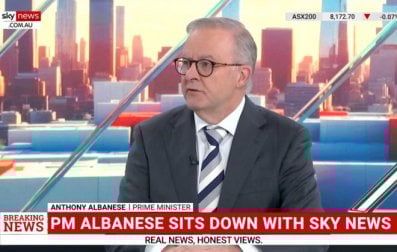
Asked on Sunday why the Coalition was not standing in the way of big-ticket spending items being rolled out by Prime Minister Anthony Albanese and other senior ministers in recent weeks, shadow treasurer Angus Taylor told Sky News there was “no shortage of areas where we’ve said Labor spending is not appropriate”.
“We’ve opposed over $100 billion of unnecessary Labor government spending,” said Taylor. “Show me an opposition in recent history that has done that. You have to go back to Malcolm Fraser, who blocked supply.”
After two federal budget surpluses in its first two years in office, the Albanese government is currently on track to deliver a deficit of $26.9 billion this financial year, with the budget not projected to return to balance until a decade from now, in 2034/35, according to the midyear economic update released in December.
“Right now, both sides are presenting ‘me too’ policies,” says economist Chris Richardson. “Yes, there are differences between them, but they’re not big and I would summarise it as both sides are promising to be mediocre, and I believe them.
“None of them are rising to the challenges around the budget or the economy, they’re just arguing at the edges around who gets what slice of the pie.
“They’re not trying to make the Australian pie bigger. They’re not focused on genuine issues around fairness or sustainability or whatever else.
“I call them – and we’ve had quite a few – Seinfeld elections. Elections about nothing.”
The way Richardson sees politics, voters today tend to punish opposition parties that attempt to differentiate themselves with ambitious policy agendas.
“What oppositions do these days is to promise to do almost exactly what the government of the day is doing, but at the same time they also promise to change the vibe, and the bad news is that we fall for that,” Richardson says.
“My summary would be that while it’s becoming easier and easier to become prime minister, it’s getting harder and harder to then do something meaningful once you get into office.”
According to EY’s regional chief economist, Cherelle Murphy, with bonds on issue as a reflection of Australia’s debt rising to $1.1 trillion by 2027/28, or about 35 per cent of GDP, and interest payments on that debt rising to about $35 billion the same year, or about 1.1 per cent of GDP, her biggest concern is that there is no plan from either the Coalition or Labor to fix the worsening budget position over the next decade.
“And the burden of that is shared quite unevenly. It really falls on workers, so you’re kind of progressively hurting younger people over time,” Murphy says. “So it’s not an ideal situation. In fact, I would argue that it’s not sustainable at all and it has to change.”
Murphy suggests that neither major party sees strict budget discipline as a vote-winner because most policies now target immediate cost-of-living relief. With spending framed as emergency or rescue measures, there is little political urgency to rein it in.
“We’re not talking about building stadiums here. We’re talking about, you know, just getting people through the week kind of thing. So maybe people are a little bit more accepting of it,” Murphy says.
“But of course, they shouldn’t be, because the debt situation is as bad as it’s been in our postwar history, and the reasons are because the more your debt increases, the more your interest repayments increase and the less options you have to deal with those day-to-day problems that will surely come in the future.
“The current budget forecast probably doesn’t feel like a really bad number because it doesn’t affect us today, and it won’t affect us next year either in a very material sense.”
With net debt currently sitting at 19 per cent of GDP and projected to rise to 22 per cent by 2027/28, surpassing the peak of 18.5 per cent of GDP in 1996, Murphy points out that Australia is actually in a worse fiscal position now than it was when the Howard government was first elected.
“I think one of the reasons our politicians don’t want to talk about fixing the budget is that back in 1996, the budget deficit looked fixable in the sense that there were some really strong upgrades to revenues from commodity prices and debt was actually being paid down,” says Murphy. “Whereas now, it feels like the opposite … it’s too big of a problem, which is kind of a bit counterintuitive because it should be the opposite way around.”
Saul Eslake, a former chief economist for ANZ Bank, argues that what is missing from the current conversation is an adult conversation as to what is the least economically damaging and fairest way of raising the revenue required to pay for the projected increases in government spending over the next decade.
“I don’t see how you can fund this spending that the public very clearly wants, or that the parties are determined that we have, without raising additional revenue,” Eslake says.
“But no one is talking about it, and no one wants to talk about it. The consequences of this are not going to come home, probably within the next parliamentary term, but they probably will within what’s left of my lifetime.”
With the Nationals increasingly shaping Coalition policy, particularly on energy and competition, where Dutton has proposed sector-specific divestiture powers aimed at supermarkets and the insurance industry, Eslake says he is not expecting the Liberals to focus in a serious way on repairing the budget if they end up in government after the election.
“The Liberals do still talk about the importance of reducing the deficit, but I think the reality is that, just like with the Republicans in the US, basically deficits really only matter when Labor governments are running them,” Eslake says.
Queensland Senator Gerard Rennick, who quit the Liberal National Party last year to form his own party and who has a master’s degree in taxation law from the University of Sydney and a master’s degree in applied finance from the Financial Services Institute of Australasia, tells The Saturday Paper that he despairs at his former party’s drift away from sound economic management as a cornerstone of its political philosophy.
“The party today is just full of careerists who want to keep their jobs,” he says. “There’s very few people in the upper echelons of the shadow ministry who haven’t spent their lifetime in the LNP.
“They’re party people from the time they went to university, or joined the Young Liberals, so their entire life is politics.
“People used to get up in the party room and you would have great debates. But now, you get up in the party room and if you push back against the leadership, you get a black mark against your name.”
Allegra Spender, the independent MP for the former blue-ribbon Sydney seat of Wentworth, says that while she supports the idea of providing greater access to bulk-billing, more affordable childcare, the NDIS, aged care and improved infrastructure, if politicians can’t have hard conversations about tax and spending reform, a disservice is being done to future generations.
“On spending reform, both parties talk big. Labor wants credit for not spending all the windfall tax gains, and the Coalition talks about cutting public spending but won’t say what they’ll cut until after we elect them,” says Spender. “The Coalition’s nuclear reactor plan is likely to be one of the biggest public spending programs in Australia’s history and will add hundreds of billions to our national debt because no private investor backs nuclear in this country.”
She says neither major party will agree to measures such as spending discipline on transport infrastructure, argued for in a private member’s bill she put forward.
“They won’t even agree to provide business cases for their big infrastructure promises, because it restricts their ability to offer billions to win over marginal seats,” she says. “We need the major parties to justify their big spending decisions not just buy votes with taxpayer dollars.”
Russell Broadbent, a veteran MP who quit the Liberal Party in 2023 to sit on the cross bench and will recontest his Victorian seat of Monash as an independent at the upcoming election, is similarly concerned by uncosted spending.
“Australia is living in a fantasy world of spending that we clearly can’t afford, and that the world knows we can’t afford, yet there’s absolutely no brakes on anything that may come up,” he says.
“No government today, or opposition for that matter, dares to talk about the elephant in the room, which is debt, and it’s a real concern to me, because eventually there is going to have to be people in the parliament with a bit of common sense, people who are great enough, who are prepared to lose their seat on behalf of putting the nation back together again.”
This article was first published in the print edition of The Saturday Paper on March 1, 2025 as "Inside the Coalition’s unfunded election promises".
For almost a decade, The Saturday Paper has published Australia’s leading writers and thinkers. We have pursued stories that are ignored elsewhere, covering them with sensitivity and depth. We have done this on refugee policy, on government integrity, on robo-debt, on aged care, on climate change, on the pandemic.
All our journalism is fiercely independent. It relies on the support of readers. By subscribing to The Saturday Paper, you are ensuring that we can continue to produce essential, issue-defining coverage, to dig out stories that take time, to doggedly hold to account politicians and the political class.
There are very few titles that have the freedom and the space to produce journalism like this. In a country with a concentration of media ownership unlike anything else in the world, it is vitally important. Your subscription helps make it possible.
Subscriber exclusive
Send this article to a friend for free.
Share this subscriber exclusive article with a friend or family member using share credits.