News
The prime minister has kicked off a long-awaited official campaign that most believe will deliver a hung parliament, as the independents work to harness growing voter disaffection with the major parties. By Karen Barlow.
What’s at stake on May 3
The campaign proper is finally under way: Australia will head to the polls on May 3 with all signs pointing towards the return of a hung parliament.
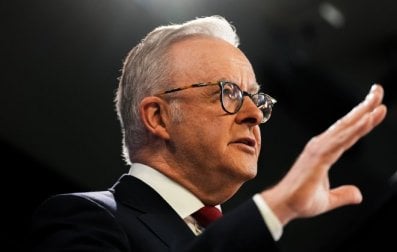
Prime Minister Anthony Albanese sought to get the jump on Peter Dutton with a pre-dawn call to Governor-General Sam Mostyn to dissolve parliament. The opposition leader has barely had time to sell the gas-led alternatives outlined in his budget reply speech.
Albanese insists he was “born ready” for this moment. If Labor loses, his will be the first government since 1931 not to get a second term.
Albanese talked of the contest between the major parties as light and shade.
“This election is a choice between Labor’s plan to keep building or Peter Dutton’s promise to cut. That is the choice. That is your choice,” he said on Friday in the prime minister’s courtyard.
“Peter Dutton last night gave a budget reply that was all about fear. It was all about fear,” he says. “What I want is a campaign about policy substance and about hope and optimism for our country.”
Both parties are leaning heavily into a cost-of-living election. Labor has offered modest tax cuts for all, and the Coalition wants to halve the fuel excise.
The opposition has sought to rouse voter discontent with the Labor government and how it is dealing with the ongoing cost-of-living crisis.
The choice Dutton presents to voters is over who will manage the economy better.
“We can’t afford three more years of Labor. Labor’s economic policies and wasteful spending have increased the cost of living for everyday Australians,” the opposition leader told reporters in his Brisbane electorate of Dickson.
“What sort of prime minister in the middle of a cost of living crisis promises a 70 cent a day tax cut, starting in 15 months’ time? Australian families need relief now, and we must do better.”
He won’t put a figure on it, but pledges that “under us and our plan, Australians will pay less for energy”.
Albanese has countered by noting the Coalition’s recent reticence over its signature nuclear energy proposal: “Dutton is barely mentioning the bold offering of nuclear power unless asked. It is all about gas.”
United States President Donald Trump has entered the election race, both via his tariff threats and in stylistic terms.
Dutton has portrayed himself as a leader who will “make the tough decisions – not shirk them,” and he uses the Trump pitch asking voters: “Are you better off?”
“Right now, Australia is going backwards,” he said.
Albanese sought contrast in a positive tone.
“My fellow Australians, we live in the greatest country on Earth,” he told reporters. “And we do not need to copy from any other nation to make Australia even better and stronger. We only need to trust in our values and back our people.”
The leaders are now on the road in an effort to sway votes in key seats around the nation.
There are 150 seats of the House of Representatives in play, after redistributions in three states brought the number down from 151.
The target for either side to win outright is 76 seats. Labor currently holds 78 and will lose its majority if there is a just a one per cent swing away from the party.
The Coalition has a much harder task. It holds 57 seats and must find 19 more to govern in its own right.
The main opinion polls are pretty much deadlocked but pointing toward the return of minority government. There is, however, a large cohort of uncommitted voters and those without strong ties to the major parties.
The rise of the independents was the story of 2022, and the crossbench currently numbers a record 19 representatives. They will take up very different battles around the country.
Progressive independents are looking to add new seats such as Cowper and Bradfield, and face tough battles in some seats claimed from the Liberals in 2022, such as Goldstein and Kooyong.
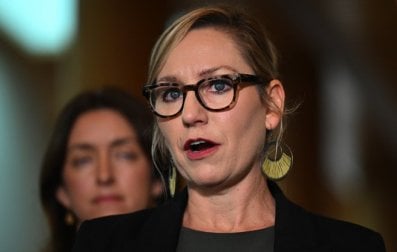
The Greens are under pressure in Brisbane. The party is positioning itself as ready for minority government, and firm in its commitment to tough negotiation, though leader Adam Bandt has already ruled out working with the Coalition.
Bandt sees a hung parliament as an “incredible opportunity”.
“Minority government is coming. And with the major parties offering about as attractive as a dead fish, you can see why,” he said, in reference to the fight over Tasmanian salmon farming and the fate of the endangered Maugean skate.
Albanese says he intends to lead a majority government. In response to a journalist’s question, he declared he fully intends to serve out a full term as prime minister if Labor wins a second term.
It is a difficult period for incumbents around the world, but Labor campaign strategists believe they have a good story to tell about the past three years. For the major parties, however, the battle for relevance amid the rise of independents is tougher than ever.
For almost a decade, The Saturday Paper has published Australia’s leading writers and thinkers. We have pursued stories that are ignored elsewhere, covering them with sensitivity and depth. We have done this on refugee policy, on government integrity, on robo-debt, on aged care, on climate change, on the pandemic.
All our journalism is fiercely independent. It relies on the support of readers. By subscribing to The Saturday Paper, you are ensuring that we can continue to produce essential, issue-defining coverage, to dig out stories that take time, to doggedly hold to account politicians and the political class.
There are very few titles that have the freedom and the space to produce journalism like this. In a country with a concentration of media ownership unlike anything else in the world, it is vitally important. Your subscription helps make it possible.
Subscriber exclusive
Send this article to a friend for free.
Share this subscriber exclusive article with a friend or family member using share credits.