News
With the economy dominating this election campaign, Labor insiders say they can shake voters’ traditional perceptions of the Coalition as the stronger steward. By Karen Barlow.
Labor hitches election hopes to economic management
The government heads into the May 3 election confident in its declaration that Labor is the better economic manager, while the Coalition says it has piggybacked off its work and a series of windfalls.
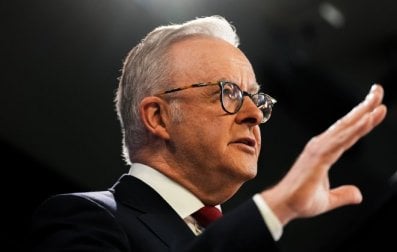
Prime Minister Anthony Albanese, who has long sought to define the opposition as the “party of no”, believes that the rapid legislation of the surprise tax cuts announced in this week’s budget – which forced the Coalition to officially vote them down – boxed them in.
The Coalition must now sell its own household budget relief – a 12-month fuel excise cut – in addition to the billions of dollars in Labor promises it has already backed and the large taxpayer bill for pursuing nuclear power, while deriding the government for overspending.
The Coalition has matched the $1.8 billion energy bill relief extension, the $8.5 billion for the tripling of the Medicare bulk-billing incentive, the $1.7 billion public hospital deal and the $573 million women’s health package, all in the knowledge that the budget was heading back into deficit – an overspend figure now revealed to be $27.6 billion and expected to rise to $42 billion next year.
Labor strategists say voters will decide on cost-of-living relief, not on the budget bottom line.
“There is a feeling out there that the economy is turning the corner, but cost of living is still the first, second and third most important issue,” a senior source tells The Saturday Paper.
“And that’s clearly a debate about the economy, but it’ll be the offer from both parties on cost of living that will matter. On broader economic management, we’re very comfortable with the story that we’ve got to tell.”
The government’s struggle in an election widely understood to hinge on the cost of living is to seize the mantle of economic competence that polling has consistently associated with the Coalition. Working in Labor’s favour lately is the continued strength of the jobs market and decline in inflation – which the latest budget forecasts show easing faster than anticipated, and which allowed the Reserve Bank of Australia to cut interest rates from a 13-year high in February.
Also to the government’s advantage so far has been the opposition’s slower progress on releasing substantial economic policy. The main focus from the shadow treasurer Angus Taylor and shadow finance minister Jane Hume has been on cutting spending, with the public service the most prominent target.
“This close to an election, if you’re still making economic policy and you’re trying to reassure voters that you were not just the party of economic management, that you were the more competent party, I think that becomes a really difficult challenge,” says Jill Sheppard, a politics lecturer at the Australian National University.
In Labor’s pitch, she sees similarities to the successful 2007 campaign in which the aspiring prime minister Kevin Rudd made the repeated claim he was the “economic conservative”.
Most reputable polls are deadlocked on a two-party preferred basis but are pointing to the return of a minority government.
Target seats for Labor to pick up are Bass and Braddon in northern Tasmania, Sturt in Adelaide, Leichhardt in Far North Queensland and the Greens seats of Brisbane and Griffith, but the biggest concern for the government remains in metro Melbourne.
“We’re going into the campaign very aware that it’s still a difficult period for incumbents,” the Labor strategist says. “It’s going to be really tough, but we feel good about our message and about how we’ll go in the campaign.”
Treasurer Jim Chalmers’ surprise $17 billion package of tax cuts for every Australian taxpayer – worth on average a “modest” $5 a week on its own when they eventually kick in in mid 2026 and $50 a week combined with the earlier amended stage three tax cuts – was criticised by the opposition as an “election bribe” and a “cruel hoax”.
Nevertheless, its modesty is easily enough turned into a virtue by the government, given the need to avoid spending that would stir inflation, particularly on the eve of another pronouncement by the RBA, on April 1. The latest slide in the inflation rate, to the centre of the central bank’s target zone of 2-3 per cent, has raised speculation of another interest rate cut, though most economists are doubtful.
Moreover, the move to legislate the tax cuts was a strategic win for Labor in that it was a classic wedge that forced the Coalition to vote against them – an action they backed with a commitment to repeal the cuts.
“We oppose these tax cuts and will repeal them – because they come at a great cost to the economy with little cost relief for Australians,” Opposition Leader Peter Dutton told parliament in his budget reply speech on Thursday.
“Instead, we will provide immediate cost-of-living relief for Australians.”
The opposition’s responding offer to halve the fuel excise for a year will most benefit families with more than one non-electric vehicle in outer suburbs and regional areas – voters the Coalition is particularly targeting. Dutton has claimed it would cost the budget roughly $6 billion in lost revenue, and is worth savings of $14 a week to fill an average car – a number that has already been queried by economists, with AMP’s Shane Wright saying it is closer to $8.75.
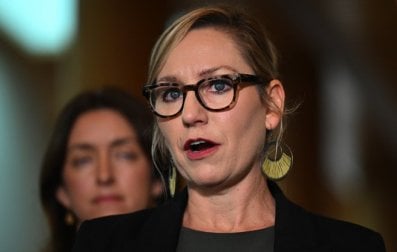
The proposal has been criticised by both independent Senator David Pocock and Greens Senator Sarah Hanson-Young, who described it as a “bribe” that won’t “touch the sides” of what households need. They also singled out the Coalition’s signature nuclear power policy as a failure to help permanently lower power bills.
On this point, Dutton announced on Thursday a plan to force gas giants to supply more energy to the domestic market by introducing an east coast gas reservation if the Coalition is elected.
He promises the gas plan, as a starting measure, will secure an additional 10 to 20 per cent of the east coast’s demand and reduce household energy prices.
Turning the central plank of the Coalition’s proposed cost savings, Dutton downplayed the impact of plans to make cuts to the now more than 41,000 public servants hired since Labor took power.
“We won’t cut frontline service delivery roles. We will ensure that the services Australians rely on are sustainable,” the opposition leader said, while putting a $7 billion savings figure on the job cuts, amounting to a possible $10 billion over four years.
The opposition’s plan to lower migration as its answer to the housing crisis is now clearer.
Talking up “restoring the great Australian dream of home ownership”, Dutton said a Coalition government would cut the permanent migration program by 25 per cent. There was no detail, aside from a commitment to stricter caps on foreign students.
Dutton sought to belittle Labor’s economic record. “Labor was only able to deliver two surpluses by piggybacking off the former Coalition government’s strong economic management – as well as record commodity price windfalls,” Dutton said. “And now, the outlook is one of deficits as far as the eye can see.
“For three years, Labor peddled the lie that they inherited a trillion dollars of debt.
“Now, Labor’s own budget papers confirm they will burden Australia with a trillion dollars of debt next financial year.”
Conservative economists see Australia’s growing debt burden as a key generational concern, and calls for more serious fiscal reform are getting louder.
David Hughes, the executive director of Liberal think tank the Menzies Research Centre points out that gross debt will hit $1.022 trillion next financial year, and young people will be “paying it off for the rest of their lives through income tax”.
“I’d like to see action on that,” he says. “Long term, not necessarily this year, I’d like to see automatic indexation of income tax thresholds as well, in order to keep pace with inflation.”
The independent member for Wentworth, Allegra Spender, who last year released her own review of Australia’s tax system encouraging lower income taxes and measures to increase productivity, wants the major parties to commit to post-election tax and regulatory reform.
“What I hope is the next parliament, early in the term, whoever forms government commits to a process around reform that engages the community, engages experts and really looks at where we need the tax system to go fundamentally, rather than more piecemeal changes,” Spender tells The Saturday Paper.
“Instead, what we’re getting is a typical pre-election cash splash, which the major parties are completely united on, because they’re all trying to protect and go after the same seats.”
Aside from all the commentary about tax cuts, there has been intense disappointment and dismay that Labor did not raise the rate of JobSeeker and other welfare payments in the budget. The treasurer, aware it was a key recommendation of the independent experts on the Economic Inclusion Advisory Committee, pointed to the welfare rates being indexed instead to catch up with inflation.
Compared with OECD comparative countries, Australia is underinvesting when it comes to public expenditure, according to the chief executive of the Australian Council of Social Service. It explains, for Cassandra Goldie, high rates of poverty for a wealthy country and crises in aged care and childcare.
“We don’t have a spending problem, we have a revenue problem,” Goldie tells The Saturday Paper. “Top priority should have been, no question, to fix the adequacy of JobSeeker in a cost-of-living crisis.”
“We were told in the lead-up to this budget, ‘We’ll always look at it and if we can afford to do it, we will.’ Well, we found another $7 billion. That’s what these tax cuts scale up to. That’s the reality per year.”
There’s a huge untapped cohort of voters affected, according to Goldie.
“There are about 30 electorates around the country where the number of people who are still waiting on the lowest incomes – who would have benefited from an increase to JobSeeker and Youth Allowance – is larger than the margin in those electorates,” she says.
“I do think politicians have underestimated how hot this issue is in their own electorates.”
This article was first published in the print edition of The Saturday Paper on March 29, 2025 as "Penny for your supports".
For almost a decade, The Saturday Paper has published Australia’s leading writers and thinkers. We have pursued stories that are ignored elsewhere, covering them with sensitivity and depth. We have done this on refugee policy, on government integrity, on robo-debt, on aged care, on climate change, on the pandemic.
All our journalism is fiercely independent. It relies on the support of readers. By subscribing to The Saturday Paper, you are ensuring that we can continue to produce essential, issue-defining coverage, to dig out stories that take time, to doggedly hold to account politicians and the political class.
There are very few titles that have the freedom and the space to produce journalism like this. In a country with a concentration of media ownership unlike anything else in the world, it is vitally important. Your subscription helps make it possible.
Subscriber exclusive
Send this article to a friend for free.
Share this subscriber exclusive article with a friend or family member using share credits.