News
Having succeeded in ousting his more moderate siblings, the eldest Murdoch son must now consider whether a shift further to the right would increase his empire’s political influence. By Jason Koutsoukis.
What will Lachlan Murdoch do with his News Corp victory?
Lachlan Murdoch has always been a paradox: the son and heir who first fled the family company and then returned to inherit it; the quietest sibling who now has a global mouthpiece.
The question now is whether the News Corp empire he controls will continue to wield political influence in Australia. It seems, at least for the moment, assured in the United States, where President Donald Trump has a direct line to Fox News, and indeed has populated his administration with its presenters.
After concluding a US$3.3 billion settlement with his three eldest siblings last week – Prudence, Elisabeth and James will each receive more than US$1 billion from the sale of their shares in the companies – the media empire built by his father, Rupert, is now Lachlan’s alone, locking in an editorial drift already pulling two sprawling companies, News Corp and Fox Corporation, further to the right.
“It’s a final resolution in this long-running, very bitter family feud that originated many years ago,” Australian journalist Lachlan Cartwright tells The Saturday Paper. Now based in New York, he is the former executive editor of the National Enquirer and The Daily Beast, and has both worked for and reported extensively on the Murdoch family.
Such was the acrimony of the siblings’ battle, the grievances spilt out in a rare public airing in February this year, with The Atlantic publishing an on-record interview with James Murdoch in which he described his father as a misogynist and Fox News as a menace to democracy.
It was Cartwright who sought comment from Rupert Murdoch’s four eldest children in response to News Corp’s coverage of the Black Summer bushfires of 2019–20, which downplayed the role of climate change. “James and [his wife] Kathryn came back with a really dynamite statement, basically criticising the company and criticising the coverage,” says Cartwright, who now co-runs the online newsletter Breaker Media.
“It was the first time a member of the Murdoch family has ever turned on the family and that really was the sort of origin point of this feud. James subsequently stepped down from the board of News Corp, and he’s barely spoken to his brother or his father since.”
Rupert’s instincts have always been political – using his newspapers to influence elections – while Lachlan’s have tended more commercial. Outrage is the most reliable product his companies can sell and it has helped drive the share prices of News Corp and Fox to record highs.
In the US, that logic holds: stoke the base, boost the ratings and, in a voluntary-voting system, turn that anger into electoral energy for Republican candidates. But in Australia, which Lachlan, 54, still calls home, compulsory voting means elections are decided in the centre – and there are signs the Murdoch model is becoming a liability for political parties on the right.
Lachlan’s world view has hardened over time. Friends say he is instinctively conservative, sceptical of climate action, disdainful of social movements, convinced that part of the media’s job is to channel the grievances of those who feel ignored by elites. In the US, that posture is a financial winner. Fox News thrives on fuelling partisan anger, and mobilising the base is enough to deliver Republican victories. In Australia, the same strategy can have the unintended consequence of hollowing out conservative politics.
Years of culture-war campaigning have not strengthened the Coalition, which is now mired in its worst-ever position electorally. The implication is that Murdoch outlets are thrilling a shrinking base and alienating the centre ground. Federal elections are decided in marginal suburban seats where competence matters more than ideological combat.
That said, Bridget Griffen-Foley, professor of media at Macquarie University, expects Murdoch’s presence will continue to be felt here. “Of the heirs apparent, Lachlan feels most affinity with Australia,” she tells The Saturday Paper. “He is a known quantity to his Australian operatives, and Australian politicians. He will maintain a close watch on the outlets and assets where the family empire began, along with the causes they espouse.”
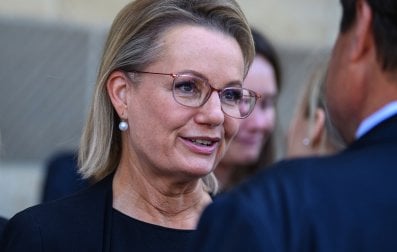
Alongside Lachlan in Sydney sits another Australian, Siobhan McKenna, News Corp’s chief executive of broadcasting, chair of Foxtel and Fox Sports, who the Albanese government appointed chair of Australia Post for a three-year term in December 2022. McKenna grew close to Rupert’s eldest son in 2005, following his decision to quit the family business and move back to Sydney to establish Illyria, his own investment vehicle.
“She’s a thought partner for Lachlan, so integral to his thinking that she’s now completely at the centre of what happens in right-wing media going forward. I think that’s absolutely the case,” says one close observer of McKenna’s relationship with Lachlan. “She’s pivotal.”
It was McKenna who designed the corporate manoeuvre known as Project Family Harmony – an attempt to force Prudence, James and Elisabeth out of the Murdoch Family Trust, which had been structured so that on Rupert’s death voting power would be split equally among his four eldest children, giving them the ability to oust Lachlan the day their father died. The plan exploded into public view last year, with articles in The Atlantic and The New York Times closely informed by objections of Lachlan’s siblings.
While Project Family Harmony foundered in a Nevada courtroom last December, an appeal launched by Rupert and Lachlan appeared to be gaining traction – giving Prudence, Elisabeth and James reason to return to the negotiating table before the original was overturned. At the same time, both Rupert, now 94, and Lachlan, had their own urgency: if Rupert were to die before the case was resolved, control of the trust would revert to an equal four-way split. Both sides, in other words, had powerful reasons to settle quickly.
If Lachlan Murdoch’s succession battle has ended, the future shape of his empire is less certain.
Strategically, bigger shifts may be on the horizon. “What I do think you’ll see is, potentially, Fox and News returning to a proposal that Rupert and Lachlan had supported back in 2022 to merge Fox and News,” says investigative journalist Paddy Manning, the author of The Successor: The High-Stakes Life of Lachlan Murdoch. “They were split in the wake of the phone-hacking scandal. Lachlan believes that there are synergies between Fox and News and that it makes financial sense to put the two back together.”
Restructuring has long been a pressure point for News Corp investors, who see a company with valuable assets but an awkward conglomerate shape. “It’s got its majority holding in [online real estate advertising company] REA Group; it’s got its crown jewel in Dow Jones. And then it’s got a kind of disparate set of assets from HarperCollins to the newspapers,” Manning says. “And there’s investor pressure in the background to break that structure up and liberate unrecognised value in the Dow Jones business.”
That would carry implications for Australia, where the local arm has been struggling. “The Australian business is not making much money, which is problematic … If it’s making any money, it is negligible. It might still be profitable, but it’s had falling revenue and earnings in recent years, and the trajectory is not encouraging.”
Even a major restructuring last year failed to deal with the fundamentals. “There was a general consensus that the restructure didn’t really tackle the hard issues facing the tabloids,” Manning says. “The writing is still on the wall for the Australian business, facing the inevitability that at some point it won’t make sense to print all those papers anymore.”
Others see the future less in corporate manoeuvres than in ideology. John Menadue, who served as general manager of News Limited in the late 1960s and early 1970s before becoming secretary of the Department of the Prime Minister and Cabinet under Gough Whitlam and Malcolm Fraser, believes Lachlan will double down.
“I don’t think Lachlan is the smartest businessman around. I know from Ken Cowley, who was Rupert Murdoch’s right-hand man here in Australia through the 1980s and 1990s,” says Menadue, who is now editor-in-chief of the online magazine Pearls & Irritations. “I think there is a view within the organisation that most of the American media is liberal and that it is necessary for an alternative view to be available, particularly in the United States, and that that needs to happen here as well. It’s partly an ideological, intellectual and political view about moving to the right, but I think the more important issue for Lachlan is to just follow the dollars, which come principally from Fox and their right-wing MAGA followers.”
Where Manning sees a cautious manager consolidating two companies, Menadue sees a man propelled by ideology and profit into ever-deeper polarisation. From this perspective, the “status quo” is not stability but escalation.
What all agree on is that there will be no attempt to curb the right-wing rhetoric, let alone a more progressive posture, as might have been hoped had Lachlan’s siblings prevailed in their initial bid to retain their stakes.
Breaker Media’s Lachlan Cartwright says, “Lachlan is more conservative than his father, but he’s also a businessman, and the businesses are doing phenomenally well right now. Like the share price of both News Corp and Fox is sky high. It’s never been better.”
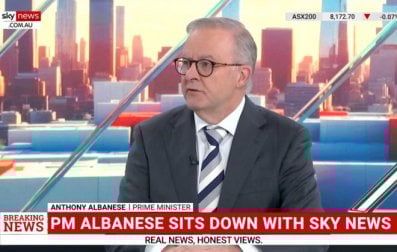
Editorially, the rightward drift is locked in with what is already a heady mix of angertainment in the corporation’s Australian broadcasting, where Sky News after dark borrows its talking points from America’s culture wars.
If the empire overall looks stable, filial relations are not. “If there’s any type of reconciliation, it is years away,” Cartwright says. “Both Rupert and Lachlan were very, very hurt by those remarks that Elisabeth and James and Prudence made … There may be a situation here where James doesn’t get to say goodbye to his father. I think the softening will happen eventually, first with Prudence, secondly, with Elisabeth. But I think James is going to be the hardest one.”
For now, Lachlan rules uncontested. The business is profitable, the editorial line following his own political evolution, and the succession settled. What remains unresolved is the family itself – fractured by years of feuding, estranged by politics and business, and with little prospect of reconciliation before Rupert makes his final exit.
This article was first published in the print edition of The Saturday Paper on September 13, 2025 as "What will Lachlan Murdoch do with his News Corp victory?".
For almost a decade, The Saturday Paper has published Australia’s leading writers and thinkers. We have pursued stories that are ignored elsewhere, covering them with sensitivity and depth. We have done this on refugee policy, on government integrity, on robo-debt, on aged care, on climate change, on the pandemic.
All our journalism is fiercely independent. It relies on the support of readers. By subscribing to The Saturday Paper, you are ensuring that we can continue to produce essential, issue-defining coverage, to dig out stories that take time, to doggedly hold to account politicians and the political class.
There are very few titles that have the freedom and the space to produce journalism like this. In a country with a concentration of media ownership unlike anything else in the world, it is vitally important. Your subscription helps make it possible.
Subscriber exclusive
Send this article to a friend for free.
Share this subscriber exclusive article with a friend or family member using share credits.