News
Both major parties are accused of missing the big picture in this election campaign, with the critical issues of climate, inequality and integrity left largely unexplored. By Karen Barlow.
The issues missing in this election campaign
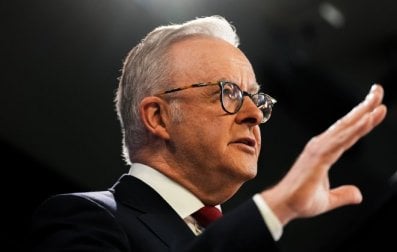
Anthony Albanese sounds at once stern and defensive. “There’s more to do. I’ve said that. And we will do more,” he tells reporters. It’s one of many teasers for a second political term.
The Labor leader is then pressed by the travelling media: “What’s happening in the future, though?”
He gave very little away amid interjections. “Well, I just said that. Well, I just said. I just responded to your question, which was there’s more to do. We’ll work those issues through.”
This exchange could relate to any number of policy areas that remain uncovered in this election campaign, in which Albanese has clearly favoured traditional Labor touchstones such as health and education. In this instance, the topic is gambling reform and whether his government would be “bold” on gambling advertising if re-elected.
“We have taken action, the most serious action of any government since Federation,” Albanese says, refocusing on the past. The total ad ban, a mid-2023 recommendation from the bipartisan committee chaired by the late Labor MP Peta Murphy, still hangs around the government without an official response.
The Coalition, while backing a restriction on gambling ads on television, has offered nothing concrete to curb those that are luring Australians online.
“We’re in no-man’s-land,” veteran anti-gambling campaigner Tim Costello tells The Saturday Paper. He points to The Australia Institute polling showing more than 80 per cent of the public back banishing gambling ads from social media and other online spaces.
“You would normally see leaders wet their finger, put it to the air and say, ‘There go the people. I will follow them. I will institute a gambling ad ban.’ But the vested interests said, ‘No.’ So there’s not even a debate, not even a discussion by the two leaders.
“It is worse than ever that the big issues on their agenda really are not being addressed. And in a world which is already losing its faith in democracy and democratic institutions, it causes a greater corrosive loss of trust.”
There’s a long list of concerns that the major parties are not viewing as matters for this campaign.
Climate targets for 2035, harder integrity and electoral reforms, moves to lift base welfare payments, a tough discussion on domestic violence and the ongoing gaps for Indigenous people are not looming as large as they did in 2022. This year’s campaign, with both major parties aware they may have lost at least a third of the electorate, is not conducive to big ideas.
Populist measures such as Labor’s personal tax cuts and the Coalition’s temporary cut to the fuel excise are the preferred focus. The Coalition has largely matched Labor on big spending announcements.
Addressing a Business Council of Australia debate alongside opposition spokesperson Angus Taylor, Treasurer Jim Chalmers acknowledged to the business crowd “there’s an appetite for taxes to be lower”, before both sides talked about reducing taxes on companies.
One of the big no-go zones is the immense pressure on the budget, just returned to deficit. There has been very little detail on critical government spending and revenue reform.
While the Coalition has emphasised the need for budget discipline and spending cuts, it’s unclear where they would be made, other than the public service. The detail there is scant.
The major parties also have little to say about how they will refill the coffers.
“I find myself saying more often now than I have done, I’m more likely to see a thylacine on my front lawn of a morning than that happening,” independent economist Saul Eslake tells The Saturday Paper.
Government spending as a proportion of gross domestic product has been 1.5-2 percentage points higher in the years since former treasurer Josh Frydenberg’s last budget in 2021. This year’s budget put spending for the decade to 2035-36 at 26.6 per cent of GDP.
“The elephant in the room that no one wants to talk about is what is the least economically damaging and fairest way of raising, let’s say, 1-1.5 percentage points of GDP and assume you can find the other half by cutting spending?” Eslake says.
“Because if we don’t do that, then one or both of two things is going to happen. We will continue to run budget deficits and hence spend more on interest, or the budget deficit will be covered by bracket creep.”
Bracket creep would disproportionately impact future generations of workers who already face the burden of the “massive intergenerational inequity” due to the housing crisis, climate change and a national gross debt figure set to tip over $1 trillion in the next financial year.
“They’ll get whacked by three of the greatest issues of our time,” Eslake says. “And if we end up participating in a war, they’re the ones who are going to be putting on the uniform.”
Four so-far-unpalatable options for raising revenue, offered by Eslake, include raising the rate of the GST; addressing the taxation of income other than wages and salaries such as dividends, trusts and capital gains; increasing taxation on rents, such as the petroleum resource rent tax; and increasing inheritance taxes.
“Part of the problem is that you cannot do tax reform on the scale that’s needed without a mandate. It’s just wrong, and political history tells you it’s costly,” he says.
What’s too costly to the budget, according to both major parties, is raising the base rate of welfare payments such as JobSeeker and the Youth Allowance. It would be a significant increase in spending, but it is the top ask of the government’s own independent taskforce, the Economic Inclusion Advisory Committee, to reduce economic disadvantage in Australia.
The Australian Council of Social Service says it would be a winner politically for both sides and lift many people out of poverty, according to chief executive Cassandra Goldie.
“We’ve got a very, very clear campaign strategy, which was to focus on people ‘in the middle’, and that’s why we’ve got a bundle of policies that are to help home ownership,” Goldie tells The Saturday Paper.
“Certainly, it was great to see that $10 billion in the [Labor] housing portfolio for new housing, but we didn’t see a commitment that that would go towards people on really low incomes.
“If you would pick the top three things that you would do to help people struggling the most … you’d fix the adequacy of JobSeeker and Youth Allowance, you would build more and more social and affordable housing, and the third thing is that you would upgrade the energy performance of low-income housing.”
The opposition leader says he is sympathetic.
“I understand the ask and understand that people are in a very difficult situation and would want to see that increase. I don’t believe that our economy, that our budget can afford to do that at the moment,” he said in Channel Nine’s The Great Debate on Tuesday.
He then explained that an improved economy overall, “including the energy system around gas and electricity” and the year-long offering of a 25 cents a litre cut to fuel, would benefit all people on fixed incomes, particularly pensioners.
For Labor, raising the rate remains an ambition. Finance Minister Katy Gallagher emphasises the actions that have been taken to ease the cost of living for people on low and fixed incomes over the past two years of high inflation.
“We look at it every single budget and you’ll see from the decisions we’ve taken where we have room in the budget, where we can find room, we have done that,” she says.
“It’s been increased to payments, JobSeeker, single parenting payment, Commonwealth rent assistance, a 45 per cent increase in just two budgets.
“That’s why we’re making all these decisions. You can’t see one income support payment in isolation of a whole range of other decisions we’ve taken.”
While there has been a significant election focus on housing, particularly for first-home buyers, the government’s 10-year housing and homelessness plan is still pending. A consultation report was released back in January 2024.
There is little to tackle the crisis for people seeking low-cost rental housing.
“Each year, we have 75,000 people come to homeless services who are seeking long-term housing and miss out,” Homelessness Australia’s chief executive Kate Colvin tells The Saturday Paper.
“A 10-year housing and homelessness plan has the potential to drive really significant policy change across all of the different policy levers that can impact on homelessness … We need significant investment in social housing, and that takes years to deliver.”
That, together with raising welfare rates and interventions in family violence and racism would go a long way to addressing Australia’s homelessness crisis, according to Colvin.
“It’s a really significant and transformative plan. And I think it should be a really top priority and delivered in the first year of a new government.”
Nationals leader David Littleproud says he’s aware of the human toll. “We see the people in Dubbo, some of them living in tents underneath the bridge because they can’t afford their mortgage and they had to move with the kids to sleep underneath it in a tent to rent their home out. So we see it through the human eyes of the pain that is there,” he told the National Press Club on Thursday.
“So that’s why this short-term relief, while we actually have the courage to fix up the fundamentals, is so important,” he said, referring to the Coalition’s fuel excise cut and other campaign offerings such as the national gas reserve plan to divert more gas domestically.
“There are no silver bullets, because we’re basically broke,” Littleproud said. “This mob has spent a lot of your money and they spent $7 billion in papering over cracks because they didn’t have the courage to admit they’ve got it wrong on their all-renewables approach. That takes courage in leadership and that’s what Peter and I are prepared to give.”
One of the very first things the next government will have to do, whatever side wins, is submit a 2035 emissions reduction target to the United Nations under the Paris Agreement.
The Climate Council argues it should be a strong target. “We don’t use the word ambitious, because we think that this is about doing necessary things to protect Australia,” the council’s chief executive, Amanda McKenzie, says.
“We argue that a target that would keep us well below two degrees, and do Australia’s fair share, would be net zero by 2035 and 75 per cent by 2030.”
Climate has not been front and centre in the campaign, apart from the intense debate over the energy transition, which has largely been framed as a cost-of-living issue. But the impact of Cyclone Alfred, as yet another extreme weather event, has not been forgotten.
“I think sometimes what people don’t understand is that with America going backwards, it means that there’s actually more pressure on the rest of the world to do more in this, and the Pacific will be looking for Australia, in particular, to be stepping up its game on climate,” McKenzie says.
Climate groups, such as nature groups, resources companies and business groups, are frustrated by the fragmented and incomplete reform to environmental protection laws, which are widely regarded as not fit for purpose.
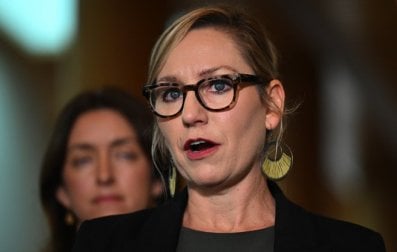
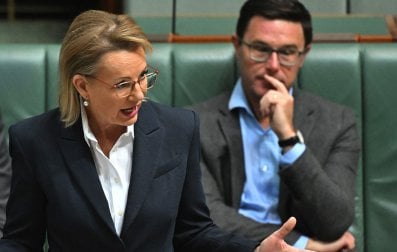
The prime minister has been personally involved in the negotiations for an overhaul of the Environment, Protection and Biodiversity Conservation Act. As was clear at the end of last year, when an agreement between Environment Minister Tanya Plibersek and her Greens counterpart Sarah Hanson-Young was overturned, that’s led to the prioritisation of pro-mining interests in Western Australia.
It is hoped the full reforms will be completed within the next term if Labor is elected, despite the Coalition’s opposition.
“It’s good that the prime minister is interested in this, because it has to go beyond just the environment portfolio. Nature is the powerhouse of our economy,” Australian Conservation Foundation chief executive Kelly O’Shanassy tells The Saturday Paper.
“It needs to be brought into the Treasury portfolio, into the climate and energy portfolios, into agriculture and mining as well – because this law is not just a nature protection law.
“It’s also the law that makes decisions about whether industrial projects should proceed or not, depending on their impact on nature,” she says. “It’s widely accepted by the prime minister, down through business, the Minerals Council and everyone that the laws currently are broken and don’t work for business or nature. And they can.”
Integrity was a huge part of the 2022 campaign and is still a live issue this year.
Labor gets kudos for delivering the National Anti-Corruption Commission and reforming the heavily politicised Administrative Appeals Tribunal, now the Administrative Review Tribunal. But the NACC’s engagement over robodebt, in particular the finding of officer misconduct by the commissioner Paul Brereton in his initial decision not to investigate referred individuals, has raised sharp criticism. There are growing calls to open up NACC’s hearings to the public and therefore allow greater transparency.
“There’s still no sign that it’s ever done anything except one massive mistake. One massive mistake regarding robodebt,” director of the Centre for Public Integrity Geoffrey Watson tells The Saturday Paper.
“Other than that, it is a pointless waste of money.”
The barrister and former counsel assisting the New South Wales Independent Commission Against Corruption says the NACC was “very well” designed, “given plenty of power and money”, but has been let down by its leadership.
He describes a “really dismal performance and a deep disappointment for people who thought this could change things”.
Watson says a new or returned government must act immediately to get rid of the “unwarranted” and “laughable” restriction that the public hearings can be conducted only in exceptional circumstances.
However, he says, there is no choice but to “bide time” until Brereton leaves the role. The NACC chair has a statutory five-year term.
The public interest disclosure regime in Australia must also be reviewed as a matter of urgency, says Watson. “What we should be doing is looking to make sure that whistleblowers are protected. I’m going to go a step further and say maybe we should look at making sure supplies are rewarded.”
A related focus is the electoral reform laws, which are still missing key elements after a deal was struck between the major parties on donations, campaign spending caps and real-time disclosures.
The 48th parliament is set to look at truth in political advertising and whether the numbers of politicians in the House and the Senate are sufficient to represent Australians. It may even look at the sometimes corrosive nature of lobbying.
“Integrity policy reform is an ongoing and urgent priority and, unfortunately, often very, very difficult to achieve because it can affect the interests of the major parties,” Centre for Public Integrity executive director Catherine Williams says.
“In what case do you see a government, of its own volition, cede power that it might have? And opposition major parties know that if they sit there long enough, eventually it’ll swing the other way and they’ll be in government, and they want to then be able to have control.”
Labor, as the incumbent, has taken the brunt of criticism for a lack of ambition in this campaign. Health Minister Mark Butler pushes back, however.
“We’ve had to deal with a range of pressures, some of them external to Australia. Obviously, the cost of living are pressures that have swept the entire globe … the legacy of the pandemic, but also a legacy of 10 years of cuts and neglect to important services like Medicare and many others,” he says.
“But at the same time that we’ve dealt with those pressures … we’re rebuilding Medicare … The prime minister has made clear is a really important priority for him in terms of universal early childhood education and care.
“We are very ambitious for Australia’s future. That’s why the prime minister is so focused on building that future.”
If he is returned, the prime minister will have no shortage of competing priorities.
This article was first published in the print edition of The Saturday Paper on April 26, 2025 as "Ambition impossible".
For almost a decade, The Saturday Paper has published Australia’s leading writers and thinkers. We have pursued stories that are ignored elsewhere, covering them with sensitivity and depth. We have done this on refugee policy, on government integrity, on robo-debt, on aged care, on climate change, on the pandemic.
All our journalism is fiercely independent. It relies on the support of readers. By subscribing to The Saturday Paper, you are ensuring that we can continue to produce essential, issue-defining coverage, to dig out stories that take time, to doggedly hold to account politicians and the political class.
There are very few titles that have the freedom and the space to produce journalism like this. In a country with a concentration of media ownership unlike anything else in the world, it is vitally important. Your subscription helps make it possible.
Subscriber exclusive
Send this article to a friend for free.
Share this subscriber exclusive article with a friend or family member using share credits.