News
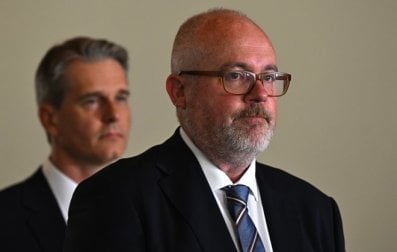
Liberal powerbroker Alex Hawke – a key figure in Scott Morrison’s inner circle – has emerged as the factional leader and numbers man on whom Sussan Ley depends for her control of the party. By Karen Barlow.
‘Ruthlessly effective’: The Morrison lieutenant behind Ley’s leadership
When Sussan Ley won the leadership ballot on May 10, days after her party’s historic election defeat, observers put her numbers down to one source: Alex Hawke.
Ever since the 2022 election loss of his former ally, Scott Morrison, Hawke has been waiting to regain the influence that was once a given in the party. Over three decades, he has been described as a “political animal”, a “henchman” and the “ultimate faceless man”, but the centre-right powerbroker is almost always on top.
“He’s the best political operator in the Liberal Party, bar none,” a senior moderate Liberal source tells The Saturday Paper.
“No one understands machine politics like Alex Hawke. He’s disciplined, he’s smart and he’s ruthlessly effective … Alex understands the importance of providing loyalty and support to the leader, and he’s doing that for Sussan for the good of the party.
“There’s no one you’d rather have in your corner than Alex Hawke when it comes to numbers.”
Hawke has been in and out of favour with various leaders over the past few terms, having been a minister for Malcolm Turnbull and Morrison’s key lieutenant before being sent to the back bench by Peter Dutton.
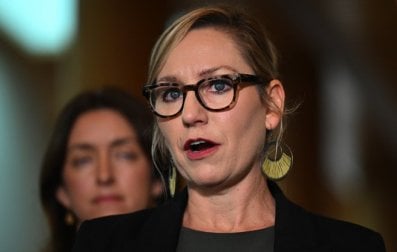
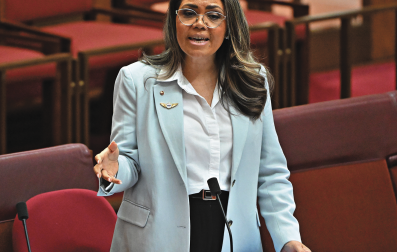
Often working behind the scenes, Hawke was recently in the headlines following his attempts to contain Jacinta Nampijinpa Price’s comments on Indian voters. The Northern Territory senator accused Hawke of berating her staff, which she described as “cowardly and inappropriate”. Hawke insists he was acting of his own accord, not at Ley’s request.
“That’s the opponent’s attack? I’m not doing that here. I did it on my own,” Hawke tells The Saturday Paper. In an interview conducted in the wake of Price’s actions, he insists he had a high opinion of Price but says that was diminished by the breach of confidence.
“I’ve helped Coalition figures senior and junior for 30 years. I’ve maintained all those confidences. I could give you 10 explosive stories today, but I’ve never done that, have I, Karen? I have never rung and said, ‘Here’s 10 explosive stories about the Liberal Party.’ ”
Hawke’s rationale for jumping into the fray with Price is pragmatic. Colleagues say he is not much interested in policy, but he always has an eye to politics. The party he sees winning elections is not the party of Price, who later insisted she is not racist.
“The No. 1 thing is, in modern Australia, you can’t be a racist party or a racist movement and get elected. So, I’m insistent on that,” Hawke tells The Saturday Paper.
“I’m a bit of a contradiction because I’m a conservative, a right-winger, but I’ve never had a racist bone in my body. I grew up in Western Sydney. Half my mates are Indians. They’re just Australians that have Indian background and, like, this dichotomy we’re having – a Liberal Party between an older generation that wants to rewind the clock…
“The clock’s never going to rewind. Australia’s moved on, and that’s the real thing that’s going on here. So there is a real moral cause here and it has got to be clear.”
Absorbed by politics for most of his life, Hawke first grasped his conservative leanings while at school. He lost his first class election and was so intent on winning the next that he rigged the ballot. In his first speech to parliament, he said this was a time when “political correctness was at its height, after 12 years of Labor rule”.
A 2005 article for The Monthly dug into his ascent to the position of national president of the Young Liberals. The precocious Hawke admitted it was lonely being the only “very right-wing” kid in his class.
He joined the Liberal Party and the Army Reserve straight out of high school, at the same time as he enrolled in a bachelor of arts at the University of Sydney. He followed this with a master’s of government and public affairs, before leaping into New South Wales politics, notably assisting and being mentored by the ultra-conservative kingmaker David Clarke and becoming president of the state branch of the Young Liberals.
“It’s very addictive, politics,” Hawke told The Monthly 20 years ago. “It is like a habit.”
Described in the article by fellow young Liberals as future leadership material if he “learns to keep the squabbling under wraps”, Hawke indicated he could be quite happy to stay in the background.
“I’m interested in being influential in politics in Australia for good, for the cause I believe in. Do I have to be in parliament to do that? I understand completely that I do not. Maybe I will, but that’s not necessary,” Hawke said. “In fact, in some ways it’s more fun on the outside. It gives you more power.”
This period in the NSW Young Liberals was marked by a distinctive shift to the right and allegations of branch stacking, with a sign-up surge by young Catholics, including members of the secretive Opus Dei. Hawke is not a member of Opus Dei and nor is Clarke, who describes himself as a “cooperator”.
“We had large membership growth and I’m very proud of that,” Hawke told The Sydney Morning Herald in 2004.
Clarke and Hawke fell out in the period after Hawke clinched preselection for the north-western Sydney federal seat of Mitchell and won it decisively despite the “Ruddslide” of 2007. By this stage, Hawke’s ruthlessness was well known. In 2005, when he was still only 28 and a staffer, Hawke was named by then NSW Liberal leader John Brogden as being responsible for his resignation.
In 2010, as Hawke changed allegiances, he tried to oust Clarke ahead of the 2011 state election. Clarke survived preselection at a particularly boisterous Baulkham Hills branch meeting, due to the intervention of soon-to-be premier Barry O’Farrell, who was in no mood for a factional blow-up.
“Alex tried to take out the big dog, take him into the forest and tried to put a couple of political bullets in … and he missed,” a senior party source tells The Saturday Paper. “And David Clarke won by a handful of votes.”
Meanwhile, in Canberra, Hawke was becoming more of a “pragmatic Liberal” and formed his centre-right or “soft-right” faction. It is a grouping that signed up the member for Cook, Scott Morrison, who entered parliament at the same time as Hawke.
Hawke was integral to the manoeuvring that ended Turnbull’s prime ministership and elevated his ally to the leadership over Peter Dutton.
Amid all the chaos in 2018, the Morrison allies voted tactically in spills to undermine Turnbull and give a false sense of confidence to Dutton. “He just wants his people in the party room that he can tell what to do, and that was critical for getting Morrison up as prime minister,” a senior party source tells The Saturday Paper.
“It was only four or five votes that he had, but the four or five votes were put behind the expulsion, the spill motion, and then they were moved to Morrison. He was enough to change the outcome.”
Another Liberal calls Hawke a “cold-blooded factional killer”.
The Right faction source adds: “When it does come to his number-counting and all that kind of stuff, he’s actually pretty forensic. He’s pretty phenomenal. That should be 20 per cent of who you are, not 80.
“Yes, these things are things that are consequences of being involved in politics. They’re not the reason you’re there.”
With Hawke as the factional organiser in NSW, the group was led by Morrison as prime minister and included the now departed Stuart Robert, Steve Irons and Hollie Hughes, as well as an overlapping faith-based “prayer group” that counted some members of the hard right.
The logjam in the state division over delayed federal candidate preselections, according to the 2022 Liberal election review, was a “contributing factor to the party underperforming in some electorates”. Hawke was Morrison’s representative on the panel reviewing preselections and it is well documented that he was not turning up to the nomination review committee.
“That was ScoMo trying to engender a captain’s pick to delay preselections for as long as possible and Alex Hawke was the weapon that he used to do that,” the senior party source says.
It later led to a state council vote to expel Hawke from the party, which he survived, but sources say it was not a walkover.
“When a big chunk of the Liberal Party hates you, then you have to ask yourself, well, what is his motivation?” the party source says.
What holds the party together is the combination of the moderates, or the Photios faction, named for former NSW state minister Michael Photios, and the centre right. A moderate Liberal source tells The Saturday Paper, “If they’re together, then they can outvote the hard right.”
“Hard-right NSW – Taylor’s the leader there, although he pretends not to be and says, ‘Oh no, I hate the factions.’ Yeah, right,” the source says, referring to leadership hopeful and shadow minister for defence Angus Taylor.
Labor’s 2022 defeat of Morrison and the May 3 thrashing of Dutton has reduced the size of Hawke’s centre-right faction but not its influence.
“With a small faction, he has been able to have an outsized role on the conservative side of politics in a way that the leaders of other bigger factions can only dream of,” the senior moderate source says.
“He’s not a retail politician, but his skill set is just so well equipped for getting outcomes.”
Hawke’s time on the back bench under Dutton, after various ministerial portfolios, including immigration and special minister of state, would have been testing, according to factional opponents.
“Don’t forget how hurt Alex would have been by being dumped by Dutton as well,” a senior right source tells The Saturday Paper. “That would have been a huge motivating trigger for Alex.”
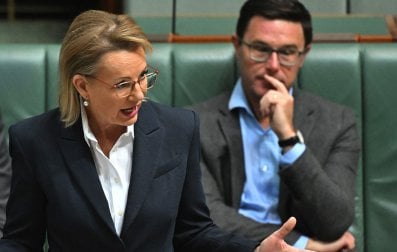
Over her 24 years in parliament, Sussan Ley has mostly identified as a moderate, although she eschewed the label. She has always been close to Hawke and the centre right.
Centre-right and moderate MPs combined to install Ley as leader in the post-election ballot over the hard right’s Taylor. Ley’s chief of staff is Dean Shachar, a player in NSW factional politics and a former staffer to Hawke, former Nationals leader Michael McCormack and Morrison.
“Hawke runs everything she does,” former Liberal leader John Hewson tells The Saturday Paper. “It’s a Hawke faction. It doesn’t sound as if it’s a right faction or left faction – it’s all faction.
“This impacts over time, because the image of the party is still pretty much a shambles, driven by squabbles and leadership aspirations of Taylor and Tim Wilson and Andrew Hastie.”
Liberal insiders describe Hawke and Taylor as “completely at war” factionally. Their disagreement is not on policy but on politics and power.
“What area of public policy do Angus and Alex disagree on?” the senior right source says.
“It’s hard to make sense of the Liberal Party in NSW – and the fact that Alex Hawke’s been in the middle of it for decades shows you where the problem might be. There are rights and centre rights and far rights and there’s allegiances between the left at different occasions, between different groups. A lot of it is personality driven, as opposed to public policy driven. It is a highly transactional environment.”
The moderate Liberal source sees it along more existential lines. “Essentially, there’s a broad coalition that’s come together to stop the forces of the extreme right taking control of the division,” they explain. “So, a lot of people who are not common bedfellows have united to try and protect the party and ensure we remain relevant and electable.
“Part of that is making sure that we’re open, inclusive and forward looking. And people like Jacinta Nampijinpa Price want to make us exclusive and not a place where all Australians can feel welcome.”
The fact Price made public Hawke’s effort to counsel her over her comments on the Indian diaspora was seen as a breach of protocol. Hawke was only doing what would be expected in his role.
“It is no surprise that a government enforcer would step up to the mark to try and address that. It would happen under any government. It would happen under any opposition,” former Morrison adviser Andrew Carswell tells The Saturday Paper.
“He was right to call up and demand a response, demand an apology, and query what had gone on. It was very clear that Senator Price had overstepped the mark in a considerable way.
“The fact that this had been elevated publicly is not a poor reflection on him. It’s a poor reflection on the senator.”
Price, who was dumped from shadow cabinet for failing to provide confidence in Ley’s leadership, is not backing down. Meanwhile, right-faction frontbencher Andrew Hastie is getting extra attention for being seen to undermine Ley through slick and pointed social media posts on the car industry and migration.
“We don’t have much in the way of policy,” Price told radio station 2GB on Wednesday. “We are supposed to be an effective opposition. We do want to be able to do our job, so we’re not going to sit back and be silent until such time as we have policy positions on a number of issues.”
As for confidence in Ley: “I’d love to be able to have the confidence of the leader myself … I think the fact that I’ve been demoted probably demonstrates that.”
Hawke is no stranger to controversy. As immigration minister, he moved the Nadesalingam family from immigration detention on Christmas Island to community detention in Perth but refused them a visa to return to Biloela in Queensland.
He is also the Morrison minister who cancelled the visa of the unvaccinated tennis champion Novak Djokovic. He left his explanation largely to media statements, saying the Serbian superstar’s presence at the 2022 Australian Open might lead to an increase in “civil unrest of the kind previously experienced in Australia with rallies and protests …”
In these decisions and others, colleagues see Hawke as a fixer.
“You can almost compare him to a Murray Watt-type in that regard. Someone who’s going to go out and fix a problem,” Carswell says.
“They’re ruthless about it. They push everything aside and they’re just solely focused on getting this one job done. And that’s what he was asked to do as immigration minister. Very similar to [Minister for the Environment and Water] Murray Watt in that regard.”
Detractors say they don’t know what Hawke, now the manager of opposition business and opposition industry spokesman, stands for. They suggest he is “energised by the internal fight over the fight against Labor”.
“Alex has to work hard to demonstrate to the wider community what is the reason that he’s in politics, yeah? What are those passions?” the senior right source says, before shifting their gaze to Ley.
“If Sussan needs Alex to secure her leadership, it demonstrates how weak her leadership is. Leaders do better when they’re not protecting their backs. They’re focused on making inroads into the communities their party needs to win over.
“There needs to be less focus on Machiavellian political games and manoeuvring and more focus on winning over the hearts and minds of middle Australia.”
Hawke tells The Saturday Paper he is committed to reforming and modernising the Liberal Party, which he says is in a better place under Ley.
“She deserves her chance to have her go. She’s been elected by the party room to lead. She’s leading. Any leader deserves their chance to set out their mandate, their position, and take the party the way they would like it to go,” he says.
“And I believe she’ll be given that chance. I think, let her have that chance. Everyone gave Peter the chance he needed to lead and to shine. And we ended up where we are.
“I think she’ll surprise people. I think she’s a tough and seasoned politician and I think some people underestimate her because she is a woman. But I say to them this: she’s the first female not just to lead the Liberal Party but to occupy the opposition leader position in Australian history.
“And the Liberal Party – men, women – we all have an interest in her breaking that ground and going well, and we should get behind her.”
This article was first published in the print edition of The Saturday Paper on September 27, 2025 as "‘Ruthlessly effective’: The Morrison lieutenant behind Ley’s leadership".
For almost a decade, The Saturday Paper has published Australia’s leading writers and thinkers. We have pursued stories that are ignored elsewhere, covering them with sensitivity and depth. We have done this on refugee policy, on government integrity, on robo-debt, on aged care, on climate change, on the pandemic.
All our journalism is fiercely independent. It relies on the support of readers. By subscribing to The Saturday Paper, you are ensuring that we can continue to produce essential, issue-defining coverage, to dig out stories that take time, to doggedly hold to account politicians and the political class.
There are very few titles that have the freedom and the space to produce journalism like this. In a country with a concentration of media ownership unlike anything else in the world, it is vitally important. Your subscription helps make it possible.
Subscriber exclusive
Send this article to a friend for free.
Share this subscriber exclusive article with a friend or family member using share credits.