News
As the Greens are accused of condoning anti-Semitism in their rhetoric on Gaza, Labor is attempting to predict the impact the conflict will have in key seats. By Jason Koutsoukis.
Labor faces the Greens over Gaza
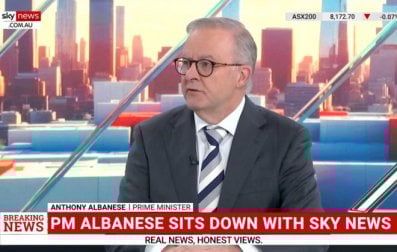
Prime Minister Anthony Albanese and the circle of political hardheads he relies on now privately concede the war in Gaza will cost Labor votes at the next election.
The only questions that remain are how many votes and in what seats.
“Labor has been wedged from both sides on this issue throughout,” says political consultant Dean Sherr, a former adviser in Albanese’s media office.
“You’ve had the Liberals trying to push them from the perspective of ‘they’re not supporting Israel enough’ and for being too soft on Hamas and their actions. And then you have the Greens accusing Labor of being too pro-Israel and going so far as to accuse them of being complicit in genocide. So from the government’s perspective, I think it’s a really difficult balancing act.”
While people who identify as Muslim make up 3.2 per cent of Australia’s population and those who identify as Jewish constitute only 0.4 per cent, the concentrations of people of both faiths in a small number of Labor-held electorates means voter perceptions of how the Albanese government has responded to the war in Gaza could tip the balance in the next parliament.
When it comes to Muslim voters, of particular concern to Labor strategists are the Western Sydney electorates of Blaxland, Watson, Werriwa and McMahon, and the metropolitan Melbourne seats of Wills, Calwell and Bruce.
While all those seats are held by two-party preferred voting margins of more than 5 per cent, the once safe Labor seat of Fowler in Sydney’s west, which was won by Liberal-leaning independent Dai Le with an 8.3 per cent swing at the last election, is a reminder of the modern political adage that there is no longer such a thing as a safe seat.
“What people forget is that the Muslim population has been the absolute spine for the Labor base in these seats,” says Kos Samaras, a former Labor Party strategist and director of the polling, research and political strategy company RedBridge Group. “If Labor loses those voters to independents, then its primary vote collapses.”
He adds: “Gaza will definitely be an issue, but it won’t necessarily be in the seats that the media are focusing on. It will be in Labor’s heartland. This is a sleeper issue.”
According to Samaras, the big problem for Labor revealed by RedBridge’s focus group research is that the war in Gaza has exacerbated a fire that was already burning in the hearts of Muslim voters, especially younger voters.
Citing a recent focus group in Melbourne that included nine hijab-wearing Muslim women, all born in Australia and all under the age of 40, Samaras said the dominant theme was a shared experience of prejudice.
“These are all articulate, switched-on people who talked to us about growing up in a country where they have had to lie on their CV in terms of their name just to get a job interview, and years of being dumped on generally and taken for granted,” says Samaras. “And now along comes Gaza, and it’s like pouring petrol on a bonfire. They are angry. Angry at levels that I have not seen before.”
This is exactly the sentiment the Australian Greens have been trying to tap into, in the process infuriating Albanese, who last week launched a scathing attack on the Greens’ attempts to exploit the issue for their own electoral advantage. He was joined by Opposition Leader Peter Dutton, who said the Greens were condoning anti-Semitism.
According to the Greens deputy leader and NSW Senator Mehreen Faruqi, however, this remains a key issue for voters and they want the Greens to continue campaigning on it. “Voters in long-held Labor seats, especially in Western Sydney, are sick and tired of being taken for granted,” she said. “They want to hold Labor to account and I think this will show at the ballot box in the federal election.”
Still, not all Western Sydney community leaders are convinced Muslim voters are ready to turn against Labor.
Retired GP Jamal Rifi, who immigrated to Australia from Lebanon in 1984 and who practised medicine in south-western Sydney for more than 30 years, says while there are some leaders in his community who are riding a wave of negative sentiment that swelled in the first months after the October 7 attacks, that won’t necessarily translate into voting out sitting Labor MPs.
“Without any doubt, there will be a negative impact on the Labor Party in south-western Sydney,” Rifi says. “But we are talking about very senior ministers who hold seats in and around where I live. And those ministers have actually served us very well. They are embedded in their local communities, they’re part of the fabric of our community.
“I think most people in my area recognise that the government has done some very important things when it comes to advancing the interests of the Palestinian people, such as voting in favour of Palestinian statehood at the United Nations and restoring Australian funding to the United Nations Relief and Works Agency for Palestine Refugees,” says Rifi, who currently has six Palestinian adults and one child, all from Gaza, staying at his home. “Yes, people are angry, but they also know the government is walking a tightrope here, and between now and the next election I believe people will realise that if they vote against Labor, they will end up with a Liberal government that they will be even more dissatisfied with.”
The Labor-held seat considered most vulnerable to the Greens on the issue of Gaza is Wills in Melbourne’s inner north, which is currently held by Peter Khalil, a former national security adviser to former prime minister Kevin Rudd. The margin of his seat will be cut from 8.6 per cent to a notional 2 per cent under a redistribution proposed by the Australian Electoral Commission earlier this month.
Khalil is being challenged in Wills by high-profile Victorian upper house MP Samantha Ratnam, who has stepped down as leader of the Victorian Greens to run in Wills and has been campaigning hard on the federal government’s response to the war in Gaza in the seat, where more than 10 per cent of voters identify as Muslim.
“We’re hearing from hundreds, if not thousands, of community members in Wills, and there hasn’t been a doorknock that has gone by where the government’s response to what’s happening in Gaza has not arisen in our conversations,” says Ratnam.
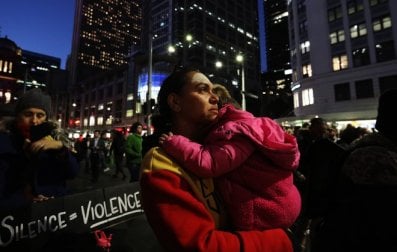
“So it certainly feels like it’s very top of mind for people and I think that is demonstrated very visibly with the number of people who are continuing to turn out at public demonstrations and rallies both in the Melbourne CBD and within suburban communities as well, including my own here in Wills.”
Khalil, whose Egyptian parents migrated to Australia in the early 1970s, argues that while many voters in his electorate are angry and upset over what is happening in Gaza, it will be issues that directly touch people’s lives, such as cost-of-living relief, the government’s support for Medicare and the National Disability Insurance Scheme, that will ultimately decide which way they vote at the next election.
He also believes voters are being turned off by the way the Greens have sought to exploit the war in Gaza for their own political advantage, pointing to recent violent protests outside the Victorian Labor State Conference and attacks on the electorate offices of federal MPs, including his own.
“From my perspective, the Greens are vote harvesting to get into the house of democracy, while encouraging others to burn it down,” Khalil says.
“As elected representatives, what we say and do actually matters. We have a responsibility to unite Australians, to protect our democracy and our democratic practices, and ensure our communities are safe and cohesive. And yet you’ve got the Greens political party fanning the flames of hatred and grievance in our community, and basically tearing asunder the social fabric.”
Equally concerned about the Albanese government’s response to the war in Gaza are Jewish voters in Labor-held seats such as Kingsford Smith in Sydney, and Macnamara in Melbourne, where the Greens candidate at the last election attracted a 5.5 per cent primary vote swing that nearly toppled Labor’s Josh Burns.
“I don’t think the Greens have provided a safe or respectful place, especially for the Jewish community in this debate,” says Burns. “And that has resulted in a number of their Jewish activists leaving the party. These are people who are members of the Greens who don’t feel comfortable in the Greens anymore and who have been devastated by the way in which the Greens have not provided that safe and respectful place in their party, and they feel very isolated and disenfranchised.”
Ittay Flescher, a founding member of the Jewish Greens, has since quit the party over its rhetoric on Gaza. He says the Greens will continue to lose Jewish voters.
“In Jerusalem, I regularly facilitate and participate in Israeli–Palestinian dialogue where we share our fears from the heart and show empathy for the suffering of the other. It pains me to see so many interfaith groups in Australia falling apart at this time over political differences,” says Flescher.
“Elections are almost always associated with heightened social tension, smears and gross generalisations or misrepresentations of the views of the other side. This is the opposite of what we need now. I hope the coming election campaign will see leaders being more measured in their words.”
This article was first published in the print edition of The Saturday Paper on June 15, 2024 as "The Gaza vote".
For almost a decade, The Saturday Paper has published Australia’s leading writers and thinkers. We have pursued stories that are ignored elsewhere, covering them with sensitivity and depth. We have done this on refugee policy, on government integrity, on robo-debt, on aged care, on climate change, on the pandemic.
All our journalism is fiercely independent. It relies on the support of readers. By subscribing to The Saturday Paper, you are ensuring that we can continue to produce essential, issue-defining coverage, to dig out stories that take time, to doggedly hold to account politicians and the political class.
There are very few titles that have the freedom and the space to produce journalism like this. In a country with a concentration of media ownership unlike anything else in the world, it is vitally important. Your subscription helps make it possible.
Subscriber exclusive
Send this article to a friend for free.
Share this subscriber exclusive article with a friend or family member using share credits.